Veterans
of Asia's hotel industry may be having a second wind in their career. Some
start new third-party management companies. The latest is Norbert Vas, formerly
with Archipelago International.
VIETNAM - The
number of third-party management companies being launched by veteran industry
players in Asia Pacific is visibly rising. That is good news for owners – and
branded chains – who have been lamenting the lack of professional white label
operators in the region.
Australia
leads with first movers that include La Vie, formed by Jerry Xu,1834
Hotels (Andrew Bullocks), Vista Hospitality (Jan Smits) and, most
recently, Trilogy, launched by Scott Boyes, Tony Ryan and Grant Alchin.
In
Southeast Asia, Norbert Vas, a senior and experienced hotel executive, has
set up Optimum Hospitality Indochina, focusing on Vietnam.
The
long-time vice president of business development for Archipelago International in
Indonesia has parted ways with the company and teamed up with another veteran,
John Gardner, in the new venture. Gardner had a 15-year career with Caravelle
Hotel Saigon.
The
road to Vietnam for Vas started around 18 months ago when Archipelago tried to
expand in the country by establishing Archipelago Indochina. Alas, the timing
wasn’t good.
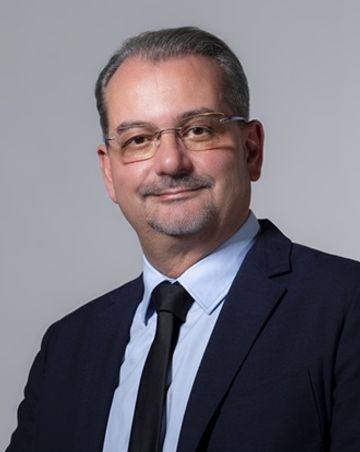
Norbert Vas, Optimum Hospitality Indochina
A
downturn in housing sales and a corruption probe of real estate developers had
a spiral effect on hotel opening and construction in Vietnam, as reported by Hotel
Investment Today. Adding to the woes, tourism recovery was slow.
Last year's 12.6 million foreign tourists were just 70% of 2019's level.
Getting
management agreements was “a struggle,” said Vas, who is a veteran in signing
contracts. He grew Archipelago International to 164 operating hotels under 10
brands, from five hotels and two brands when he joined in 2008. But despite
Archipelago's track record, promoting an Indonesian chain in Vietnam wasn't
easy, Vas said.
So
why is he still pursuing Vietnam? Vas
believes that approaching the market as a third-party operator widens the net.
“We can operate hotels under the owner's brand or other brands, and we aren't
anymore constrained to franchising only Archipelago brands. We can do
consultancy or asset management,” Vas added.
Moreover,
there’s a lack of professional third-party players in the market. “There are
some local companies here [in Vietnam] but I wouldn’t call them a real white
label operator,” Vas said. “Apart from those, La Vie already has a few projects
in Vietnam.”
Better timing
Business
is starting to flow for Vas’ Optimum. A big deal was clinching a one-year
contract with the former VinOasis Phu Quoc. The 1,400-room hotel has been
rebranded to Wyndham Grand Phu Quoc under a franchise agreement.
“They
engaged us to implement Wyndham Grand standards at the hotel,
elevate the service there, and do a PIP [property improvement plan]. They see
us as helping them. The hotel staff are hungry for new leadership and ideas.
And Wyndham is very cooperative. So, it’s a win-win for all. We’ve been on that
project now for four months and enjoying it,” Vas said.

Considering the sharp competition in Vietnam, owners who feel their asset is underperforming would definitely benefit from advisory services. Those can be in the form of a spot review, focusing on specific pain points, or an operator search and selection.
Pierre Marachel
Another
Optimum project was operator selection for a property in Mui Ne, a beach resort
town in southeast Vietnam. This became the Radisson Resort Phan Thiet after the
selection process.
Yet
another was to develop a contemporary brand for a Vietnamese developer.
There
are definitely opportunities for new entrants in Vietnam, observed Pierre
Marachel, vice president, Strategic Advisory & Asset Management, JLL Hotels
& Hospitality Group.
“Considering
the sharp competition in Vietnam, owners who feel their asset is
underperforming would definitely benefit from advisory services. Those can be
in the form of a spot review, focusing on specific pain points, or an operator
search and selection,” said Marachel when asked what the opportunities
are. “Debt advisory is another type of service that would assist owners to
navigate those uncertain times. Or a robust feasibility study can help aspiring
owners to better understand the risks and opportunities."
Vietnam
is ready for the third-party operator model, according to Vas. “Coming out of
COVID, many owners of independent hotels in Vietnam started realizing the value
of a brand and a global distribution system. Would I be able to fill 1,400
rooms in Phu Quoc without the help of Wyndham? No. That’s where white label
comes in and why it’s becoming more popular,” he said.
Vas
added that the third-party operator knows the game much better than the
independent owner and can work with the brand more effectively. “A brand
franchise and distribution is like giving you the owner a beautiful car,” he
said. “But you still need to know how to drive it. You need to be in touch with
the revenue management team, e-commerce team, et cetera, and challenge them,
because if you don't, you won't get the maximum out of it.”
Another
value of white label operators is a stronger local commercial capability that
enables them to market to domestic travelers better than a global brand can,
Vas added.
Vietnam’s
domestic travel market is far bigger than its international travel market. Last
year, the country recorded 108 million domestic trips, 8.5 times more than
foreign arrivals.
Vas is
confident that Vietnam will bounce back in full swing in 2025, saying that this
is pretty much the sentiment in the industry.
“I
see foreign direct investments are still coming into Vietnam, in sectors
including warehousing and distribution. Infrastructure projects such as
highways and high-speed trains, as well as new airports, are moving forward
now. Some sectors of the government are becoming more flexible.
“In
Phu Quoc, we are running almost 50% occupancy, which is not bad for a
1,400-room hotel, although it’s not 50% every day. Domestic demand is growin,”
Vas said.
His
goal for this year is to reach out to educate the market about the third-party
operator model. “So, by 2025, we will be well-positioned to make a mark in
the market,” Vas concluded.