Australia's
La Vie Hotels & Resorts journey reaches a tipping point at which growth can
only accelerate, illustrating that Asia, too, could produce its own credible
third-party operators.
While
U.S.-based third-party management companies consolidate and adapt to an
ever-changing landscape, the model in Asia Pacific is on the cusp of growth.
Only
1% of supply in Asia Pac is under white label operators, predominantly in
Singapore, Japan and Australia, according to the 2023 Hotel Operator Guide by
AP Hospitality Advisors. That makes Asia a wide-open field for white label,
another term for third-party management, especially as Asia’s pipeline is also
robust.
Among
players, Sydney-based La Vie Hotels & Resorts’ rapid expansion in
Australia, and now Asia, illustrates that the model is breaking through a space
led by HMAs and franchises.

A misconception [about third-party operators] is that it’s just about cost cutting, but that is a lazy solution. A good third-party player must focus on the top line as well.
Jerry Xu
Branded
HMAs comprise 55% of the market, AP Hospitality Advisors guide shows. But more
interesting is that franchise is now a substantial 34%, which augurs well for
third-party operators.
La
Vie added 10 hotels to its portfolio in 2022 alone, bringing the total to 19,
and is expanding its footprint beyond Australia to Sri Lanka, Maldives and
Thailand. Another seven signed contracts will see the company enter Indochina
between 2024 and 2026 with a hotel in Sihanoukville, Cambodia; Vientiane, Laos;
and Kalaw and Yangon, Myanmar, in addition to hotels in Phuket, Thailand, and
Melbourne.
A
further 10 signings are in the final negotiations and are expected to be
announced in the coming months.
Many
of La Vie’s properties are franchised brands of chains, including Radisson,
Wyndham and Choice, while the rest are non-branded. In May, La Vie signed a non-exclusive
deal with Radisson to develop, manage and operate at least 30 hotels in 10
years under five of Radisson's brands.
Getting
to this point took nine years, millions of dollars in investment and lots of
learnings, said Jerry Xu, founder and CEO of La Vie Hospitality Group, in an
interview with Hotel Investment Today. The group had its beginnings in
2014 under MG Hospitality Management, managing the former Mercure Bugis in
Singapore.
“We
work our way along the journey and I wouldn't say we're perfect at this stage,”
Xu said. “One of the changes we have made since the middle of this year is to
boost our commercial delivery capability. A misconception [about third-party
operators] is that it’s just about cost cutting, but that is a lazy solution. A
good third-party player must focus on the top line as well.
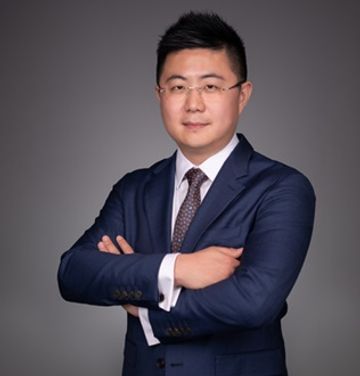
Jerry Xu, La Vie Hospitality Group
“So,
regardless of who we work with, be it brands, small luxury hotels or the
preferred hotels of distribution partners, we still need to overlay a strong
commercial team [on top of the partners’ resources] and drive revenue and
performance to our hotels.”
Xu
invested in building a commercial team in Australia, led by a senior group
commercial director. A regional office in Bangkok and a support office in
Singapore were set up to cover Southeast Asia. There’s also an area office in
Sri Lanka, and a sales office in Dubai to oversee the Middle East and Europe.
These are huge outbound travel markets for La Vie’s hotels in Southeast
Asia.
In
all, staff count is now more than 30 people spread across the offices.
“I
believe we are one of few independent management companies [in Asia Pacific]
that have this infrastructure,” Xu said. “We also have a far better
understanding of the overall Asia Pacific market now. With the hard education
to the market in the past few years, owners are starting to realize the value
of a company like ours. More [third-party] players are coming into this field
as well, which is positive, as that means more people spreading the word about
this model.”
Australia’s Salter Brothers and
Pro-Invest
are among those players, as reported recently by Hotel Investment Today. Salter
Brothers just hired Rahul Ghai, formerly with Swiss-based private equity
Partners Group, as managing director Asia based in its Singapore office that
was set up in August. Senior hires under Ghai include former KSL Capital
Partners Vice President Ethan Quek and IHG Japan Finance Director Gene Osborne.
An office in Tokyo is next. Salter Brothers also has an existing operations
team in Vietnam.
For
Xu, Vietnam and Singapore are two promising Asian markets. “Vietnam is booming.
Singapore is a mature market, with lots of institutions there. This model will
work well in Singapore,” he said.
La
Vie has a fairly strong pipeline in Australia, but Asia is a big focus as a lot
more activity is happening. “The economy is booming compared with other
markets. There are more hotels being built in Asia, and owners are looking at
alternative options to maximize their returns,” Xu said.
Previously,
La Vie worked “super hard” knocking on people’s doors. Now, it gets a few leads
every week, including from brands too, Xu said.
Clarion
call
To
Graeme Dickson, the industry in Asia Pacific needs to fashion itself to be more
attractive to the investment community than it has been in the past, and
part-and-parcel of doing that is to provide investors with as many hotel
operating models as possible. The partner at Baker McKenzie made this
clarion call during a session on hotel operating agreements at HICAP in
October.
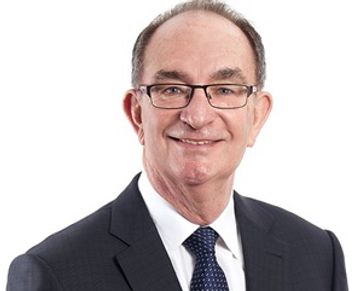
Graeme Dickson, Baker & McKenzie
“We
are living in a world of limited capital. We are competing against other
industries for that capital. We must be able to demonstrate to investors
looking at our industry that we can basically offer them every conceivable
level of flexibility that they are looking for, and that we can deal with any
of their queries or concerns on all of the models that are in play in the
industry,” Dickson boomed.
The
ability to change is important in the life of a contractual agreement, Dickson
reminded. An example is giving owners the option to flip the HMA or manchise to
a franchise after a certain period of time. Or, in the event the hotel is put
on the market, the ability to switch back to a branded HMA in anticipation of a
higher valuation if the hotel comes with a good operator.
“If
you want me to contract for 10, 15, 80 years with this operating company that
controls my assets, what happens if they don’t conform to my expectations?
Investors have to deal with that possibility every time they are contemplating
investment in the industry,” Dickson said.
In
the U.S., there’s a lot of flexibility, such as clauses in the contract that
allow the HMA to be terminated and replaced with a franchise with the option of
a new third-party operator, said another panelist, Patrick Finn, IHG’s vice president
Development South-East Asia & Korea, who drew from his previous experience
in the U.S.
But
it’s not so easy in Asia. Said Finn, “In the U.S., if you terminate your
third-party operator, there are literally hundreds of different operators that
you can hire to take their place. In Asia Pacific, we don’t have that. It’s
starting to grow; lots of companies are being set up, but it’s not quite there
yet.”
We must be able to demonstrate to investors looking at our industry that we can basically offer them every conceivable level of flexibility that they are looking for, and that we can deal with any of their queries or concerns on all of the models that are in play in the industry.
Graeme Dickson
A
lot of times brand companies would first want to evaluate the owner’s
capability to manage the hotel properly and deliver on the brand promise. The
most important element is whether the owner has a third-party operator who is
credible and has the track record to deliver on the requirements of a hotel, Finn
added.
A
bit broken
Yet
one reason why greater flexibility is needed is that it’s questionable these
days if the branded HMA model is ideal.
Another
panelist, David Simpson, managing director of Australian asset management firm
Axsia, said in Australia, branded HMAs probably worked better 10 years ago.
“The
explosion of growth in the number of hotels being developed in Australia
changed the landscape a little bit. Because of the growth, the management teams
in hotels today, in our experience, are not as experienced as they were 10 to 15
years ago,” Simpson said. “The corporate office hasn’t expanded to the same
level, and we find that they just don't have the resources to be able to coach
and guide a local management team to develop a specific strategy for that one
hotel.”
Simpson
also pointed out there are different objectives between brand companies and
owning companies. “For the hotel owner to maximize the profit and deliver the
investment strategy that the board signed off [when] buying or developing the
hotel, the owner really must have a detailed level of input into the
hotel.
“In
our experience, hotel operators are working on an annual budget, for example,
whereas owners, when they bought or develop a hotel, typically will have a
longer-term strategy, and each year is a steppingstone to achieving that
strategy. And for that reason, we question whether hotel management agreements
are the perfect vehicle.
“I
think with the emergence of third-party operators, and the willingness and
desire of hotel management companies to do franchise deals, there are
alternatives models.”