Confidence in hotel investment drops but a stronger Vietnam
may emerge in the long term.
VIETNAM – Vietnam has at least 41,000 hotel rooms in its pipeline as
of October 2023, a massive figure that reflects its runaway hotel construction
in recent years. But it’s unlikely that many rooms will open this year.
Pierre Marechal, vice president, Strategic Advisory &
Asset Management, JLL Hotels & Hospitality Group, went on a bike tour of
the country from December 15 to January 13. What he saw across the country were
fully completed hotels and residences that stood empty, and abandoned
construction sites with not even a security guard in sight. This wasn’t just in
secondary cities such as Quy Nhon, but in popular destinations such as Danang
and Halong Bay.
It's a dismal picture of ghost blocks, widely blamed on
several factors. A downturn in home sales left developers unable to service
debts. A step-up in corruption probe by authorities at the end of 2022 made
government officials cautious to issue licenses and approvals. International
arrivals of 12.6 million in 2023 were 70% of 2019 level, souring banks’
appetite to extend loans.
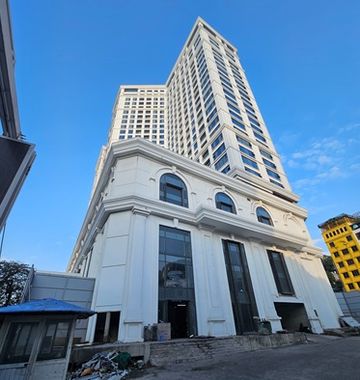
A new, unoccupied branded residence in Halong Bay. (Photo courtesy of Pierre Marechal)
In short, it was a very challenging year for Vietnam’s real
estate sector.
Confidence on hotel investment has “definitely subsided” for
many investors who have been battling the effects of the pandemic on the hotel
market and high interest rates, said Michael Piro, chief operating officer,
Indochina Capital. “Investors are focusing on optimizing their existing hotels
rather than investing in new hotels,” he said.
But Indochina Capital is still investing. “We are very much
an exception to the rule as we continue to invest in and open Wink Hotels while
developing a super luxury Mandarin Oriental Hotel in Phu Yen [a province on the
south-central coast],” Piro said.
The company opened its first Wink Hotel in 2021. The brand
portrays a chic modern Vietnam and ticks all the boxes coming out of COVID,
such as less contact, experience driven, cost conscious, locally inspired,
cashless payments, flexible workspaces and short stays.
Bright side
Investors and industry analysts whom Hotel Investment Today
talked to continue to see the bright side to Vietnam and believe 2024 will be
the turning point for confidence to rise again.
Marco Foerster, head of ASEAN Advisory at Dezan Shira &
Associates, sees the corruption clampdown as “a rethinking in regulation,” not
just in real estate but other sectors such as EVs, e-commerce, green energy and
high-speed railway. “Although this delays things in the short run, it is
crucial for sustainable long-term development [of the country overall],” said
Foerster, who is based in Ho Chi Minh City.
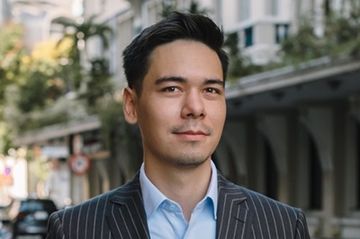
Marco Foerster, head of ASEAN Advisory at Dezan Shira & Associates
JLL’s Marechal shares the view. “While the housing crisis
and corruption probe may redirect attention and resources momentarily, it also
highlights the government’s dedication to resolving these matters efficiently.
As a result, the hotel development process may benefit from increased
transparency and scrutiny, leading to improved regulation and investor
confidence,” he said.
In fact, unsustainable development – financial or
environmental – has been the bugbear of Vietnam’s hotel sector in the years
leading up to the pandemic, although that’s not across the board in the
country. For lessons, however, one could turn to the UNESCO-listed city of Hoi
An, where hotel asset sell-offs are now reportedly rampant. Or to Phu Quoc,
where environmental issues such as lack of waste management persist.
In Hoi An, and Danang, room supply doubled from 2015 to 2019
as new players entered to cash in on a tourism boom. “Many of these new
entrants were not particularly well prepared or capitalized [and] are now
suffering quite significantly as demand has decreased,” Piro explained.
Phu Quoc, too, saw a significant drop in visitor numbers,
particularly domestic tourists, due to high air fares and a reputation for
overpricing and poor service, Foerster added. The island, Vietnam’s largest,
responded with campaigns such as ‘I Love Phu Quoc’ and crackdowns on price
gouging, but challenges such as waste management and high airfares persist.
Less is more
In 2019, Vietnam had 93,261 rooms in 781 hotels, according
to STR. In 2020, figures from STR and others show anywhere between 54,000 and
59,000 rooms in pipeline. STR’s latest projection of 41,000 rooms as of October
2023 gives an idea of the extent projects have been abandoned.
No one believes 41,000 rooms will open this year. That would
be a relief for an industry that is still recovering from the impact of the
pandemic. This, coupled with Vietnam National Authority of Tourism target of 18
million arrivals in 2024 – the record achieved in 2019 – and 110 million local
tourists this year, gives hoteliers room to breathe.
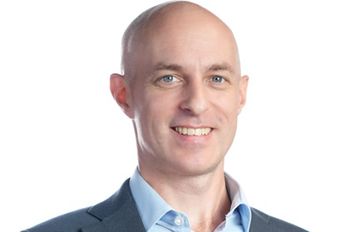
Pierre Marechal, vice president, Strategic Advisory & Asset Management, JLL Hotels & Hospitality Group
One fundamental of Vietnam’s hotel market is its huge
domestic travel market. It was the buoy that kept hotels afloat during the
pandemic. Vietnam’s population is around 100 million people and they love to
travel. Revenge travel started in 2022 and, in 2023, Vietnam recorded 108
million domestic trips, surpassing 2019’s level of 85 million. This was partly
because flight capacity to travel overseas was limited and expensive.
There is some concern that locals now seem to crave for
outbound travel, especially within visa-free ASEAN, not to mention that travel
costs of holidaying in the neighboring countries are often lower than at home, Foerster
said. “This may reduce hopes for a significant uptick in domestic tourism this
year,” he said.
But Marechal believes growth in foreign arrivals this year
will balance it all out, resulting in “a stable overall demand” for hotels in
2024. GMs of operating hotels he spoke with during his trip said they are
positive about Q3 results and expect a full year positive GOP, he said.
Foerster agrees, noting that new direct flights – mainly by
Vietnam's low-cost carrier VietJet Air – from China, India, Southeast and
Northeast Asia, and Australia could drive more inbound tourism. Nonetheless,
infrastructure challenges such as overwhelmed airport facilities and
inefficient ground transport, could pose hurdles. “The situation at immigration
lines, particularly at Ho Chi Minh City’s Tan Son Nhat Airport, is abysmal.
Construction of a new airport is underway but nowhere soon to be completed,” he
said.

There will be good opportunities for acquiring underperforming owner-operated hotels and rebranding them with international operators to improve the performance and asset value.
Michael Piro
Piro said 2024 will be a better year for Vietnam hotels than
2023, thanks to the expected full return of Chinese visitors. “We saw Chinese
arrivals increasing steadily throughout 2023, albeit falling short of 2019
numbers. We have seen relations between China and Vietnam improve last year and
expect that the Chinese market will really recover in 2024,” he said.
Investment opportunities
Piro also foresees increased M&A activity in hotel
investment in Vietnam this year, saying cost of borrowing is projected to drop
and market recovery is steady. “There will be good opportunities for acquiring
underperforming owner-operated hotels and rebranding them with international
operators to improve the performance and asset value,” he said. Nearly 80% of
Vietnam’s hotel market is non-branded, according to Piro.
Indeed, opportunities await savvy investors to enter or
expand their position in Vietnam at a favorable price point in a distressed
market, added Marechal. In the major cities, there are opportunities to
redevelop existing hotels and convert independent properties into branded
hotels. In resort destinations, distressed and reclaimed assets have become
available at attractive prices, he said.
As for locations, Foerster believes investors would do well
to follow the development of infrastructure access such as highways to more
secluded areas that boast tranquil forests, mountains and beaches, and build ultra-luxury
hotels offering private and serene experience. “This represents a growing
market segment,” he said.
Or, fully explore the Vietnam coast from south to north as
Marechal and his wife Janine did for nearly a month and discovered that beyond
ghost buildings are the diversity of scenery, culture and cuisines, as well as
friendly people who are eager to communicate. And fun – they were invited to an
impromptu karaoke session by the beach of Quy Nhon by a group of young
Vietnamese singing with their own portable microphones.
The best surprise? A special lane for motorcycles.