A
bailed-out Sri Lanka is seeing arrivals rebound and there are other good
reasons for investors to be more curious about hotel development there.
SRI LANKA – It
isn’t raved about like the other South Asian country India, but Sri Lanka is
starting to become more interesting with the imminent opening of a mega-integrated
resort and as the destination strives this year to match or, some dare say, surpass
2018’s record arrivals of 2.3 million. As of August 11, Sri Lanka has already
reached 85% of last year’s 1.5 million arrivals.
John
Keells Holdings, the country’s largest conglomerate whose business includes
Cinnamon Hotels & Resorts, is forking out substantial pre-opening costs for
its 687-key Cinnamon Life hotel debuting in October at City of Dreams Sri
Lanka, a 4.5 million square feet waterfront development in Colombo which the
company initiated.
Melco
Resorts & Entertainment, having been granted a 20-year license in April, is
spending $125 million to fit-out and equip a demarcated gaming space at the
site. It is also developing a 113-key hotel under its brand, Nuwa, scheduled to
open next year.
When
fully completed in mid-2025, the $1 billion City of Dreams Sri Lanka will also
feature offices and residences.
At
one go, 800 keys from a single project are being added in Sri Lanka’s
fragmented hotel sector. Out of a total 4,346 accommodation establishments,
only 168 (4%) are classified tourist hotels providing 16,686 rooms, or an
average of 100 rooms per property. The rest comprises guesthouses, bungalows,
homestays, lodges and others, bumping up the total number of rooms in Sri Lanka
to 53,229 in 2023, according to Sri Lanka Tourism Development Authority (SLTDA)
data.
Made
for post-COVID
A
tourist image of Sri Lanka is typically of verdant rice terraces, rich culture
and heritage, exciting wildlife and adventure, and indeed, the diversity of
small and medium-size accommodations offering personalized service. It’s an
image made for post-COVID travel, as seen by the 107% year-over-year increase
in arrivals to nearly 1.5 million in 2023.
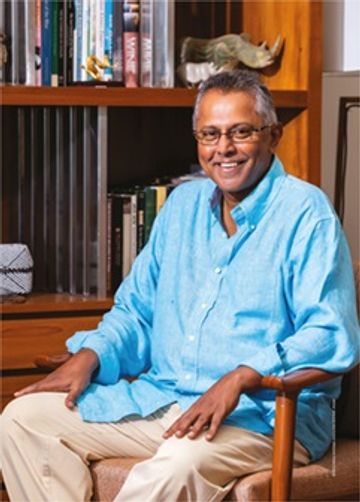
Hiran Cooray, chairman, Jetwing Symphony and The Lighthouse Hotel
The
hotel investor view, however, might have been of a country declared bankrupt in
April 2022 due to economy mismanagement and impact of the pandemic on key
sectors such as overseas workers remittance, textiles and garments, and
tourism, its three top earners in that order. But that perception is gradually
changing as an IMF debt restructuring program continues to progress well, and
with the strong growth in arrivals.
“Confidence
levels in tourism are high now. The [economic] progress in the past 24 months
has been better than expected. We are grateful to the international donors, the
current administration, and the governor of the Central Bank of Sri Lanka for
helping in the recovery,” said Hiran Cooray, chairman of Jetwing Symphony and
The Lighthouse Hotel.
Jetwing
invested US$10 million in the past three years to uplift existing properties
and introduce new villas. It also bought a boutique resort, Saman Villas in
Bentota, and is opening a 16-room hotel, Sigiriyaya, located next to its
eco-luxury resort Jetwing Vil Uyana. As well, it forayed into the F&B
business with a rooftop restaurant and bar, Virticle by Jetwing.
Describing
the continued investment in Sri Lanka’s hospitality sector as his “best
decision,” Jetwing’s Cooray said, “COVID and the [country’s] internal political
upheaval strengthened our resolve even more. Sri Lanka is a unique destination.
The warmth, cheerfulness and resilience of the people cannot be taken away.”

COVID and the [country’s] internal political upheaval strengthened our resolve even more. Sri Lanka is a unique destination. The warmth, cheerfulness and resilience of the people cannot be taken away.
Hiran Cooray
Last
year, 34 projects contributing 1,273 new rooms were approved. They amounted to
an investment of $170 million, the highest since 2019. However, that investment
volume is low compared with 2019’s $756 million from 57 approved projects with
2,027 rooms, SLTDA data shows.
Noesis
Capital Advisors, India & South Asia’s hotel investment advisory and
consulting firm, expects a bigger volume of investment in Sri Lanka this year.
Said
CEO Nandivardhan Jain, “The Sri Lankan hotel market is cautiously optimistic as
it begins to recover from recent crises. While last year saw limited investment
due to political and economic challenges, this year promises to be
different.
“With
the IMF bailout stabilizing the economy, we expect to see increased investment
activity, especially in acquiring distressed assets and refurbishing
properties. Although investment volumes may edge closer to pre-crisis levels,
the pace of full recovery will still depend on the global economic landscape
and local political developments.”
Investment
opportunities
Jain
sees opportunities in the upscale and luxury segments, especially in Colombo
and the southern coastal areas. There is rising demand for properties catering
to high-spending, experience-driven tourists, he said. Boutique hotels,
eco-resorts and wellness retreats stand out, aligning with the growing trend
towards sustainable tourism.

Nandivardhan Jain, CEO, Noesis Capital Advisors
“Luxury
hotels in Colombo and popular coastal areas are maintaining healthy margins,
while budget hotels and guesthouses are feeling the strain from rising
operational costs. As tourism numbers recover, profitability should improve,
but effective cost management will be crucial,” Jain said.
He
also believes that Port City Colombo, positioned to become a business hub, is a
strategic investment opportunity. “Hotel developments within this SEZ [special
economic zone] can cater to business travelers, luxury tourists and long-stay
visitors. Investors should also keep an eye on emerging regions like the
Eastern Province, where infrastructure developments are opening up new areas to
tourism,” Jain said.
On
the horizon are also promising developments such as the expansion of Colombo
International Financial City and the modernization of airports, he added.
Additionally, the government’s focus on improving road connectivity and
developing secondary airports will enhance access to emerging tourist
destinations.
But
will a presidential election this September 21 create a wait-and-see effect on
investors? Jain said it might. However, investors with a long-term perspective
may view it as a prime opportunity to enter the market at favorable valuations.
“Local financing may be difficult, but international investors with access to
external capital are likely to find an advantage,” he said.
According
to Jetwing's Cooray, the three front-runners to the presidency have pledged to
focus on tourism as a key driver of the economy. “We don’t see much disruption
as all their campaigns have been peaceful. Many have been campaigning digitally.
Therefore, crowd movements and disruptions have been minimized. We expect 2025
to be even better than the current year,” Cooray said.
Investors should also keep an eye on emerging regions like the Eastern Province, where infrastructure developments are opening up new areas to tourism.
Nandivardhan Jain
John
Keells Chairman and CEO Krishan Balendra said during a recent earnings webinar
that the main parties have broadly committed to the current economic path with
the IMF program. So, there’s no cause for concern on economic volatility or
uncertainty beyond the election.
Cinnamon
spices up Colombo
Balendra
declined to give a specific guidance on occupancy for Cinnamon Life but it’s
clear the company hopes it will be high. “If you look at integrated resorts in
the region, be it Singapore or Manila or Macau, they operate at high
occupancies of well over 80%. That’s one way of looking [at it]. But Colombo is
new for integrated resorts; it doesn't mean it will follow the same pattern.”
In
an interview with Hotel Investment Today, Dileep Mudadeniya, John Keells head
of Corporate Affairs, said a key target market for City of Dreams Sri Lanka is
the intra-regional countries within a travel radius of six hours, such as
India, Dubai and the Far East. This is especially during the country’s monsoon
season typically from May to October.
“They
[the intra-regional markets] love culture and beaches but also city life, food,
events, concerts and such. An hour’s drive from Colombo will take them to Sri
Lanka’s cultural and beach spots; within 2.5 hours, they can see wildlife. So,
within three days, they can do all three. We are creating new demand that will
benefit everyone, not just us,” he said.
“Our
idea is that Colombo city becomes more attractive,” Mudadeniya continued. “Look
at examples such as Marina Bay [Sands] Singapore; it has everything for the
whole family, not just gaming but entertainment, etc. Sri Lanka can produce
this, plus all the other highlights as mentioned that can be reached within a
short period of time, providing tourists with the highest diversity of
attractions.”
Prospects
for non-gaming businesses such as meetings, exhibitions, events and destination
weddings are also high. “We have many conference halls, ballrooms and
exhibition centers [at the resort],” he said.
When
probed for average room rate expectations, he said $200 including taxes is their
“aspiration.”
But
is having a world-class casino a good thing for the country?
Ben
Lee, managing partner of IGamiX, a gaming management consultancy, said it is. “Hopefully
the integrated resort will be able to develop international tourism for the
country,” Lee said. “Having a casino there will obviously enhance Sri Lanka’s
revenue. But I hope they don’t depend too much on the casino to drive the bulk
of the revenue, which is usually anywhere between 70% and 90% around Asia – in
Macau it's 95%. I hope they can develop the non-gaming aspect of the resort,
which is how they can draw the India business, such as the upper middle class
who are not yet rich enough to throw weddings in Europe or the Mediterranean
but for whom Sri Lanka would be a significantly reasonable alternative.”
According
to Lee, the Indian market is not really a gaming market, with the exception of
a handful of uber rich Indians who will go to Monaco or London to be seen and to
gamble in the Mediterranean or the U.K.
He
doesn’t think it will spoil Sri Lanka’s image as a culture and nature haven
either. “That path is pretty well beaten now. So, this development, in fact,
could rejuvenate the tourism industry and give it a new oomph like Marina Bay
Sands did for Singapore,” Lee said.
Jesper
Palmqvist, STR senior director APAC, said Sri Lanka does not enjoy the
attention that India is getting these days, but at least it is moving finally
in the right direction. “It’s not for everyone, perhaps, but neutral [industry
people] would want them to succeed since it’s a beautiful place with great
potential and wonderful people.”