The
top-end of the market isn’t so easy to bundle, but time is the ultimate filter.
ASIA
PACIFIC – While the Caribbean and Mexico have long mastered the art of ‘everything-included,’
Asia is still finding its footing with the model in a region synonymous with
bespoke, itemized service.
Global
hotel chains have been hyping an upper upscale and luxury all-inclusive
revolution in Asia since the leisure travel boom post-COVID. But so far, it’s
been a slow burn rather than a wave of openings.
The
debut of the Paradisus by Meliá Bali in February, and a phase one opening of
Rixos Phu Quoc in Vietnam sometime this year, tell a tale of patience.

Owners’ appetite for scaled, pure luxury all-inclusive brands in Asia remains selective. Owners are watching closely, but few are prepared to be early adopters at scale.
Leanne Reddie
It
took years for Meliá Hotels International to convince the owner of the Meliá
Bali to go all-in. After all, the resort, located in Nusa Dua, was a money
machine since opening 40 years ago. But a dip-a-toe-in-the-water by offering
some all-inclusive options at the property proved “the numbers were very good,”
said Gonzalo Maceda, Meliá’s vice president development.
“When
30% of sales was all-inclusive and the GOP of the hotel jumped 20% from the
previous year, the owner became convinced,” Maceda said. “The property was also
planning a renovation [its first since 1985]. So, it was a good opportunity to
[re-conceptualize] the resort as a Paradisus.”
Rixos
Hotels tried to enter Asia in 2008 with the Rixos Premium Khao Lak. It lasted a
year – the hotel was converted to a JW Marriott. This was before Rixos sealed a
joint venture with Accor in 2017. Accor then announced it had signed two Rixos
resorts in Vietnam, one in Nha Trang, the other in Phen Thiet, slated to open
in 2025. Both didn’t happen. This year’s opening of Rixos Phu Quoc, a Sun Group
property, may be more long-lived.
Asia
is a “long-memory market,” said Leanne Reddie, chief commercial officer of
Global Asset Solutions based in Singapore. This implies that short-lived
repositionings can still shape market sentiment. Moreover, there’s “a
perception risk” across much of Asia that all-inclusive equals mass or
midscale, Reddie observed.
“Owners’
appetite for scaled, pure luxury all-inclusive brands in Asia remains
selective. Owners are watching closely, but few are prepared to be early
adopters at scale,” she said.
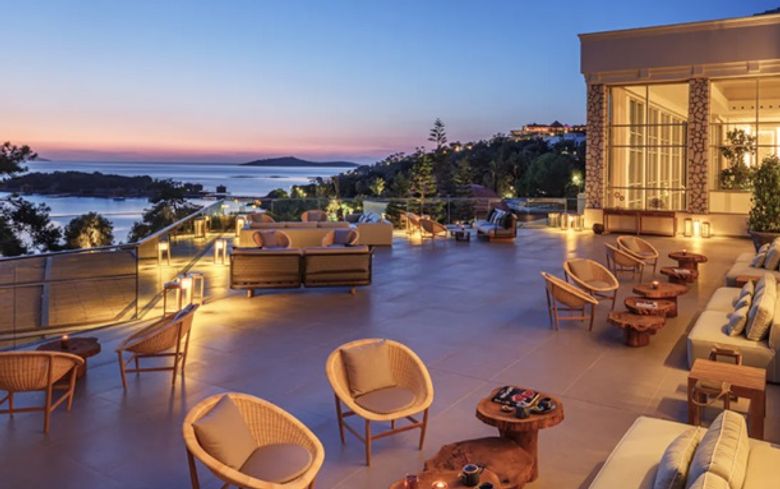
Rixos Phu Quoc, a Sun Group property in Vietnam
That’s
one reason why the all-inclusive revolution is stuck in the lobby. Owners need
to see how dedicated all-inclusive brands remove the buffet-binge stigma and
create non-standardized concepts with a clear positioning to attract
sophisticated, well-heeled clients.
Pipeline
remains short: Paradisus Jomtien Resort, Pattaya, an Asset World Corp.
property, is scheduled to open in 2028. In Phuket, Splash Beach Resort will
undergo a major renovation and reopen as a Rixos, although no opening date has
been given. Club Med will announce its first Exclusive Collection Resorts
property in Southeast Asia in the coming months. And that’s roughly it, as of
now.
Careful
growth
To
be sure, chains themselves are selective about growth. Stephen Ho, Hyatt
president, Greater China, and Growth, Asia Pacific, said it’s less about
investor appetite, and more about “timing and disciplined expansion.”
Hyatt
is the player to watch as it is now the undisputed leader with 11 all-inclusive
brands, many in the upper-upscale and luxury bracket. So far, however, no
signing has been announced.
“In
Asia, both owners and operators are taking a thoughtful approach,” Ho said.
“All-inclusive is not a one-size-fits-all model. The economics of land, scale,
distribution mix and brand positioning must align to truly unlock value. We are
intentional about our growth, prioritizing the right destinations and the right
partners rather than expanding rapidly. This measured approach is healthy for
the long-term sustainability of the [relatively new] segment [in Asia-Pacific].”
He
sees strong long-term potential in the region for Secrets, Dreams, Hyatt Ziva
and Hyatt Zilara, in destinations with strong leisure appeal, air connectivity,
growing intra-Asia demand and favorable development dynamics. Priority markets
include Greater China, Japan, Southeast Asia and Southwest Asia.
All-inclusive is not a one-size-fits-all model. The economics of land, scale, distribution mix and brand positioning must align to truly unlock value.
Stephen Ho
Similarly,
Francois Baudin, Rixos chief business officer and ALL Inclusive Collection at
Ennismore, said, “For us, growth is not about speed; it is about selecting the
right markets where the Rixos’ luxury all-inclusive proposition can be clearly
differentiated and properly positioned at the premium end of the segment.”
Baudin
is “actively” pursuing further opportunities in Thailand and Vietnam, building
on the existing footprint.
Meliá’s
Maceda, too, is looking at Thailand (Phuket, Khao Lak) and Vietnam (Phu Quoc
and Cam Ranh), along with Indonesia (Lombok) and the Philippines. Echoing the
need to find the right markets, Maceda said, “All-inclusive is not for every
destination. Bali is a good example why it is right. For one, the traffic
[gridlock] today has made it impossible for guests to go beyond the area they
are in and explore Bali.”
Paradisus
by Meliá offers a ‘Destination Inclusive’ program that curates experiences
shaped by Bali's culture and way of life. Guests can dine and unwind on their
own terms, without the need to plan or coordinate day-to-day details.
Global
Asset Solutions’ Reddie applauds the flexibility, but cautions that
all-inclusive in general can be counter-productive for destinations. “Asian
destinations are often defined by culture, cuisine, landscape and off-property
experiences. In these contexts, a fully bundled all-inclusive structure can
risk diluting the value of the destination itself, limiting guest exploration
and compressing the experiential narrative,“ she said. “This is why, across
Asia, luxury resorts have traditionally favored flexibility and curation over
rigid all-inclusive formats, allowing the destination to remain central to the
guest experience rather than contained within the resort.”
Largely
exclusive?
Meanwhile,
how exclusive can a resort truly feel with 1,300 rooms and suites (scaled back
from 1,700) and 22 restaurants? Upon completion, the Rixos Phu Quoc will boast
nearly triple the inventory of the Paradisus by Meliá Bali, which offers 492
luxury suites and 11 dining venues.
When done right, it supports longer stays and deeper engagement with our guests.
Rajeev Menon
Rixos
has to prove that scale doesn’t mean soul-less. Perhaps owners will witness new
brands like Rixos unleashing unprecedented mastery at carving out dedicated
spaces – be it a resort-within-a-resort, or adults-only and multi-generational
zones – to cater to Asia’s diverse travel segments which yearn for exclusivity,
privacy and hyper-personalization.
This
nuanced approach is why Rixos sits within the Ennismore portfolio; the
partnership blends Rixos’ all-inclusive operational prowess with Ennismore’s
lifestyle design and F&B curation, and Accor’s massive distribution engine,
Baudin said.
Similarly,
Hyatt leverages a dedicated global all-inclusive team to provide Asian owners
with expertise in design, operations and commercial strategy.
With
new competitors emerging in Asia, Club Med, which pioneers all-inclusive in
Asia, is rising to the challenge. Said Sébastien Favre, Club Med’s vice
president development, construction & asset management, Southeast Asia
& Pacific, “Twenty years ago, our competition came from the lower end of
the market. Today, it’s the opposite, coming from luxury players. We are
prepared for this as essentially we now have a full portfolio, from upscale,
which remains our core, to luxury [Club Med’s Exclusive Collection Resorts],
which we intend to expand in Asia.
“We
have been operating in Asia for 40 years and have built a trusted brand with a
strong distribution arm; 75% of our sales are direct – we don’t work with OTAs,
but with partners in every market in the region who have been with us for
decades.”
Meliá’s
Maceda is “quite happy” about Rixos Phu Quoc opening soon. “We've been pushing
the segment ourselves for a long time. Now we have another player joining us in
doing so.”
And
increasingly, global chains like Marriott International are experimenting with
all-inclusive luxury in their hotels in Asia. This trend may encourage the
region’s elite to embrace the model, even as it pits traditional luxury hotels
against dedicated all-inclusive brands.
Rajeev Menon,
Marriott’s president, Asia Pacific excluding China, said, “As demonstrated by
our recent signing of Emirates Wolgan Valley, a Ritz-Carlton Lodge, we plan to
explore this model selectively with luxury brands like The Ritz-Carlton, where
it strengthens both the guest offering and long-term economics. When done
right, it supports longer stays and deeper engagement with our guests.”