Can Accor and InterGlobe jumpstart a two-decade-old
partnership in India with their new plan?
INDIA – Accor and its India partner InterGlobe Enterprises
are jumpstarting a two-decade-old relationship that has not progressed at
levels that can be expected of two tenacious conglomerates.
They are reshaping the structure of their partnership, which
suggests that it was flawed or out of sync as the companies evolve and change.
Or maybe it’s both.
They shook hands in 2004. InterGlobe was just five years old
and hotels was not its core competency. Neither was Accor streetwise about
doing business in India. And the sub-continent was a low rate and low rating
business to investors who preferred other asset classes such as healthcare or
technology.
Their partnership comprises two joint ventures and both are
asset-heavy, which does not sit well with Accor’s asset-light strategy. It also
appears that InterGlobe has greater control, through a bigger equity stake.
The first JV, InterGlobe Hotels, centers on the development
and management of ibis hotels in India, Nepal, Sri Lanka and Bangladesh.
InterGlobe owns 60% and Accor 40%. This has yielded 22 owned and operating ibis
hotels in India totaling 4,000 rooms.
The second JV, Triguna Hospitality Ventures (India), sealed
in 2010, is an investment fund for a portfolio of hotel assets in India. A
tripartite partnership, InterGlobe and Accor hold 32% equity each, while APHV
India, a JV between Singapore’s GIC Real Estate and Host Hotels & Resorts,
holds 36%. This portfolio comprises seven operating hotels with 1,700 rooms
with one Pullman, four Novotels and two ibis hotels.
Beyond this, the partnership has not produced anything else.
Marriott International, which entered India five years earlier than Accor and
is asset light from the start, has more than 150 operating hotels – twice as
many as Accor.
‘Bizarre’
In a session at HISCA recently, moderated by Hotelivate
founder Manav Thadani, Accor CEO Sébastien Bazin said “it’s kind of bizarre”
that the relationship was “not moving” despite Accor having “the best partner
we can dream of in India.”
In an interview last year with India media, Mint, Bazin put
it down to each party having other priorities. InterGlobe Founder Rahul Bhatia
was focusing on building the airline, IndiGo, while Bazin was transforming
Accor from an economy chain to an asset-light company with brands all the way
to luxury and lifestyle. As a result, both didn't spend enough time on their
partnership.
As it turned out, both got their priorities right: IndiGo is
hugely successful, while Accor has become a big lifestyle player with 17 brands
under Ennismore.
There is speculation, however, that the relationship soured
in 2012 when Accor sold 60% of Barque Hotels, its vehicle to develop Formule 1
hotels in India, to SAMHI Hotels. In 2018, SAMHI bought the other 40% and
rebranded the portfolio of 14 Formule 1 hotels as Holiday Inn Express.
A source alleged that the sale led to a dispute between
InterGlobe and Accor that went to arbitration in Melbourne and was settled in
favor of the Indian partner.
“It might be that there were clauses such as InterGlobe has
the first right of refusal, or that any economy development in India will only
happen with the InterGlobe joint venture, or that Accor was advised differently
by their legal advisers,” the source said.
“In emerging markets, where licenses are gray and laws are
opaque, you can’t manage a relationship based on legal representation. You need
to manage the bosses of the joint partners who have control of the judiciary
outcome,” the same source added.
Accor did not reply when asked to comment on the
arbitration.
Some industry observers also perceive InterGlobe’s European
foray as a sign that the partnership somewhat frayed. In 2019, InterGlobe
acquired Austria’s K+K Elisabeta hotel chain from Goldman Sachs, comprising 10
boutique hotels across London, Paris, Barcelona and Budapest, among others.
Instead of working with Accor, in 20222 it partnered with European third-party
management company Cycas Hospitality and launched its own brand, Mirro.
On stage with Bazin at HISCA, Bhatia said, “We decided to
launch the brand; Sébastien used to keep telling me maybe we can do something
together, but we wanted to try it [ourselves]. We launched the first product in
Paris in summer over the Olympic Games, then in Barcelona. London is opening
any day now, then Vienna in a couple of months.”
Fresh start
India’s hotel market is now everyone’s priority, and Accor
and InterGlobe managed to cobble together a new package that was nine months in
the making. It was announced at HISCA.
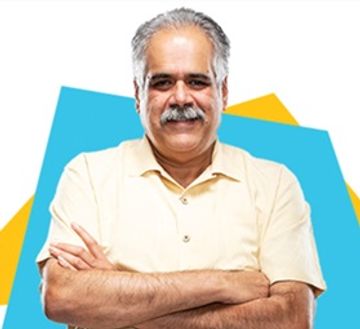
InterGlobe's Rahul Bhatia
Interestingly, Accor is going all out with InterGlobe, from
ibis before. All the existing owned assets, development and management
businesses in India will be pooled into a new entity, which will be the
exclusive vehicle to grow all Accor brands in India, including Ennismore. Accor
will continue to lead operations and brand management and provide full access
to its brands and services.
Accor won’t reveal the shareholding in the new unnamed
company. Thus, it is uncertain if the chain’s control has strengthened or
diluted compared to before.
“It will be joint ownership and controlled between the two
partners. We are not sharing the respective size of each partner,” an Accor
spokesperson said. “The name [of the new company] will reflect the
collaboration between InterGlobe and Accor.”
Bazin is clear, however, about the new arrangement being
asset light. “We are not going back on nine years of transformation,” he said
at the HISCA session.
IPO possibility?
Some observers, looking at the stack of the new company,
smell an IPO plan.
If all goes well, it will result in 300 hotels by 2030.
Additionally, both partners are investing in Treebo, which has the master
license for ibis and Mercure.
The Accor spokesperson explained: “Treebo is the fastest
growing hospitality player in the economy segment with strong technology
expertise. They know the market intimately and will be able to develop ibis and
Mercure brands at an accelerated pace. The rest of the Accor premium, midscale
and economy brands, notably Novotel and Pullman, will be developed directly by
[the new company]. This structure will help the company and the brands benefit
from Treebo’s scale, technology, and growth capabilities. Further, it will also
ensure the right level of focus and direction for the teams of the new entity.”

People say we were too slow for the first 20 years, but I say the fact that the relationship survived for 20 years speaks volumes about it. It’s obviously predicated on trust and goodwill, and a collective belief on where we want to go, and I'm mighty pleased we’re able to cross the line today.
Rahul Bhatia
Another stack is a collaboration between InterGlobe’s IndiGO
and Accor loyalty programs. The airline launched its program 4.5 months ago and
signed up 2.5 million members, according to COO Peter Elbers, speaking at
HISCA. IndiGO has also doubled to 40 its number of international destinations
in a short time frame, he said, and the network matches perfectly with Accor's.
Expect growth to continue as IndiGo has the largest order book of more than 900
planes to match future demand.
When asked about an IPO during his HISCA session, Bazin did
not rule it out. “On the one condition: do we need excess capital? If no,
there’s no need to add complexity. Both of us have plenty of experience with
capital; we certainly are going to be looking for many investors to come along,
then we’ll decide in a year, two or three years if listing is appropriate. But
it’s not in the cards today.”
However, a rumor is going around in India hotel investment
circles that the new entity is seeking “a CEO who is an investment banking and
financial market expert and has experience with IPOs,” a source said.
‘Speaks volumes’
As with any marriage, disputes and snubs, if there were any,
perceived or real, could be mended.
“People say we were too slow for the first 20 years, but I
say the fact that the relationship survived for 20 years speaks volumes about
it,” Bhatia said at HISCA. “It’s obviously predicated on trust and goodwill,
and a collective belief on where we want to go, and I'm mighty pleased we’re
able to cross the line today.”
He added, “Of course, like anything else in life, it’s how
well and quickly you can execute, and I think the new framework will give us
that ability.”
Bhatia said he has been watching Accor’s evolution under
Bazin’s leadership. “We truly believe we can create a vehicle that will
position Accor and its products [with] significant presence in the marketplace.
“We think hospitality in the organized sector in India is
still in its nascent stage. We truly believe over a period of time our [new
initiative] will be a very encouraging enterprise.”
Several times in the past, Bazin openly said at forums that
Accor “never made money in India, probably won’t make any money in India.”
May be the chain finally will.