The Denver-based private equity firm has already invested billions in
the hospitality industry, and there’s plenty of dry powder left in its latest
$2 billion fund.
DENVER — To hear John Ege
describe it, KSL Capital Partners isn’t so much chasing a common type of asset
as chasing the type of asset its core customer — which it describes as a “mass
affluent consumer” — wants to stay in.
“We’re
trying to find unique experiences and settings that we think they’d enjoy. So, that’s what we focus on,” said Ege, a partner at Denver-based private equity
firm KSL Capital Partners. “It’s less about where we are exactly in the chain
scale and more about where those mass affluent consumers want to vacation.”
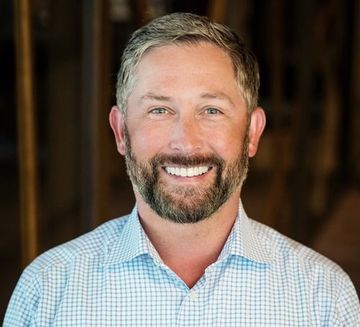
John Ege is a partner at KSL Capital Partners.
KSL
invests in travel and leisure in five sectors: hospitality, recreation, clubs,
real estate and travel services. It has already invested billions in the
hospitality sector in its extensive portfolio and recently announced the
closing of its latest travel and leisure fund: KSL Capital Partners VI, LP,
which has approximately $2 billion in capital commitments.
The
hospitality investments already made in that $2 billion fund have created
headlines, notably KSL’s acquisition of the Hersha Hospitality Trust for $1.4
billion last August. Another investment from that fund was KSL’s acquisition of
a majority interest in Torno, Italy-based Sereno Hotels, which owns and
operates a portfolio of luxury hotels, including properties in Lake Como,
Italy, and the island of St. Barthelemy. KSL also acquired San Luis Obispo,
California-based Martin Resorts, which owns five boutique independent hotels on
California’s central coast.
Ege
said the acquisitions fit the profile of where the mass affluent consumer wants
to stay and the type of property KSL has had success investing in over the last
30 years. “Generally,
we’re looking to focus on high-quality assets in high-barrier markets where we
think that our approach to both maximize the current state of the business and
invest in the properties to improve them [will work],” he said.
More
importantly, Ege said KSL still has a lot of dry powder in that current fund.
He said KSL typically would make 15 to 20 investments, approximately, in a fund
like that, and it’s currently only made six.
Although
Ege said that the pace of transactions is “a bit slower” for KSL, the company
has “still been able to find interesting investment opportunities over the last
12 months.”
About the “mass affluent consumer”
A
lot of what KSL has invested historically in hospitality is in the luxury and
upper upscale space. But that approach has broadened into other areas primarily
because of the behaviors of the mass affluent consumer (think college graduates
with an average household income of $125,000-plus or higher in today’s inflationary
environment, a top 15% to 20% income earner in the U.S.). That means the locations
KSL chooses to invest in have changed over time, too.

I wouldn’t say that we necessarily have targeted markets; we’re just tracking that core consumer, trends and where they’re going, and then looking to invest in properties there. So, maybe there is a location [we are targeting], but I’d say that’s changed over time, just as consumer preferences have changed.
John Ege
“I
wouldn’t say that we necessarily have targeted markets; we’re just tracking
that core consumer, trends and where they’re going, and then looking to invest
in properties there,” Ege said. “So, maybe there is a location [we are
targeting], but I’d say that’s changed over time, just as consumer preferences
have changed.”
As
for the trends of that core customer, Ege said they have changed post-COVID,
notably with the overall trends of an increased focus on customers spending
more on experiences than consumer goods and the emphasis on leisure. “We’ve
seen in our customer research continued high interest and intent to travel,
which remains significantly elevated versus long-term averages,” he said. “In
terms of things that maybe have changed, probably the biggest is the blurring
between leisure travel and business travel.”
Hospitality v. other asset classes
Ege
said current supply-demand dynamics create interesting trends that make
hospitality a great investment. “We’re
always looking at industry fundamentals, and right now, we see a really
interesting supply-demand dynamic,” he said. “If you look at projected demand,
most industry groups expect that to be roughly 70% above the historical average
going forward. But if you contrast that to projected supply, right now, it’s
expected to be roughly less than 50% of the historical average.
“When
you look at why, on the demand side, we believe there’s been a broad shift in
travel prioritization. We see a muted supply outlook. If you’re
expecting higher-than-average demand and lower-than-average supply, that should
be quite good for the industry overall. So, that’s what we generally see in our
forward outlook in hospitality.”
Portfolio v. individual assets
Ege
said KSL typically takes a platform approach to real estate investments. He
said sometimes the company will see that one vertically integrated company that
owns and operates companies and has a brand as well (he mentioned Alterra
Mountain Company, which KSL announced in January it had a single-asset
continuation vehicle of over $3 billion to invest in the Denver-based ski
resort company).
Ege
said 60% of KSL’s investments have been in hotels and resorts, mainly in the
latter, while 40% have been in various leisure and recreation properties. He
said there is a commonality to most of the single assets KSL owns, and it
usually involves another KSL investment.
“Generally,
those single assets that we acquire are managed by one of our owned or
affiliated hotel management companies,” Ege said. “It is still a vertically
integrated approach, typically, but sometimes, we’re investing in individual
properties managed by one of our platforms, as opposed to something more in a
consolidated entity.”
The value add for KSL
Ege
said KSL is always looking for investments that can add value through capital
management. Once those are implemented, the company can consider disposition. “Historically,
we’ve increased (net operating income), on average, across all of our realized
investments by 80%,” he said. “In terms of hold period, it ranges quite a bit… It all
comes down to our value creation plan. Once we’ve implemented our initiatives
or invested all the capital, we usually look to harvest investments and return
capital to investors.”
Many of our properties will have ancillary revenue streams. One of the things we love to do is take those back in-house. Instead of leasing out the restaurants or spas and outsourcing management for the golf courses, we love to insource that and run it all ourselves.
John Ege
Ege
said for its properties, KSL hasn’t seen the softening of luxury ADRs that
others in the industry have been talking about. “Our
bookings are still up in aggregate globally by 10% year-over-year,” he said.
“We’re usually looking for highly differentiated properties that offer unique
experiences, which we think the customer wants, and perhaps that’s what’s
driving the continued demand.”
Ege
said KSL is generally looking for properties where the company can add value
through enhanced marketing, management, or improved CapEx. The company can
employ a range of strategies, but one approach has had a lot of success: the
opposite of outsourcing.
“Many
of our properties will have ancillary revenue streams. One of the things we
love to do is take those back in-house,” he said. “Instead of leasing out the
restaurants or spas and outsourcing management for the golf courses, we love to
insource that and run it all ourselves.”
He
said that approach can often improve not only the customer experience and
satisfaction scores but also increase ROI. “It
really increases the on-property spend, which ultimately flows through the
bottom line,” Ege said.