Its
major revenue source, Hong Kong, hasn't fully recovered but that hasn’t stopped
the holding company of Peninsula Hotels from keeping its assets as shiny as its
Rolls-Royce fleet.
HONG KONG – Having
opened a Peninsula hotel in London and Istanbul, Hongkong and Shanghai Hotels
is giving Peninsula New York a facelift next.
Capital
spending never stops at this company, which is steadfast about owning and
operating only one Peninsula hotel in each city and increasing its asset value
and operating yield over time by maintaining the finest quality. Its flagship,
Peninsula Hong Kong, is valued at more than HK$12 billion ($1.5 billion) today
and Its total assets as of end-2022 are worth HK$57 billion ($7.3 billion).
The
renovation of Peninsula New York is starting even as the group faces challenges
elsewhere. Hong Kong, its main revenue source, hasn’t recovered fully. The
London project was fraught with problems such as delays in obtaining approvals,
design and project coordination issues, and labor shortages and site closures
due to COVID-19. This led to the budget rising by £200 million to £1 billion.
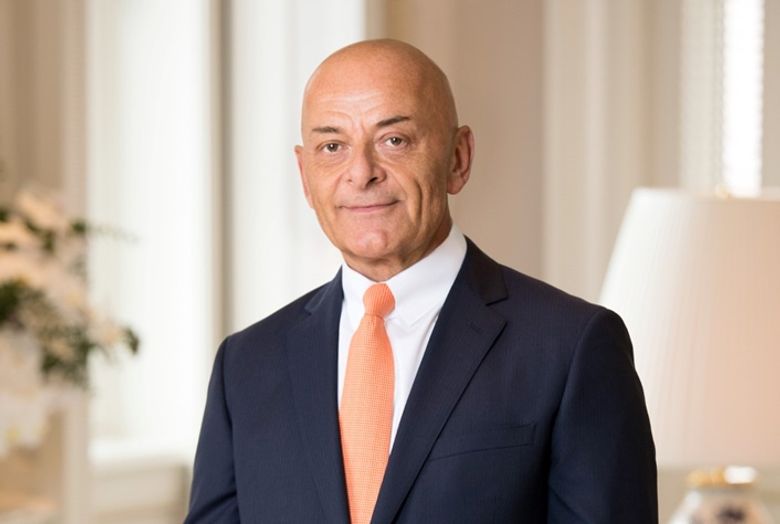
Hongkong and Shanghai Hotels COO Peter Borer
“We’re
starting the renovation now [of Peninsula New York] and hopefully it will be
finished by the end of next year,” said Peter Borer, Hongkong and Shanghai
Hotels COO, in an interview with Hotel Investment Today. “We’re doing new rooms
and suites, lobby and the rooftop bar. That bar is doing very well because of
its views of Manhattan. So, we're going to make it more contemporary. The rooms
will have fresh [design] and in-room technology.”
Looking
West
As
Hong Kong dawdles its way back to normalcy while recovery in Asia is mixed, the
company is looking West, especially to Europe, for further expansion.
“We
have a lot of territory to cover now in Europe, which may be we didn’t do in
the past. Paris was alone for almost 10 years. So, I’m delighted we now have
three hotels in Europe [Paris, London, Istanbul] because that gives us the
critical mass to start penetrating a market like Germany, Spain or [others].
And that’s what we’re doing now,” Borer said.
Unaudited
3Q23 operating data shows a healthy average room rate for Peninsula hotels in the
U.S. (New York, Chicago and Beverly Hills) and Europe. At HK$8,531 ($1,094),
it’s way higher than the HK$6,276 ($805) achieved in 3Q18 (note: 2018 is the
benchmark, as Hong Kong was already severely impacted by student protests in
2019 before COVID-19 came in 2020).
On
recouping the £1 billion spending on Peninsula London, Borer said it’s a long-term
investment that would benefit the company because of the hotel’s location,
asset appreciation and sale of residences, which has done well. The hotel, with
190 rooms and 25 Peninsula-branded residences, is located in Belgravia and
offers views of the gardens of Buckingham Palace.
“We’ve
been open since September 12 and we are already the rate leader in London. The
grand opening will be in June next year and, so far, we are seeing a good
uptake,” Borer said. “We have the largest rooms in London – the smallest is
about 54 sqm. And we have an amazing variety of rooms and suites that we can
combine for big delegations or big families.

I’m delighted we now have three hotels in Europe [Paris, London, Istanbul] because that gives us the critical mass to start penetrating a market like Germany, Spain or [others]. And that’s what we’re doing now.
Peter Borer
“I
wanted to give London a hotel full of light because London is quite dark. So,
we have big windows that take in a lot of light. We also had the great fortune
of working with [American architect] Peter Marino. I wanted Peter to give us a
hotel that is contemporary yet timeless and I think he’s achieved this well. So,
you won’t see the traditional English period furniture; you'll see something
that appeals more to the modern traveler.”
When
asked about a big takeaway from the project’s cost overruns, Borer said, “I
must tell you that I find the London construction industry very unappetizing.”
After
a pause, he added, “I’ve done every Peninsula hotel – sounds dreadful doesn’t
it? But they are all like my babies; each has a different story. The London
story would be one of COVID, Brexit, lots of unknowns, surprises. This compares
to Istanbul, which was relatively easy despite challenges. There’s an extremely
can-do construction mindset in Istanbul, really working in the best interests
of the customer and getting it done. So, I’ve totally fallen in love with
Türkiye.”
The Istanbul
hotel opened on February 14, a week after two devastating earthquakes hit south
and central Türkiye. Istanbul wasn’t affected.
“Unfortunately,
the earthquake happened virtually the week before we opened, which was
extremely sad. We started to do well but now there’s the conflict between
Israel and Palestine. And believe it or not, it leads to cancellations in
Istanbul. People don’t get their geography right anymore,” Borer said.
Mabrian,
a travel intelligence firm, said it has seen a far-reaching drop in the safety
perception of destinations surrounding the conflict area, even in the UAE,
which is more than 2,000km away. Closer areas such as Jordon and Egypt suffered
the most dramatic drop in safety perception, around 18% and 20% respectively,
it said.
Over
the moon
Hongkong
and Shanghai Hotels is also diversifying revenue sources to help offset “the
cyclical nature of the hotel business.”
An
interesting development is the expansion of Peninsula Merchandising, which
develops Peninsula-branded merchandise, including the famous Peninsula
Mooncakes, artisanal chocolates, high-quality tea and other fine gifts.
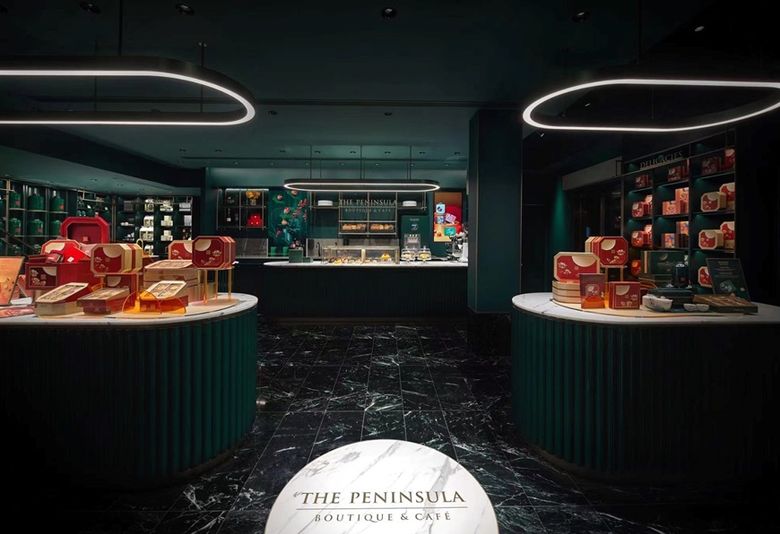
The first standalone Peninsula Boutique & Cafe in Xintiandi, Shanghai
Sales
are through Peninsula Boutiques at Peninsula hotels where available, and direct
website, but the company has now developed a new Peninsula Boutique and Cafe
concept store, and is opening free-standing ones, just like fashion brands such
as Dior or Louis Vuitton have done cafes and restaurants.
In
September, it opened the first free-standing Peninsula Boutique and Cafe in
Xintiandi, Shanghai.
“We’re
on the verge of a big expansion in China. We’re going into department stores in
Shanghai and other parts of China. We’re just about to do one in Paris,” Borer
said.
Borer
added that Peninsula Merchandising started as a very small business, at the
boutique inside the Peninsula Hong Kong and has now grown quite substantially. “In
Hong Kong, we’re controlling almost the market in mooncakes – it’s become a
really big business,” he added.
Such
a revenue stream is an example of why an insistence on brand purity and quality
pays off. “Despite only having 12 hotels, we are well recognized as a quality
hospitality brand. We now have a good platform to take the name Peninsula and
use it in other connections to tourism, hospitality, lifestyle,” Borer said. “I
feel strongly about brand purity and, to me, our brand is quite valuable.
Hence, we need to maintain it because if we become mediocre we have no right to
exist.”
The
backbone
Although
it is diversifying, Hong Kong remains the backbone of the company unlike, say,
Minor Hotels, which was at first dependent on its base Thailand but now gets
70% of revenue from Europe, where 61% of the portfolio sits.
The
legendary 300-room Peninsula Hong Kong enjoyed an average room rate of HK$6,603
($847) in 3Q23, more than twice as much as Peninsula hotels in ‘Other Asia’
(i.e. Shanghai, Beijing, Tokyo, Bangkok and Manila), which had an average rate
of HK$3,222 ($413).
Hong Kong was a bit of a victim of geopolitical tensions. And that’s unfair to Hong Kong. We continue to be a free society, we’re vibrant and we are one of the safest cities in the world.
Peter Borer
So, while
the average occupancy of its hotels in Other Asia has surpassed 50%, unlike in
Hong Kong, the grand dame’s RevPAR of HK$2,489 ($319) in 3Q23 was 43% higher
than hotels in Other Asia, the latest unaudited figures show.
Aside
from Peninsula Hong Kong, the company also owns commercial properties in the
city, including the high-end residential building Repulse Bay, and the Peak
Tram, one of Hong Kong’s most popular tourist attractions.
And
true to form, despite COVID-19 and political tensions in Hong Kong, the group
went ahead with a comprehensive HK$799 million ($103 million) upgrading of the
Peak Tram, which reopened last year. In 2021, it also undertook a major
renovation of the Peninsula Arcade in Hong Kong with the aim of providing
high-end lifestyle amenities and retail offerings for local guests.
When
asked why Peninsula occupancy still lags behind 2018 level, reflecting that
high-spending travelers aren’t back in force in the city, Borer said, “Hong
Kong was a bit of a victim of geopolitical tensions. And that’s unfair to Hong
Kong. We continue to be a free society, we’re vibrant and we are one of the
safest cities in the world.
“Hong
Kong’s recovery is slower than other parts of the world due to an image problem
that Hong Kong is suffering from. And what should one do? One should really ask
the Hong Kong Tourism Board and all the associated [agencies] to come up with a
convincing communication strategy that goes into the key markets of the U.S.
and Europe, assuring people of Hong Kong’s vibrancy, of it being incredibly
cosmopolitan, being the good old Hong Kong that’s so admired in the past while
being a proud part of China.”
He
stressed that Hong Kong needs to go back to a more international base, saying,
“Right now, there’s a strong concentration [by the tourism authorities] of
bringing in as many mainland tourists as possible.”