The prolific, big box project developer recognizes the need to acquire
assets where their ability to execute complex renovations can drive better
returns.
ATLANTA – A sign of the times – a premier project developer
with five decades of experience over three continents turning to acquisitions
to better drive shareholder return. Such is the evolution of Portman Holdings, 70-year
architect/developer of large-scale mixed-use developments, who in late July
acquired from Host Hotels & Resorts the 456-key Westin Cincinnati, marking its
first-ever hotel acquisition and the official launch of its value-add strategy.
With ground-up development of bigger boxes so challenging to
find, the Portman principals are taking a new tack, acting as the real estate
general partner, sourcing acquisition deals, putting together the business plans,
using its alpha to manage complicated capex executions, and putting the capital
stacks together mostly in-house through its many and varied debt and equity
partner relationships. Hold periods are more flexible, upward of seven years,
to drive profitability for more complex projects, according to Managing
Director of Hospitality Kaunteya Chitnis.
“Sellers are really thinking hard about whether they want to
execute that capital renovation cycle, whereas that is our business plan,”
Chitnis explained. “So, this is a great opportunity to match up the sellers
that need to exit for a variety of reasons, and us as the buyer looking
specifically for this type of bigger, full-service product.”
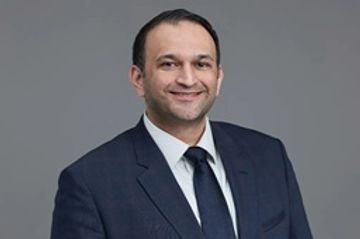
Portman's Kaunteya Chitnis
Case in point, the Westin Cincinnati, irreplaceable real
estate in a major market and the potential to create long-term value through
thoughtful investment and operational enhancements, according to Chitnis, previously
a senior vice president with MCR. “It’s a product of really being disciplined
on what we’re looking for,” he added. “For us, the box is so well defined, and
there’s a somewhat limited number of opportunities that fit this exact
acquisition strategy. So, I’d imagine we will be very active as the mechanics
of these events we speak about come to a head.”
Getting the Westin Cincinnati deal done also gave Portman
some proof of concept, according to Chitnis, because from a timing perspective
they were able to weather the macro storms and still close the deal with their
partners. “We have a very focused and long-term business plan for that
particular asset. The execution of this, despite the challenges that were
thrown at us, is a great testament to what the platform can achieve when you’re
all rowing the boat in the same direction,” he said.
Opportunity set
Chitnis is looking at the next 12 to 36 months being very
active for Portman and he believes they could do several deals a year. He said
there should be a number of products that matches very well and where they can
add a lot of value.
“We are a great engine for the recycling of intellectual
property in the hotel space and bringing the more impactful, iconic brands to
where they need to be for the next cycle of that box’s useful life,” he said.

We are a great engine for the recycling of intellectual property in the hotel space and bringing the more impactful, iconic brands to where they need to be for the next cycle of that box’s useful life.
Kaunteya Chitnis
Expected returns should range from mid- to high-teens cash-on-cash
with a longer hold period of about seven years to accommodate the more
sophisticated capex executions and higher multiples on invested capital in the
out years of the investment.
“Generally speaking, we’re underwriting to those levels and
to 20%-plus IRRs,” Chitnis said. “But we also are very realistic with the
timing and the complexity of executing thoughtfully these comprehensive
renovations.”
When asked what big box deals Portman has and will pass on revolves
around realistic expectation about the capital renovation execution and whether
it can get where it needs to go from a stabilized yield perspective. “It’s
going to take significant resources – both capital and time – and you need to
have a very good view of how risk adjusted that growth is after the renovation.
“So, the number one reason we’re passing on deals is a
disconnect between the seller and the buyer on what is actually needed to get
that renovated product where it needs to go, which absolutely affects the
purchase price that you can bid to get comfortable.”
Secondly, as a prolific developer, Chitnis said Portman applies
those practices on these big renovations as building for several years down the
road. They need to understand the NOI growth potential and the return they will
get on that investment. “If you're taking it from a perspective of a developer,
you’re going to view that very differently than buying an acquisition of in
place cash flow from a competitive standpoint,” he said.
While Portman will continue to capitalize these new
acquisitions on a case-by-case basis, Chitnis added that he sees an opportunity
to raise a fund around this strategy to create more discretionary capital. For
now, however, he said Portman has a proven track record of executing deal-by-deal
and that will remain the strategy for the near term.