Olive
by Embassy recently signed a deal with Hilton to introduce the Spark brand in
India and add 150 hotels in 10 years. Here’s how the deal came together and why
it won’t just be for conversions.
BENGALURU, India — Olive by
Embassy became a hotelier by accident because of opportunities during the
pandemic. However, the company’s plan to rapidly expand Hilton’s Spark brand in
India is anything but accidental.
“What Hilton is doing with Spark
sounds very familiar to us [because] that’s exactly what we’ve been doing,”
said Kahraman Yigit, co-founder and CEO of Bengaluru, India-based Olive by
Embassy. “We’re getting our hands on many properties which we feel could be
suitable for this brand.”
Earlier in November, Hilton
signed a strategic licensing agreement with Olive by Embassy to introduce the
Spark brand in India (the first in Asia Pacific) and open 150 premium economy
hotels across the country. The first Spark by Hilton hotels will open in
Southern India with a focus on Maharashtra, Andhra Pradesh, Telangana, Goa,
Karnataka and Tamil Nadu.

In a lot of the cities, we’re not finding too many suitable buildings to convert. When there’s a shortage of that, then that’s when the greenfield comes in, especially for tier 2 or tier 3 cities.
Kahraman Yigit
Hilton already had a
long-standing partnership with Olive by Embassy’s parent company, The Embassy
Group, one of India’s largest real estate developers with verticals in
commercial, residential, coworking, educational and more. Embassy owns the
Hilton Bengaluru Embassy Manyata Business Park and Hilton Garden Inn Bengaluru
Embassy Manyata Business Park in India.
Yigit was born into a real
estate family and worked in student housing in Turkey until 2017. In 2019, he
cofounded Olive by Embassy, which is a multi-brand hospitality company with
multiple revenue streams from management, design and technology. Olive has four
brands — Olive Life, Olive Zip, Olive Hotel, and Villas by Olive — and 65 signed
and operational properties in its portfolio, all in India, ranging from
co-living and economy hotels all the way up to luxury resorts, hotels, and
villas.
Yigit said when the pandemic
came, he saw an opportunity to take over underperforming hotels and reposition
them into extended-stay. He said the company was able to deliver humble
returns. About 20% of Olive’s portfolio is extended-stay, but the company’s
main focus now is on the economy segment.
When he saw Hilton launch the
Spark brand in the U.S., he sensed an opportunity in India and started pursuing
a deal with Hilton because his company already had a proven model of converting
hotels in India (brownfield deals).
“The international brands have a
strong distribution engine, the brand recall, and we feel like Spark is a great
addition to our brand portfolio,” Yigit said.
While Spark is a conversion-only
brand in the U.S., Yigit said he thinks Spark will also work for new-build
projects in India (greenfield). He said Olive is already seeing huge
interest in the brand, and most of those deals would be greenfield.
“It’s a very different business
plan, I think,” he said. “We’re just taking the brand and we’re going to launch
it just like a new kind of business.”
Olive’s expansion
Right now, Olive by Embassy is funded by Embassy Group, but Yigit said the company is in the process of fundraising so it can rapidly expand its capabilities and onboard another strategic investor (he declined to name but said the deal is in its final stage).
“We’re looking to add some more brands to our portfolio, both with this partnership and going forward on what we’re looking at,” Yigit said.
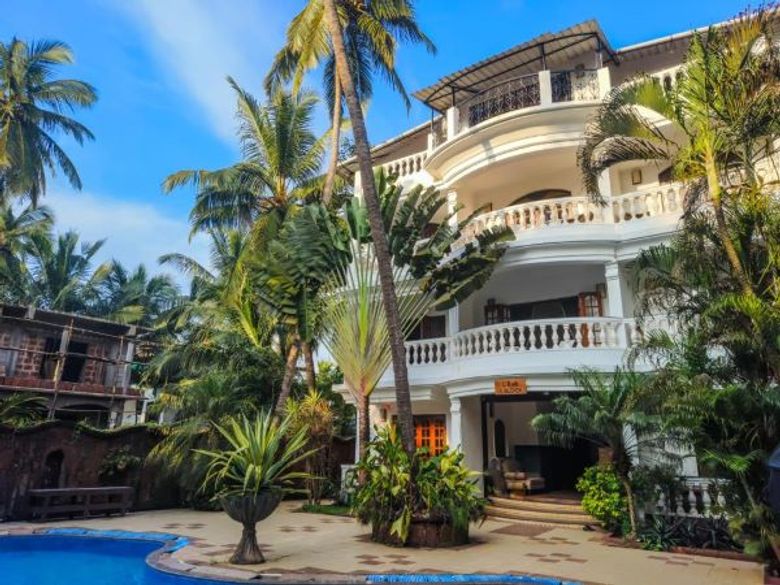
The Alidia Beach Resort in Goa, India is one of the hotels in Olive by Embassy's portfolio.
The company manages all of its properties and intends to manage all 150 of the Spark hotels as well. Yigit said Olive would like to establish a third-party hotel management business in the country “because that’s non-existent in India and international brands are all moving in that direction.”
“We’re positioning to become the preferred partner, the operating partner, for these international brands,” he said. “So, hopefully, we’ll be able to grow. Obviously, we need to acquire the know-how. That’s why we’re looking for a strategic partner who will enable us.”
Underserved segment
The opportunity is robust in
India for a number of reasons, Yigit said. Firstly, because the barrier to
entry is low, even purpose-built projects can be developed at a much lower cost
than those in the U.S. But Yigit said he thinks Spark will really work in India
because the premium economy space is extremely underserved in the country,
especially in secondary markets.
“There are really only a handful
of brands who are operating in this space, and [it] has been overlooked,” he
said.
Yigit said Spark would be upbrand from the economy hotels the company currently has in its portfolio.
“It’s the next level up which we
feel is very complimentary to what we are doing and where our guests can evolve
with us over time,” he said.
Yigit is also optimistic about
the development opportunities for Spark because there are so many
infrastructure needs in India.
“In a lot of the cities, we’re
not finding too many suitable buildings to convert,” he said. “When there’s a
shortage of that, then that’s when the greenfield comes in, especially for tier
2 or tier 3 cities.”
Growth potential
Though the agreement with Hilton
is for 150 hotels in 10 years, Yigit thinks there is an opportunity to develop
even quicker than that.
We’re positioning to become the preferred partner, the operating partner, for these international brands. So, hopefully, we’ll be able to grow.
Kahraman Yigit
“We feel that we will be able to
deliver on this mandate much quicker than that and hopefully surpass our
ambitions,” he said. “Just [because of] the rise in the Indian middle class and
domestic and foreign tourism.”
Those opportunities will be
especially prominent in the smaller markets.
“We have an opportunity to take
space in all of these micro markets… For instance, if we go to a tier 2 or 3
town, in most cases, we’ll find that we’re probably one of the only decent
hotels there and suddenly you become the destination. You become the Sunday
brunch destination. You become the wedding destination… It’s really
underserved. Therefore, the positioning is different.”
The Spark brand in India will
also be elevated in other ways (breakfast, for example, and other F&B
opportunities in some markets like having banquet and wedding facilities).
Yigit said in the premium economy segment in smaller markets, Olive will seek
to be the best option.
“I’m confident of that and we’ll
be able to command the delta in comparison to what’s already there,” he said.
While the licensing agreement
with Hilton doesn’t commit Olive to have any ownership stakes in these hotels,
Yigit said he thinks the company will probably see some opportunities where it
both owns and operates some of these properties as well, though he’s reluctant
to say what percentage that might be.