Founder David Zisser talks about the group’s approach to
dealmaking, its partnership with Mohari, as well as their next moves.
LONDON—David Zisser doesn’t have a degree from the Cornell
hotel school or a background as an operator, but just as he calls his 50-strong
Omnam Group team today, he is a gladiator hotel developer. The CEO is not
afraid to question the status quo, retains humility knowing he is not always
right, and will sleep on a development site floor in a sleeping bag to manage
challenges because he unflinchingly believes failure is not an option. Now,
with some initial successes, a pipeline of eight or more projects, a newly
opened Edition on Lake Como in Italy and a pivotal partnership since 2022 with
developer Mohari Hospitality, Zisser has the respect and attention of
institutional capital as well as the firepower to grow and take the company to
the next level.
Even as a child, Zisser thought about a career in hotels as
he loved everything about the business and enjoyed being a host. How he got
there was not planned, however, as his father died and left a debt that the son
wanted to repay in his memory. He talked the creditor into bankrolling him for
five corporate extended-stay properties in Brussels, relatively quickly turning
a profit to repay the debt. That same creditor backed him again for the
conversion of a 62,000 square meter empty office space outside Amsterdam that
he said he bought for a steal at €12 million.
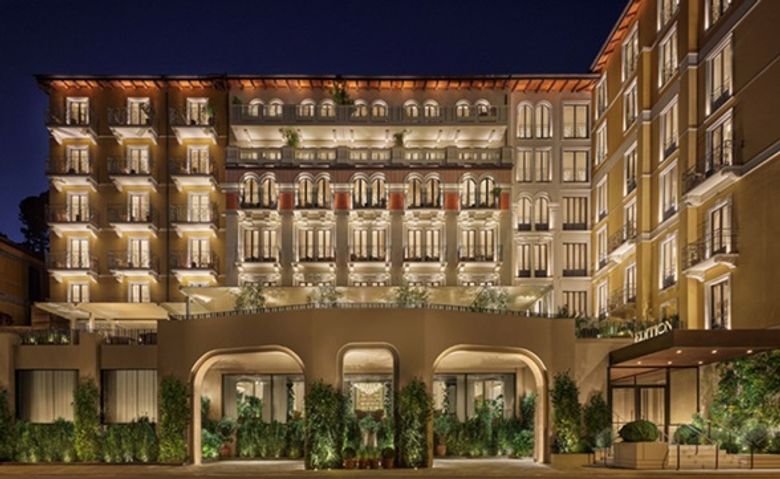
Just this month, Omnam opened this Edition in Lake Como with investment partner Bain Capital.
He brought in Radisson’s Park Inn brand, a local casino
operator, a colorful designer, strong F&B, a spa – untypical for a brand
that gets €100 ADR – and again within a relatively short period of time and a
lot of hard work he was able to sell it to Westmont for a neat profit. That
experience also opened doors to institutional capital and led to his next deal,
the W Rome, which Omnam has since exited.
Founded in 2011, today’s Omnam portfolio with a project
value of €2.6 billion. Open properties include The Lake Como Edition and a
Radisson Blu in Florence. Under development are the Baccarat Florence, Rosewood
Bauer Venice, Park Hyatt Taormina, Four Seasons Puglia, the Post Rotterdam, the
Vergini in Rome as well as the Hôtel Saint-James & Albany, Paris, among
others. In total, there are more than 280,000 sqm in development and a workflow
that encompasses investment, finance, legal, engineering and design, development,
commercial and marketing, innovation and technology, and asset management. Zisser
told Hotel Investment Today that the group is even working on launching its own
operating platform.
Over the years, Omnam has worked with institutional funds
like Bain Capital at The Lake Como Edition and Radisson Blu in Florence, U.K.
family officers on three projects, and Mohari so far on the Rosewood Bauer and
Hôtel Saint-James & Albany. Omnam generally participates on the equity side from 10% to north of 30% in Puglia and with
the Baccarat in Florence.

From my perspective, the headline is ‘generosity.’ What’s real generosity in hotels, and how do you really make guests feel you are being generous? It is not just a sales move. This is something I’m very curious about today.
David Zisser
Zisser is often sourcing distressed assets, including
office-to-hospitality, and more often than not turning the asset once it has
solid cash flow. For trophy assets like the Bauer in Venice, acquired in 2024
and being completely refurbished, the hold will likely be much longer,
especially because of the group’s now sizeable growth in assets under
management.
Zisser said they are likely to stick to Europe for near-term
growth and he wants to create strongholds similar to Italy in France, where
they are about to close on a luxury asset in the south, as well as Spain and
Greece. They also have a deal close to being announced in the Nordics. “Our
focus is more on going to places where and the diversity of clientele is bigger
– not just corporate, not just leisure,” he explained.
Omnam’s philosophy for development surrounds creating
communities and experiences with their projects.
Zisser referenced the Radisson Blu in Florence where he
learned that whether it’s a Four Seasons or a Radisson, guests want the same
thing – fun. “When you create an experience and a community, then the level of
thinking and how you get people happy and create moments for them is not that
different. What we’ve done at the Radisson is create a ‘resort’ in the city –
something that really doesn’t exist. It’s super value for money, and I’m quite
sure people will have amazing moments.”
For the most part, Omnam has capitalized deals on a
case-by-case basis, but Zisser said they are now at the point where they are
thinking about a dedicated fund or doing a strategic joint venture with a hotel
operator with a brand who needs a developer with a pipeline and execution
capabilities.
“We never have issues raising capital,” Zisser said. “I just
think that if we don’t have to do a raise on a case-by-case basis, we can do
more because we spend less time doing that.”
Mohari connection
By far, the most important deal to date for Omnam was
bringing in Mohari Hospitality, who took a 30% interest in Omnam in August
2022.
Zisser said the relationship started as a friendship with Mark
Scheinberg, an Israeli-Canadian businessman who co-founded online gambling
company PokerStars, which was sold in 2014 for $4.9 billion.
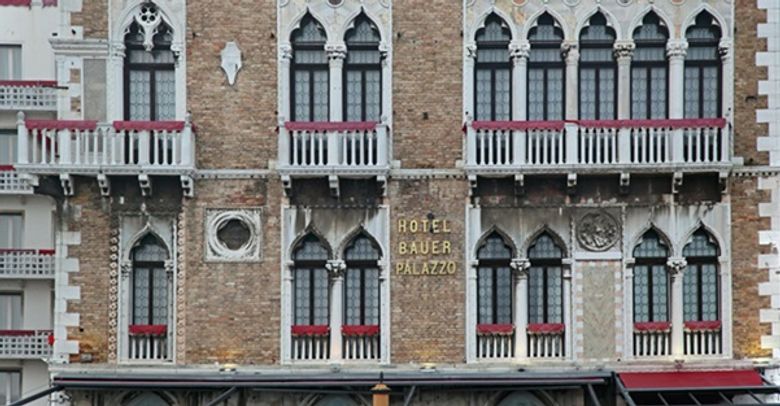
Omnam and Mohari have started reconstruction to create the Rosewood Hotel Bauer 2.0.
Mohari Hospitality was founded in 2017 and has included
investments in the 2,200-acre Peninsula Papagayo in Costa Rica, which is
anchored by a Four Seasons luxury resort; the 1 Hotel Toronto; a Four Seasons
in Madrid; and the Riviera Dining Group, among others.
Zisser said the deal gives Omnam the strong backing from a
financial perspective to get more deals one. It also helps to have access to
the experience of former Four Seasons CEO J. Allen Smith, he added. In return,
Mohari gets greater entrée into Europe, where Omnam is more established.
“With this partnership, we’ve secured some unique deals [like
the Bauer in Venice],” Zisser said. “We work as a family. We like each other a
lot.”
Both groups source deals, including the Bauer, which Zisser
said is about 2.5 years or a little less from reopening. Construction is
underway, there is a general contractor, and the new owners are very focused on
how to present the Bauer 2.0 while respecting its past. He said it will have
118 keys, quite a few F&B outlets, a beautiful spa and second-to-none
retail.
Considering the macros
Bigger picture and with their focus on Europe and Zisser’s
background in Israel, he said the big question mark at the moment is Dubai and
Abu Dhabi in the wake of the conflict in Iran. “How is it going to look the day
after? If the regime [in Iran] is not going to change, our people going to come
back to Dubai? Ultimately, one of the unique selling points was stability and
safety. That’s been broken quite hard.”
From a business perspective for Omnam, Zisser said the
conflict is likely going to be good for his business with more people coming
back to Europe and fewer people going to the U.S. due to foreign policy
decisions.
From my perspective, the headline is ‘generosity.’ What’s real generosity in hotels, and how do you really make guests feel you are being generous? It is not just a sales move. This is something I’m very curious about today.
David Zisser
Also, when it comes to capital markets and investors, a
similar situation exists, according to Zisser, especially in the luxury and
ultra-luxury space.
“In any sales process that we are doing, clearly there are
quite a few Middle Eastern sovereign wealth funds. And it has become a question
about what and where they are going to spend their money in the next few
years,” Zisser said. “Maybe they’ll adopt a strategy that now they need to put
their money in their own countries to recover. So, we will maybe see less of
them coming in. I don’t think it will create a mess because, ultimately, there
are also quite a lot of others coming from Asia and so on.”
Longer-term for Europe, Zisser wonders about what the next
five to 10 years will be like for hotel trading. “The elections in all the European countries
in the next three years are going to really define how the continent is going
to look,” he said.
One last thing Zisser said was worth mentioning about luxury
hotelkeeping: he thinks it is at a juncture, referencing Four Seasons Founder
Issy Sharp being among the first operators to put towels and shampoo in
guestrooms. “The industry is now at the point where it needs to present the new
towels and shampoos,” Zisser continued. “From my perspective, the headline is ‘generosity.’
What’s real generosity in hotels, and how do you really make guests feel you
are being generous? It is not just a sales move. This is something I’m very
curious about today.”