Active players cite mix of positives for region, eyeing more moves in 2024.
SOUTH FLORIDA – Stakeholders in the South Florida hotel market have been
busy deploying a variety of investment strategies of late, many looking to 2024
for an improved economic landscape vis-a-vis interest rates and a strengthening
of development and deal activity.
Brookfield, Driftwood Capital, Gencom, Procaccianti
Companies, Pyramid Global Hospitality and Sonesta International Hotels Corp.
are among the marquee names with a vested interest in the region.
Diversifying demand mix
Of the companies noted, key executives at each consider the
region, composed of Broward, Miami/Dade and Monroe counties, to be well-worth
organizations’ attention, even with a few nods of concern to existing headwinds
around interest and insurance rates.
“South Florida has always been a highly favored investment
market, and a preferred region within the Sun Belt states due to the diversity
and strength of demand,” said John Hamilton, executive vice president, Business
Development, for Pyramid Global, which is focused on acquisitions and management
in the region.
He cited leisure, group, commercial, cruise and
international as overall demand drivers in the state, with South Florida now
“seeing growing demand from corporate relocations, which is further
diversifying the demand mix. This robust demand appeals to many types of
investors—private equity, REITs, high-net-worth and international buyers.”
Shai Zelering, a managing partner in Brookfield’s Real
Estate Group, said his organization is bullish on the entirety of Florida,
including South Florida, for the obvious reasons, including positive migration,
welcoming business environment, overall quality of assets and investment
environment. “Florida has been propelling since COVID and is doing a great job
sustaining its positioning as one of the best markets for investments,” he said.
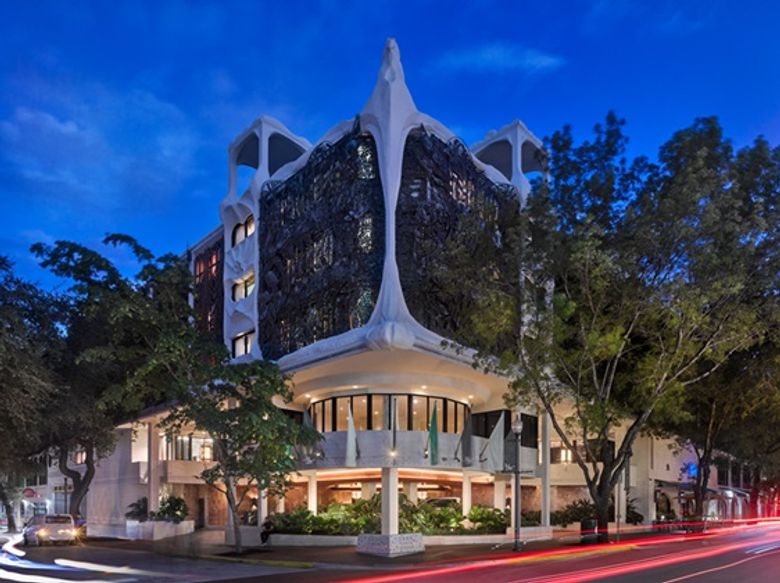
Brookfield's Mayfair House hotel in Miami
Global owner and operator Brookfield, along with its funds,
has been active in the SoFlo market over the past year on a variety of fronts,
including the headline-generating disposition of the 1,000-room Diplomat Beach Resort
(Curio Collection by Hilton) in Hollywood, Florida, a year ago for $835 million
to a JV of Trinity Investments and Credit Suisse Asset Management.
The significance of the deal for Fort Lauderdale’s market
performance was put into perspective by Matthews Real Estate Investment
Services, which noted the transaction represented 90% of the approximately $921
million in hotel sales in first-half 2023.
Brookfield also executed on a multimillion-dollar re-finance
last summer of the 594-key Hilton Fort Lauderdale Marina on the Intracoastal
Waterway and piqued investor interest again this January with its sale of a
majority stake in the Ritz-Carlton Key Biscayne via Brookfield Asset Management
Ltd. It was an opportunity scooped up by Miami-based Gencom, already a partial
stakeholder in the beachfront property and the hotel’s original developer in
2000.
Zelering indicated the property exits don’t signal a shift
in confidence regarding the south Florida market. “Brookfield is always an
active buyer and seller in the market. We still own numerous hotels and resorts
in Florida, and we continue to look for opportunities to buy in the region,” he
said, noting there’s a preference toward complex assets and full-service hotels
with “clear needs” for capital improvements. “There are various considerations
when we sell a hotel, most prominently, making sure that our investors’ returns
are optimized. The level of interest in hotels in Florida continues to be
robust, and we will opportunistically evaluate offers for our hotels, and
continue to look for investment opportunities.”
One such opportunity Zelering cited was the The Mayfair
Hotel & Spa in Coconut Grove, which Brookfield Asset Management bought five
years ago and transitioned into The Mayfair House Hotel & Garden. “The
Mayfair has incredible history. The asset was neglected for numerous years, and
we literally rebuilt the hotel while preserving its unique essence and
aesthetics,” he said. “When you step into this hotel it really transforms you
to a different place and the team does an incredible job activating the rooftop
pool, bars and special spaces. This is a building that cannot be replicated and
has so much character in one of the most unique neighborhoods and locations in
Miami.”
Gencom’s own opportunistic move back to majority ownership
of the Ritz-Carlton Key Biscayne—it had sold that interest in 2015 to Carey
Watermark Investors for $325 million—has it planning a $100 million
“transformative renovation and repositioning” to begin in 2025, according to Executive
Vice President and Chief Investment Officer Alessandro Colantonio. He expects
the revamp to ensure the 12-acre property “will remain a top luxury resort” as
Miami’s international inflow expands.
“Our approach has always been to be patient and selective
when it comes to finding the right opportunities for asset acquisitions as we
view each investment through a long-term lens. As a long-term owner and
operator, we like to take our time to find the right opportunities,
particularly amidst the challenging market conditions,” Colantonio said. “When
we evaluate opportunities, it comes down to the location, the quality and
potential of the asset, and the surrounding destination.”
The CIO shared that Gencom is “very excited” about another
transformative project dubbed Miami Riverbridge. Set for Downtown Miami, the
privately funded, mixed-use development is slated to deliver a 615-key Hyatt
Regency hotel, residential apartments, Class A meeting and event space and
50,000 square feet of new public green space along the Miami River.
In summer 2023, the project received the City of Miami
Commission’s unanimous approval in favor of Hyatt and Gencom’s land-lease
agreement and prior to that, they were successful in gaining the community’s
support for the project through a referendum, in which 64% of voters were in
support, according to Colantonio. He added, earlier this year, the investment
firm submitted its zoning application, the next step in advancing project
plans.
Too much development?
Interestingly, the Gencom project is on the boards with
local support at a time when some SoFlo municipalities copiously supplied with
hotels are looking to put the brakes on more lodging development to strike what
would constitute a “better” balance between residential and hotel footprints.
According to news outlet Miami Today, Miami Beach City
Commissioner Alex Fernandez suggested discussions slated to head to the city
commission’s Land Use and Sustainability Committee would include such topics as
limiting which zoning districts would permit hotels, as well as “increasing the
minimum and average unit size potentially for hotel rooms because that’s one of
the ways through which we can limit hotel development and promote more
permanent residential development and limit the density of new hotel rooms in
the city.”
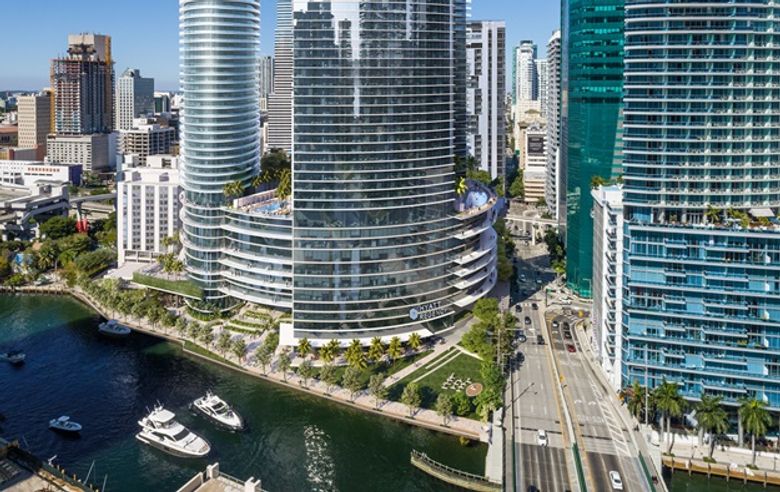
Gencom's Miami Riverbridge project rendering
That said, the city will see one of the largest
new-construction hotel projects emerge over the next few years: the 800-room
Grand Hyatt convention center headquarters hotel, set to come out of the ground
at a reported $600 million.
The number of hotels currently in construction across South
Florida’s three counties is less than two dozen, according to CoStar data. There
are five (1,335 rooms) in Broward, 16 (2,224 rooms) in Miami/Dade and one (110
rooms) in Monroe. Projects in final planning show 18 (2,230 rooms) in Broward,
34 (6,054 rooms) in Miami/Dade and four (370 rooms) in Monroe.
“There are cranes all over Miami, Fort Lauderdale and
beyond,” said Brian Quinn, chief development officer for Sonesta, which has
nine hotels in the SoFlo market, including the 250-key Nautilus Sonesta Miami
Beach, acquired last June by REIT Service Properties Trust for $165.4 million
from Quadrum Global. The property is set to undergo a $25 million renovation
and conversion to The James brand next year. “We even have new construction in
the works in the form of our first new-build Sonesta ES Suites in Port
Charlotte,” Quinn said.
Sonesta also is debuting the upscale Z Ocean Hotel in South
Beach, the first property that falls under its newly launched soft brand,
Classico, A Sonesta Collection. “Miami was the perfect location to debut this
brand as it speaks to its ethos,” Quinn added. “The benefit and appeal of South
Florida is the diversity in terms of consumer, location and demand. This has
allowed us at Sonesta to open a wide variety of properties in the region such
as airport hotels, Nautilus and Z Ocean—both on the beach—extended-stay
properties like Sonesta Simply Suites and Sonesta ES Suites, as well as
select-service and economy properties. All of these properties cater to the
different types of consumers in the SoFlo area, whether it be family travel,
upscale travel, business travel or longer-term stays,” he said.
New-build news
New construction also is on the agenda for Driftwood Capital
and, like Gencom, the focus is on mixed-use development on the Miami River.
The $185 million project, known as Riverside Wharf, is a
joint venture between MV Real Estate Holdings, led by Miami developer Alex
Mantecon, and Driftwood Capital that, when completed, will deliver a lifestyle
entertainment complex anchored by a 165-key Dream Hotel. Other components
include the return and expansion of Breakwater Hospitality Group’s The Wharf
Miami; 16,000 square feet of restaurants; a 12,000-square-foot event hall; a
30,000-square-foot nightclub and rooftop dayclub; and a private, deep-water
marina capable of accommodating mega-yachts.
“The company is excited about the collaboration with various
groups, including Alex Mantecon’s, and the progress of the project,” said
Driftwood Capital’s Chairman and CEO Carlos Rodriguez Sr. “[We are] currently
working on the seawall with plans to break ground later in the year. The
financing is in place, and Driftwood Capital expects a positive impact on the
market upon completion.”
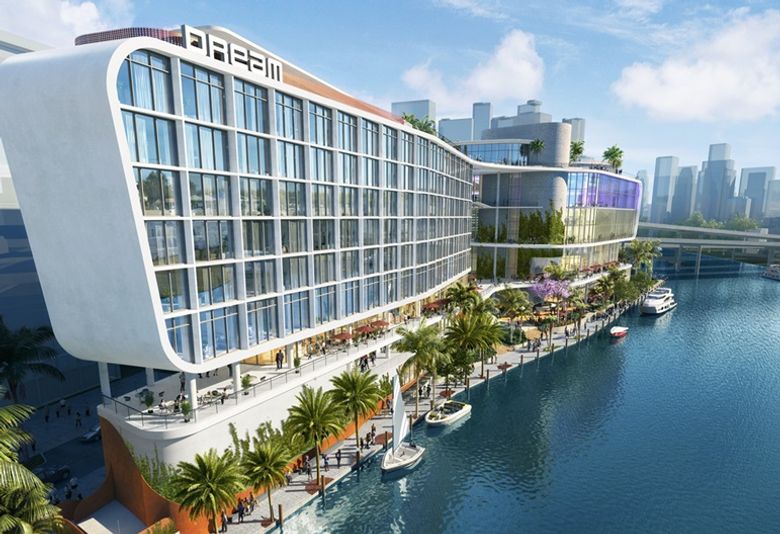
Driftwood Capital's Riverside Wharf project in Miami
The CEO added that Driftwood recognizes the potential of
mixed-use developments and considers them a perfect strategy in many cases.
“Driftwood constantly explores mixed-use opportunities based on supply and
demand in specific submarkets. The approach involves designing projects
according to the needs of the local market, whether it be retail, condos or
otherwise,” he said.
SoFlo challenges
While voicing enthusiasm for SoFlo, those in the market also
cited challenges.
“Concerning are the challenges with financing terms, land,
insurance premiums and construction costs,” Rodriguez said. “Despite a strong
and growing market with high barriers, the difficulty lies in making the
numbers work due to these issues. The capital influx in South Florida makes it
challenging to find deals that meet the company’s return expectations.”
According to Rob Leven, chief investment officer for
Procaccianti Companies, which includes the Westin Fort Lauderdale and several
properties in the Florida Keys, “High [interest] rates, lack of availability of
debt capital, cost of equity capital, uncertainty on direction of interest
rates, and uncertainty of economic trends, have all played a role in ability to
transact in 2023. Clarity on any of those fronts will help, but there isn’t any
‘silver bullet’ in the short term,” he said.
Pyramid Global’s Hamilton said financing is now more
challenging and costly than it has been in a long time. “However, the prospect
of no further increases and the likelihood of a dip in rates will definitely
spur activity,” he said. “There is a rise in distress, but in many cases,
especially for quality assets, sponsors and lenders are working out the assets
through extensions, equity infusions and other restructuring methods.”
Brookfield’s Zelering observed the impact of inflation on
construction prices, delays in shipping and deliveries, increase cost of
financing and lack of liquidity are “undoubtedly impacting” proposed projects
and the development pipeline. “Which is good news for exiting owners of trophy
assets in South Florida, because replacement costs are significantly higher
than in the past,” he said. “The distress will come from owners with stretched
balance sheets and undercapitalized assets that require renovations or
have deferred maintenance. These dynamics, along with increases in operating
costs and higher insurance costs will also put further pressures on owners.”
Pyramid Global Vice President of Business Development Nala
Holmes added that most hotels are “experiencing annual premium increases by
more than 25%. Insurance coverage limits, carrier rating and premium costs are
heavily scrutinized by lenders,” she said. “Owners should take a proactive
approach in evaluating property improvements to mitigate flood and windstorm
risks. These mitigating measures will help support efforts in placing property
coverage with an insurance carrier.”
M&A outlook
As to what M&A activity and pricing/valuation looks like
at the start of 2024 Zelering expected the first six months to be relatively
slow. “But there is a lot of money sitting on the sidelines and toward the
second part of 2024, things should pick up,” he said. “As it pertains to
Brookfield, we will continue to rebalance our holdings, selling hotels that are
repositioned where we completed our business plan, and buy or JV with owners
looking for fresh capital and opportunities for growth. This year will be quite
active.”
Driftwood Capital and Pyramid Global also anticipate an
increase in M&A activity in the market. “Some sellers may be pressured to
transact due to maturing loans and demands from hotel chains for product
improvement plans,” Rodriguez said. “We expect interest rates coming down to
contribute to improved transaction numbers and we are actively working on two
significant transactions scheduled for later in the year.”
Holmes felt the bid-ask spread remains challenging in these
markets “as many assets are coming off record performance during COVID and
buyers are underwriting a normalization of demand from leisure travel.”
Procaccianti’s Leven expects pricing will continue to move
toward the buyer for most products. “The market continues to adjust to the new
normal and generally that means lower pricing for the seller to transact,” he
said. “Investors continue to be interested in South Florida based on population
growth, business and leisure growth, and an overall positive economic
environment.”
As of January 17, full-year 2023 data released by CoStar on
South Florida’s combined counties show SoFlo edged downward in terms of KPIs.
Occupancy was at 72.2% compared to 72.8% in 2022; ADR dropped to $222.37 from
2022’s $233.21; and RevPAR sagged to $160.59 from $169.77. While 2023’s
occupancy also fell short of 2019’s pre-pandemic 75.4%, last year’s ADR and
RevPAR were significantly stronger than 2019’s corresponding metrics at $178.39
and $134.49, respectively.