The
Southern California region is one of the hottest hotel pipeline markets in the
country, thanks to its robust logistics sector and low barriers to entry.
NATIONAL
REPORT — Driven largely by the growth of distribution centers, prohibitive
coastal pricing and low barriers to entry, the Inland Empire has emerged in
recent years as a key market for hotel developers seeking new opportunities.
The Southern
California region — located east of Los Angeles County and home to some 4
million residents — encompasses Riverside and San Bernardino counties,
including cities such as Palm Springs, Ontario, Fontana, Temecula, as well as
the Coachella and Victor Valleys. Due primarily to its proximity to Los
Angeles, the region has evolved into a major logistics hub.
According to
the Q2 2025 Lodging Econometrics report, the Inland Empire is
poised for robust hospitality expansion with 122 hotel projects totaling 12,272
rooms in the U.S. pipeline. This ranks the market sixth
nationally among the top 50 U.S. markets for hotel construction volume, based
on project count.
One global
brand company with a strong presence in the region is Sonesta International Hotels Corp., which currently
operates 10 hotels, including eight Americas Best Value Inns and two Signature
Inns. The Newton, Massachusetts-based franchisor has also signed an agreement
for the development of The Royal Sonesta Coachella.
“Sonesta
remains bullish on the long-term outlook for the Inland Empire, a region that
has evolved into one of California’s most dynamic lodging markets. The area
benefits from a wide range of demand drivers that provide both stability and
growth across multiple hotel segments,” said Michael Handy, regional vice
president of franchise development for Sonesta International Hotels.

It’s a major logistics hub for companies like Amazon, UPS and other corporations involved in distribution and that’s been a big positive. The second factor is that a lot of the population has relocated to the Inland Empire — it’s just much more affordable than the coastal areas.
Alan Reay
According to
Handy, one of the catalysts for development in the region has been the influx
of companies like Amazon, FedEx and UPS, which employ thousands of workers and
generate a consistent need for lodging — particularly extended-stay options.
Furthermore, the region is also projected to grow its population by more than
20% by 2048.
He added
that new development opportunities are particularly strong in the Rancho
Cucamonga/Ontario Airport area, Temecula, Riverside and Lake Elsinore. Handy
described hotel development in the region as “active but balanced.”
Alan Reay,
president of Atlas Hospitality Group, noted that his Newport Beach,
California-based brokerage firm is “seeing a lot of interest in the Inland Empire.”
He said his
company currently has several deals underway in the region, including one near
the Ontario Airport. Reay pointed out that the most expensive hotel transaction
in California in 2024 was the sale of the 398-room Riviera Resort in Palm
Springs, which fetched roughly $58.7 million.
He
attributed the region’s rapid growth to several factors, including the logistics boom and population relocation. “It’s just
much more affordable than the coastal areas,” he said.
Reay also
cited “the availability and affordability of land” as one of the most
compelling selling points for developers throughout the region.
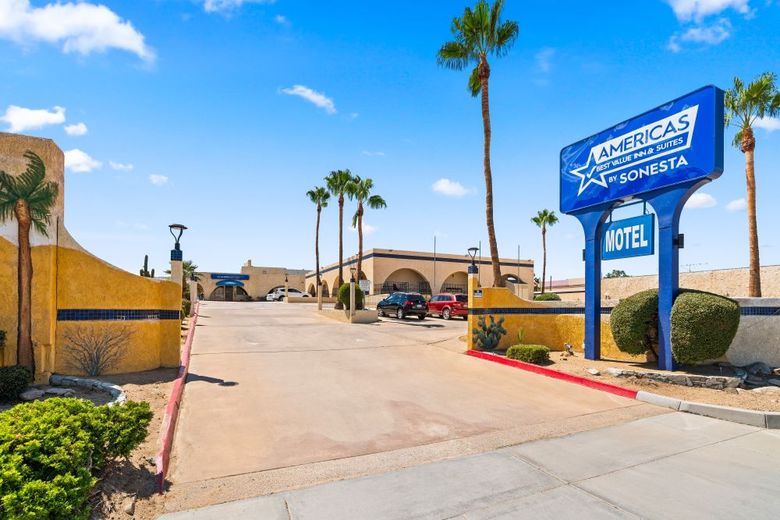
Sonesta has 10 hotels in the Inland Empire, including an Americas Best Value Inn & Suites in Joshua Tree.
Palm
Springs growth
Palm
Springs, meanwhile, continues to draw significant interest. Michael
Stathokostopoulos, senior director of hospitality analytics at CoStar Group,
described the area as “a major demand generator” within the Inland Empire.
“Palm
Springs anchors resort demand with its upscale resorts, golf courses, shopping
and signature events like Coachella. The area also attracts outdoor enthusiasts
visiting Joshua Tree, local casinos or regional camping and RV destinations,”
he said.
The Kirkwood
Collection is one such upscale hotel company that has established a strong
presence in the Palm Springs market. The Beverly Hills, California-based
company’s luxury boutique portfolio includes La Serena Villas in the historic
Tennis Club, Del Marcos Hotel, The Three Fifty and The Palm Springs Hotel.
Alex
Kirkwood, founder and CEO of The Kirkwood Collection, described the market as
an “international destination,” though he acknowledged that maintaining strong
RevPAR can be challenging amid rising supply.
Kirkwood
emphasized the importance of staying competitive in the area. “Every time
there’s an uptick in demand, someone renovates, which pushes the rest of the
market. When you’re the new kid on the block, it’s great. You can be an old
hotel, renovate and suddenly you’re new again,” he said.
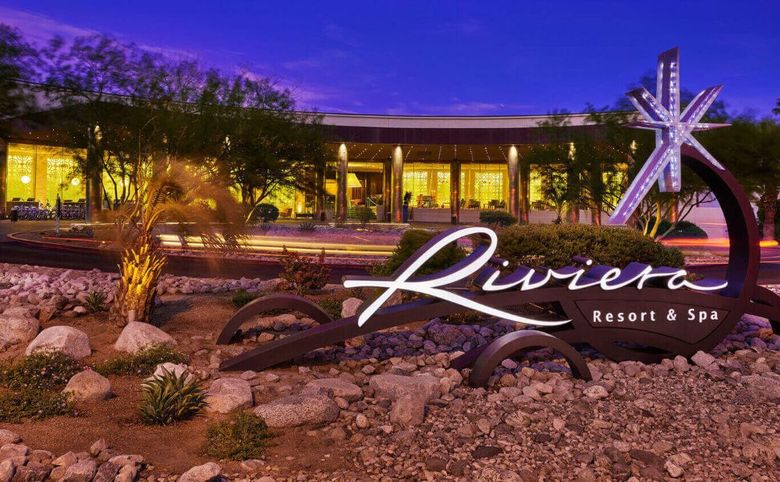
The sale of the Riviera Resort in Palm Springs for $58.7 million was the most expensive hotel transaction in California in 2024.
Growing
submarkets
Kirkwood
noted that several submarkets have also benefited as travelers seek more
affordable alternatives to Palm Springs. “Joshua Tree was on fire for a while,
but it seems to be cooling now,” he added.
Another
hotspot in the region is Ontario, which is undergoing significant
infrastructure development, including the expansion of the Ontario Convention
Center, which is set to double its space to 500,000 square feet by the end of
2027. The Ontario Entertainment District, anchored by the Toyota Arena, is also
ramping up development, including a new 60,000-seat performing arts venue.
“All of this
is definitely going to help going forward and part of the reason you see
increased hotel supply is due to these infrastructure projects,” said
Stathokostopoulos, who added that group demand has been a “bright spot.”
The Inland Empire offers a compelling combination of corporate, leisure and group demand balanced against a manageable level of new supply.
Michael Handy
According to
CoStar, hotel supply within the Inland Empire remains strong, with about 1,900
rooms across 19 new hotels currently under construction. Stathokostopoulos
noted that the most activity is occurring in the Riverside and San Bernardino
Center submarket.
While he
acknowledged that the Inland Empire is unlikely to sustain its recent growth
pace of 5% over the last three years, Stathokostopoulos said it will “still
exceed the national average,” projecting roughly 3.4% growth for the
region.
“This is
definitely more than what you see in other markets in California, many of which
have high barriers to entry,” he concluded.
Handy also underscored Sonesta’s continued investment in the region
going forward. “Taken
together, the Inland Empire offers a compelling combination of corporate,
leisure and group demand balanced against a manageable level of new supply.
These fundamentals reinforce Sonesta’s confidence in the region as a long-term
growth market,” he said.