Leaders
in the region discuss hot markets, challenges, a pipeline reset and the
transaction outlook.
INTERNATIONAL REPORT – Lodging Econometrics recently
reported the Latin America construction pipeline stood at 751 projects and
116,480 rooms at the end of 3Q25, representing year-over-year (YOY) increases
of 17% in projects and 11% in rooms. However, Hotel Equities Juan Corvinos, who
has spent 12 years developing in the region, said those numbers are loaded with
dead projects and it is time to clean up the LATAM pipeline data.
“In short, it’s a bubble,” he told Hotel Investment Today as
parent company The Burba Hotel Network prepare for ALIS CALA 2026, April
28-30, at the Loews Coral Gables Hotel, Coral Gables, Florida. “When you
look at the data, there’s a lot of projects that were signed during 2018-2020
but have not started. So, yes, the pipeline continues growing, but the brands
haven’t terminated. A lot of the agreements are not moving.”
Corvinos said there needs to be “a flushing of the pipes” on
the data. “There’s a lot of projects in there that need to be either terminated
or removed from the from the pipeline for us to really know if there’s growth
and signings versus opening.”

We need to reset expectations about the growth. There is growth, I agree, but we need to establish a baseline of projects that are basically dead or inactive for us to establish the real growth.
Juan Corvinos
He continued that the bigger brands sign about 135 projects
in Latin America every year, while opening around 20 hotels. “There’s no
correlation between signings and openings when there normally should be,” he
said.
“We need to reset expectations about the growth,” Corvinos
added. “There is growth, I agree, but we need to establish a baseline of
projects that are basically dead or inactive for us to establish the real
growth.”
In response to Corvinos’ comments, Lodging Econometrics Senior
Vice President, Director, Global Business Development Bruce Ford said they have
cancelled or postponed more than 25,000 rooms from the Latin America pipeline
in the last 12 months, thus removing them from the active pipeline. “We do
actively work the projects every month to keep the pipeline as clean as
possible,” he said.
On another note, Ford said projects that have signed in
recent quarters are entering the pipeline with longer timelines to begin and
actually reach the construction phase. “The timeline has lengthened in every
region of the world for new projects that are announced,” he added.
More LATAM data
Lodging Econometrics’ Q3 report also provides insights into
the region’s hotel pipeline by chain scale. Notably, the luxury and upper
upscale chain scales hit record-high project counts at Q3. The luxury chain
scale closed the quarter at 143 projects/27,387 rooms, while the upper upscale
chain scale reached 124 projects/22,420 rooms, and the upscale chain scale
reached 144 projects/20,904 rooms.
Geographically, Mexico reached an all-time high with 264
projects/40,412 rooms, accounting for 35% of both the total project count and
room count. Brazil followed with 123 projects/16,272 rooms, up 19% by project
count YOY. The Dominican Republic continued its strong growth trajectory with
81 projects/17,351 rooms, representing a 37% increase in project count and 20%
increase in room count YOY. These three countries combined account for 62% of
all the projects and 64% of the rooms in Latin America's construction pipeline.
The region’s pipeline growth reflects both pent-up demand and renewed confidence in long-term fundamentals: strong demographics, rising intra-regional travel, and sustained global interest in leisure and mixed-use hospitality.
John McCarthy Sandland
The cities with the largest pipelines in Latin America
include Mexico City with 28 projects/3,273 rooms, Lima with 16 projects/2,206
rooms, and Riviera Maya with 16 projects/2,088 rooms.
Corvinos said he expects the data on Mexico to prune itself,
but added when he looks at the rooms coming into the Dominican Republic he’s
“scared.”
“I actually just told an owner, against my interest, please
don’t develop this hotel [in the Dominican Republic] because there’s too much
inventory coming in and we’re not going to be able to do well when if all this
product is developed,” Corvinos said.
What Corvinos does like is luxury development with
residential in market like Mexico City, as well as conversion opportunities for
focused service in Mexico. He likes the recoveries going on in Peru, Chile and Colombia
after their new presidential election. He likes some sustainable development on
Caribbean islands like Curacao.
Looking at more organic growth, Corvinos said he is seeing a
lot of affiliation brands coming up and mentioned Best Western, Small Luxury
Hotels, Design Hotels and Best Western-owned WorldHotels.
Opportunities, challenges
When asked about the sustainability of the growth momentum
in the LATAM region, Grupo Posadas Vice President of Development Mauricio Elizondo
said they are seeing more conversions as ground-up has been more challenging.
“We do see Mexico and the Caribbean as the fundamental strong markets due to
steady airlift,” he added.
John McCarthy Sandland, executive chairman, Leisure
Partners, Los Cabos and Mexico City, added, “The region’s pipeline growth
reflects both pent-up demand and renewed confidence in long-term fundamentals:
strong demographics, rising intra-regional travel, and sustained global
interest in leisure and mixed-use hospitality. While financing and permitting
timelines vary widely across countries, I believe this momentum is sustainable,
especially in markets with stable tourism policy and private-sector leadership.”
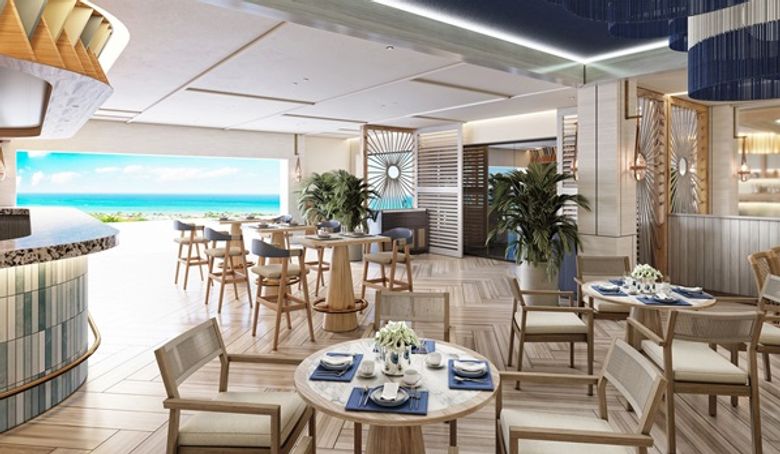
Hyatt just opened the adults-only, all-inclusive Secrets Mirabel Cancun Resort & Spa.
We also asked sources to name their favorite markets with
Elizondo touting Los Cabos, Mexico, and Punta Cana, Dominican Republic. Looking
ahead, he added that the Dominican Republic may keep growing as some newer
destinations launch.
McCarthy added that Mexico remains his clear favorite —
particularly Los Cabos, Nayarit, and Mexico City, each offering very distinct
demand drivers and a mature development ecosystem. “I also have great
admiration for the Dominican Republic, where a consistently pro-investment
attitude and coordinated government support make the environment particularly
attractive,” he added.
Mexico’s scale, brand presence, and infrastructure keep it
at the top of the regional pipeline, according to McCarthy, and he expects that
to continue. “However, the Dominican Republic, Colombia, and Costa Rica are
emerging as strong up-and-comers, each balancing tourism growth with a
pragmatic approach to investment and sustainability,” he said.
Rogerio Basso, principal at Miami-based Impactum Capital
Advisors, said Mexico’s scale, diversified destinations, and well-established
operator ecosystem ensure it will likely remain at the top of the regional
development pipeline. He added, however, that the Dominican Republic, despite
Corvinos’ warning, stands out as the region’s strongest up-and-comer, driven by
a pro-tourism government agenda and a robust local financial system that has
long supported the sector.
“The D.R. continues to lead the Caribbean in new supply and
airlift expansion, with more than 177 new or reinstated regional routes and
several international brands under development — including W Punta Cana, St.
Regis Cap Cana, and Four Seasons Tropicalia,” Basso said. “The government’s
consistent investment incentives and pro-business stance, coupled with the
strength of domestic lenders such as Banco Popular, Banreservas, and BHD León,
continue to attract both regional and international capital. New destinations like
Miches and Pedernales are diversifying the tourism map, complementing the
established Punta Cana, Puerto Plata, and Romana-Bayahibe clusters and
reinforcing the D.R.’s position as one of the Caribbean’s most dynamic
investment environments.”
To sustain growth, the [Caribbean] region needs broader financial-instrument optionality and access to new investor pools — including family offices, institutional investors, pension funds, and insurance companies — that bring longer investment horizons and diversified risk appetites.
Rogerio Basso
As for the segment with the most potential, Posadas is
present across all segments, according to Elizondo, so they have a balanced
portfolio and have projected openings and further pipeline ranging from economy
to luxury.
Luxury continues to lead, according to McCarthy, driven by
international brands seeking experiential destinations and affluent domestic
travelers trading up. “That said, the economy and midscale segments still
present compelling long-term opportunities in secondary cities, especially when
tied to industrial corridors and airport expansions,” he said.
Not surprisingly, conversions are dominating the pipeline
with Elizondo stating 70% of Posadas’ work has been with existing product.
McCarthy added that while conversions are growing,
especially in urban markets, new builds remain the main driver — particularly
in leisure destinations and integrated resort projects where brand standards
and design DNA are central to value creation.
Even with the enthusiasm for LATAM development, construction
costs and financing remain challenges.
“The greatest challenge remains the availability and cost of
capital, combined with regulatory delays,” McCarthy explained. “Yet, with
well-structured projects, strong operators, and credible local partners, the
appetite from both domestic and international investors is clearly there.”
Basso added that across the Caribbean, project economics are
being tested by escalating construction costs, rising insurance premiums and
limited coverage, and ongoing vulnerability to natural disasters. Yet the most
pressing constraint remains the availability and cost of capital. He said traditional
bank financing is concentrated among a small number of regional lenders, many
of which face exposure caps to large hospitality borrowers.
“To sustain growth, the region needs broader
financial-instrument optionality and access to new investor pools — including
family offices, institutional investors, pension funds, and insurance companies
— that bring longer investment horizons and diversified risk appetites,” Basso
added. “The introduction of sustainability-linked financing, blended capital,
and potential tokenization of real-estate assets could further expand liquidity
and help de-risk project pipelines. The long-term outlook remains positive, but
capital efficiency, resilience, and innovation will define the next growth
chapter for Caribbean hospitality.
“Despite some near-term headwinds, the Caribbean’s
fundamentals remain solid. The next wave of growth will hinge on how
effectively the region expands its capital base and develops a more innovative
financing toolkit to meet the evolving needs of hospitality developers.”
Transaction momentum
From a transaction’s perspective, all was moving along – in
typical Caribbean/Mexican fashion – until Liberation Day in early April,
according to Berkadia’s Miami-based Managing Director Fernando Garcia-Chacon. “We
were marketing a handful of resorts and part of our brokerage team was in New
York pitching the deals when Trump announced the tariffs. The market came to a
standstill and did not move for the next two months. One of our PE clients
commented that if he was to bring a deal to his investment committee, he would
be fired on the spot, regardless of the economics of the transaction.”
Just as you are seeing here in the U.S., there is still a gap between buyers and sellers. Many of the 9 to 10 caps that we were used to quoting on resort pricing is no longer applicable given the increase in interest rates. And owners are reticent to accept a lower price.
Fernando Garcia-Chacon
Fortunately, Garcia-Chacon continued, the market has
softened slightly (in a good way), and at least clients will take their calls
now. “Nevertheless, just as you are seeing here in the U.S., there is
still a gap between buyers and sellers. Many of the 9 to 10 caps that we were used
to quoting on resort pricing is no longer applicable given the increase in
interest rates. And owners are reticent to accept a lower price.”
Garcia-Chacon called the Playa-Hyatt deal a real positive
for the market, certainly for the all-inclusive segment. “That was a real
vote of confidence for the space as historically, institutional investors have
shied away from these types of resorts,” he said. “But now, with KSL
stepping in, it does provide reassurance that this is a true investment
category. And everyone is ready to pour over the filings once the
transaction closes (hopefully be year-end) and more detailed financial
parameters are shared. I believe this will help plant a flag in the land
of pricing.”
One area of interest for deals is the Dominican Republic,
according to Garcia-Chacon. “We have seen the emergence of local pension
funds that have an appetite for hotel product,” he said. “They don’t move
fast, but under the right circumstance, they will acquire existing hotels.”
He also pointed to the Dominican Republic government’s pro-tourism
stance, pushing the development of several new destinations inside the island
(i.e. Pedernales) as well as existing ones (Puerto Plata). “The truth is
that the entire island has truly evolved – a new St. Regis opened this year, a
Four Seasons is under construction, and I believe a Rosewood is being planned.
The country has sure come a long way from the land of the 3-star, cheap
all-inclusive resort,” Garcia-Chacon said.
Another emerging trend Garcia-Chacon cited is a lack of
truly capable third-party operators, despite what has seemed like a big move
into the region from U.S.-based players.
“In the all-inclusive space, Playa was the leading player,
and you could see how they franchised different flags with Marriott, Hilton,
Hyatt and Wyndham,” Garcia-Chacon said. “They understood how the U.S.
brands functioned but at the same time, could deal very effectively with the
tour operators and wholesalers, both of which remain an important distribution
channel for all-inclusives. However, with them being absorbed by Hyatt,
there is real absence of capable operators.”
He added that some groups are trying to get into the space,
but thinks it needs more specific expertise.
“We are also seeing something similar in the select-service
space. You have some U.S.-based management groups entering the region but,
while they have the relationship with the brands and the necessary systems,
entering new markets has its challenges. It will take some time,”
Garcia-Chacon said.