Global chains and local investors are targeting France’s secondary
cities such as Nice, Lyon and Marseille bolstered by bleisure travel demands
and regional dynamism.
FRANCE — “The French hospitality
industry is experiencing record growth, massive investments and post-2024
Olympics prospects,” according to Luc Espaillard, associate director at French
hotel consultancy Christie & Co.
Espaillard led an October study of
hotel performance in seven Olympic organizing cities — Paris, Nice, Lyon,
Marseille, Lille, Nantes, and Bordeaux. While Paris is still the epicenter of
investments, he found the dynamics are changing, a lot of the pipeline activity
is happening in secondary cities. He attributes this to a rise in bleisure
travel and the swell of remote work, which is bringing diversification and
dynamism to those markets.
“In addition, the resilience
demonstrated by secondary markets after the COVID period reinforces their
attractiveness,” Espaillard said. “This means cities with a mixed clientele,
both leisure and business, such as Marseille and Nice, have maintained a high
occupancy rate even in low season, thanks to their robust MICE markets.”
In the French Riviera capital of
Nice, he said, RevPAR rose almost as sharply as in Paris between 2019 and 2023
— +32.9% compared to +33.6% — driven by hikes in room rates.
In Lyon, France’s third biggest
city, famed for its history and gastronomy, “the hotel market is showing good
momentum,” Espaillard added, partly due to Paris’ increasing unaffordability.
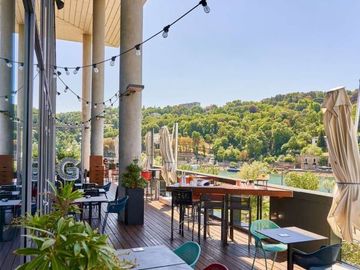
Castellet Hospitality bought the Novotel Confluence Lyon in 2023.
“While the Parisian market remains
expensive, Lyon benefits from more attractive prices. This dynamic is mainly
underpinned by operator investors such as Paris-based Sohoma, which acquired
around 20 hotels in just four years in the Lyon metropolitan area, as well as
Marseille, France-based Castellet Hospitality, which bought the Novotel
Confluence Lyon .”
Sohoma manages about 70 hotels in
France, including Accor, Louvre Hotels, Marriott, IHG and Hilton franchise
brands.
Stéphane Botz, partner and national
director at KPMG France, agrees that the regions are booming.
“The drivers of this development
are linked to recent social changes which have accelerated post-COVID, coupled
with increased accessibility and better transport links — notably, the TGV
(high-speed rail). This has strengthened the attractiveness of these secondary
cities in terms of business and leisure tourism, which makes these secondary
cities destinations in their own right.”
French investments pick
up pace
While the Olympics might have
seemed like a hard act to follow, French hotels are still “a hotly sought-after
asset class,” according to Botz.
“Hotel groups including Hilton,
Marriott, IHG and Radisson are targeting the secondary cities,” he said. “These
hotel groups operate mainly through franchising or with management agreements
with owners-investors.”
Marriott plans to add 10 new hotels
— some 1,000 rooms — to its existing portfolio of over 70 hotels in France by
the end of 2025, said Alexandra Goguet, vice president of development France
& Benelux (Belgium, the Netherlands and Luxembourg) at Marriott
International.
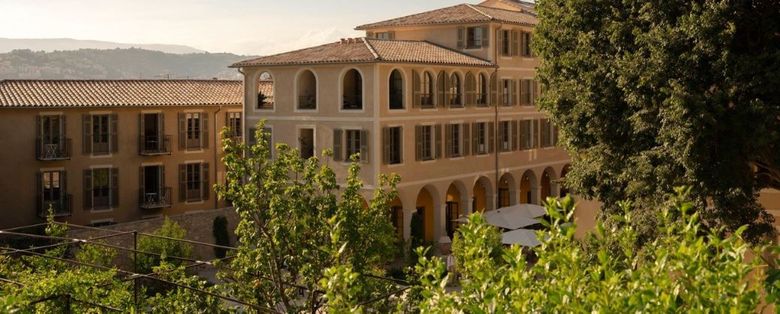
The Luxury Collection Hôtel du Couvent, Nice in France opened earlier this year and was a heritage makeover.
She added that this was part of a
strategy “of strengthening Marriott’s presence in primary and secondary markets
in France” as it pursues “robust growth opportunities with owners and
franchisees.”
For Goguet, Marriott is responding
to strong demand for leisure, resort experiences, and business travel by moving
its focus “beyond Paris and the French Riviera.”
Marriott’s pipeline projects
include Moxy Nice, a Courtyard by Marriott, Lyon East and Residence Inn by
Marriott Lille. This follows the mid-year opening of the Aloft Dijon in a
repurposed post office building and Luxury Collection Hôtel du Couvent, Nice, a
heritage makeover. Moxy Annecy has also just opened its doors.

We are targeting major French cities that attract an international clientele – and these projects allow us to add hotels in key locations in city centers. Conversion and adaptive reuse projects represent nearly half of those properties.
Alexandra Goguet
“We are targeting major French
cities that attract an international clientele – and these projects allow us to
add hotels in key locations in city centers. Conversion and adaptive reuse
projects represent nearly half of those properties,” Goguet said.
All this interest from global
brands is making France “one of the most attractive and resilient markets in
Europe,” Botz said. “Despite a slowdown in the last quarter, investments
reached approximately €2.1 billion ($2.22 billion), again placing France in the
top three European countries for transaction volumes.”
That investment activity and growth
is echoed in surveys by Cushman & Wakefield and HVS, with Deloitte’s
European Hotel Industry & Investment Survey 2024 putting Paris after London
in Europe’s leading hotel investment markets.
The acceleration of hotel
investments and record transactions in France in 2023 was led by the Greater
Paris Île-de-France region, Christie & Co. found, with the sale of the
prestigious Westin Paris Vendôme, for €650 million ($686.15 million), contributing
to that.
“Paris stands out with an increase
of 36.8%, well above the national average, contributing to an excellent market
performance,” the study found. Despite moderate growth in RevPAR and
stabilization of prices since the Olympics and Rugby World Cup, average room
prices in the seven secondary cities rose by 26.7% on average in 2023 compared
to 2019.
Regional growth tipped
But Espaiallard predicts the
secondary destinations will continue to grow, along with investments in hotel
upgrades and forecast openings.
“We expect that most of these
markets will end 2024 with performances similar to those of the record year of
2023, or even with an outperformance.”
Christie & Co. found the share
of 3- and 4-star hotels in those cities continues to grow, while that of
unbranded or unclassed hotels is decreasing. “This move upmarket reflects the
investments being made to improve the quality of hotel assets in France.”
Cities like Bordeaux have already
seen the hotel supply increase by 8.8% rooms since 2019, “which favors a
continued price increase, " Espaillard said.
According to KPMG’s “French Hotel
Industry in 2024” study, 80 hotels and more than 9,000 rooms are in the
pipeline in France for 2027.
“Most developments are new builds
or conversions of office real estate,” Botz said, “but also the transformation
and repositioning of existing hotels, with an upgrade of these urban hotel
assets.”
Lyon, Lille, Marseille, Nice, and
Bordeaux are among the top 10 cities in terms of new supply, along with
Strasbourg and Toulouse.
“The investors are mainly families
and French investment funds,” Botz said. “The choice of brands is often linked
to a development strategy and specific positioning adopted by investors, as
well as existing competition. In recent years, we have noticed that Anglo-Saxon
brands are making inroads in these cities, creating stronger pan-European and
international appeal.”
The pre-Paris 2024 prophecy of
Jean-Claude Wietzel, GM of the Four Seasons Hotel George V, Paris, and the
group’s regional vice president, seems to be coming true for many hotel
investors in France.
“If the Olympic Games go well,” he
quipped, “the influence of France, particularly of Paris, will be strengthened
in 2025-26, allowing us to consider new growth prospects.”