Management model shifts from tasks to tactics to help hotel investors outperform in today’s complex market.
PLANO, Texas ─ The next 12 to 24 months could sharpen the competitive edge of third-party management companies that have broadened their traditional approach to help hotel owners resolve today’s biggest challenges.
This slower growth, higher cost environment is the ideal testing ground for sector leaders to upskill from their former specialist status as pure operators to an integral role as full-stack consultative partners in the brand-owner-manager triad.
Their expanded scope answers hotel owners’ need for a co-strategist with in-house expertise to proactively unlock layers of opportunities and get ahead of problems before they hit the P&L.
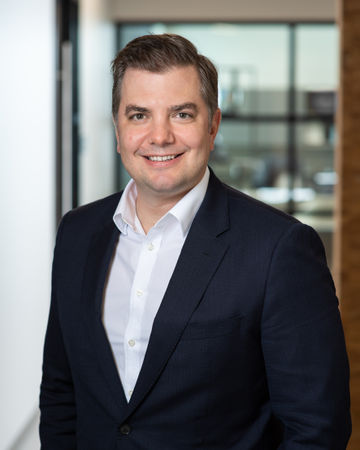
Justin Magazine, Aimbridge Hospitality
The evolution toward fully integrated owner support gives progressive operators more levers to pull. That could be a pivotal advantage now as hotel investors are already navigating brand compliance, de-risking capital, harnessing costs and protecting NOI without much near-term hope of cushioning from substantive pipeline growth or reduction in margin pressures.
More levers offset the bottom-line drain of RevPAR stalls
“Most people predict muted RevPAR growth for 2026 and 2027 especially as expenses — notably labor and construction — continue to rise,” said Justin Magazine, senior vice president, business development, Aimbridge Hospitality, the world’s largest third-party hospitality management company.
This dynamic has owners pressing operators to “help relieve compression in the middle of the P&L” without compromising guest experience or brand standards.
“Without the lift of rising RevPAR, this is where owners look to their operating partners and say, ‘Okay, what can you bring to the table to help this property, and my investment, be cash flow positive? Where can you move the needle beyond giving us a strong general manager, above-property operational support, and best-in-class sales, marketing, and revenue management?’” said Magazine.
“Based on our perspective as an integrated solutions partner, the answer is, ‘everywhere’ ─ from the property level to enterprise scale,” he said. “Owners need their operating partners to get creative and work all the edges. And they need a company with the operational ingenuity and capital discipline to achieve guest satisfaction and performance goals.”
Economies of scale mitigate labor challenges
Labor management remains one of hotel owners’ biggest concerns – and one that Aimbridge is working to solve through its proprietary Shift Share platform and its team of market recruiters across 20-plus markets. In this challenging labor market, flexible management companies still have a series of tools that can give owners proactive control.
“When you have the scale and technology prowess that we do, you can really provide a benefit to owners by solving the problem of open shifts,” said Magazine. “Our owners don’t have to worry about open positions because we have the in-house ability to fill those hourly positions more quickly. A housekeeper can finish their shift at one property, check into our app and see if there are any other shifts available within that market and go fill that shift at a different Aimbridge property.”
Standardized training also empowers hourly team members to move among the more than 80 global brands in Aimbridge’s portfolio. That capability creates a more dynamic workforce able to adapt to real-time labor needs without relying on overtime or cost-inefficient contract labor.
At the property leadership level, those same structural advantages benefit owners by tackling one of today’s biggest labor issues: high turnover of general managers.
“Close to 70% of our GMs have a tenure of more than three years,” said Magazine. Defined career pathways, both for upward mobility and geographic flexibility, serve as powerful retention drivers, reducing turnover costs, strengthening property-level stability and keeping top talent on a long-term growth plan.
In-house experts play critical role in cost controls, revenue growth
While labor may be the top-of-mind cost issue, owners facing margin pressures are looking for cost relief across the board. Aimbridge expanded its options for problem-solving and profit-building by leveraging the full-range of operational, development, brand relationship, finance, asset management and technical services at its global support center at its Plano, Texas headquarters.
This knowledge base enables broad-scope third-party managers to dig deeper to ensure every decision becomes accretive to owners, according to Magazine.
“We can look at an owner’s profit goals from a capital management standpoint because our engineering department knows hotel systems so well that they can flag small problems before they become big problems,” said Magazine. “That gives the owner time to get ahead of capital needs. We’re protecting that owner’s investment because they’re not racing to fix a problem and they won’t have to take rooms offline.”
It also allows Aimbridge to parlay their relationships into strategic drivers for lowering construction costs.
“A developer can come to us and say, ‘This is where I am in cost terms. These are the contractors I have. What are my options to make the numbers more economically feasible?,” said Magazine. “Our first question might be, ‘Are these the best contractors or subcontractors to have?’ Do we have better ones? If so, we typically can save that developer 7%-to-10% of the development costs while also shrinking the construction timeline.”
According to Magazine, scale also pays dividends when it comes to insurance planning. “By joining our umbrella property and liability programs, many owners are seeing double-digit rate reductions – savings they simply couldn’t access on their own. As we grow our portfolio with properties that align with our strategy, those additions strengthen the overall risk profile, enabling more competitive coverage for owners.”
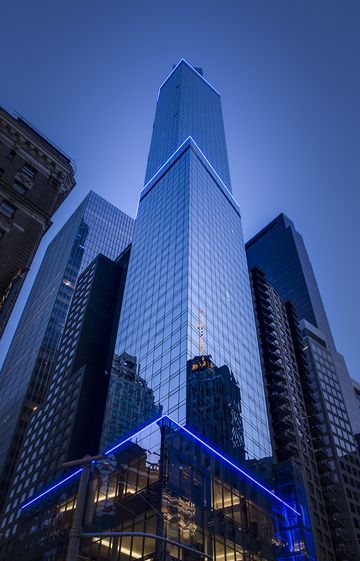
Courtyard-Residence Inn New York Manhattan/Central Park.
Hands-on operator involvement streamlines owner, brand collaboration
In other cases, third-party managers’ increasingly consultative role can point to missed opportunities to generate incremental revenue or stop the leakage of underperforming spaces.
“We have a lot of owners and potential owners that are looking at their meeting space and their big ballrooms, especially in the large full-service hotels and saying, ‘Do we need a large ballroom anymore? Does the market support this? Is this space what meeting groups are looking for these days?’” said Magazine.
More highly integrated third-party managers can tap into cross-disciplinary expertise to show owners how to be more agile with underperforming function spaces. This leveled-up collaboration can generate new opportunities, new design options and reprogramming scenarios that open a steady profit stream.
“Evaluating the potential of function space is a case-in-point example of what a manager with a broad scope can bring to the profit discussion,” said Magazine. “Before we talk about selling more event business, we first need to talk with the owner about whether having a traditional wedding ballroom in a secondary or tertiary market is going to deliver good ROI ─ especially if they have to spend significant money on a PIP.”
Situations like this reinforce the importance of third-party managers’ heightened involvement with hotel brands.
“Through our Operational Excellence Team, we're working with brands and owners to figure out how to monetize spaces that aren’t delivering ROI,” said Magazine. “The answer could be as simple as leasing it out or collaborating with a brand to come up with new programming. Or maybe we need to help the brand understand that a given property really doesn’t need to dedicate the full square footage required in the PIP because there are other hotels with larger, newer, better ballrooms. Groups in that market may not be looking for big ballrooms; they may want more executive experiences and smaller breakouts.”
In-depth engineering expertise empowers operators to advocate for owners on major line items where the PIP may need interpretation to fit an individual asset. On a recent PIP review for a full-service hotel, Aimbridge’s corporate support engineering team was able to demonstrate to the brand that the property’s current HVAC units did not need to be converted to VRF units, saving the owner over $3 million on the PIP.
How owners can unlock F&B revenue while controlling costs
That same expertise and activated partnership impact hotel operations and profitability. F&B is a case in point. It’s a vital tool when topline revenue is scarce, but razor-thin margins can easily flip it from asset to cost center.
“We ask, ‘Is there an opportunity to reprogram your F&B offering to make it more in line with the property, market and guest?’” said Magazine, noting that Aimbridge’s involvement often begins at the development stage. A close eye on F&B venues and programming has translated into significant savings for developers by ensuring equipment purchases align with product and customer needs.
Operators’ tech focus puts owners ahead of the curve
On the commercial side, dedicated teams focus on shifting the share of bookings from OTAs to direct channels, while preparing to complement brand-level AI and LLM initiatives that are reshaping discovery and conversion. According to Magazine, Aimbridge’s dual mandate is to understand how best to increase customer acquisition through direct bookings while differentiating properties, so they rank and resonate when travelers query for experiences, F&B, and neighborhood context.

Without the lift of rising RevPAR, this is where owners look to their operating partners and say, ‘Okay, what can you bring to the table to help this property, and my investment, be cash flow positive?...as an integrated solutions partner, the answer is, ‘everywhere.’
Justin Magazine
“Hotel brands are leaning into AI and language learning models to grow direct booking, but, as a manager, we know we have to supplement their efforts,” said Magazine. “The question for us is, ‘How can we get creative on e-commerce?’ That’s where Second Wave comes in, our in-house, full-service marketing division. Second Wave has a strong pulse on AI optimization and does phenomenally well in getting our properties to the top of the web page as travelers search different engines to explore where they’ll book.”
Consultative operators will continue to redefine the owner/operator relationship
Ultimately, said Magazine, the increasing complexity of managing hotels will only continue to add to the value owners find in experienced and versatile third-party partners.
“Owners are looking for their operating partner to be a sounding board for all the different components we talked about, whether that’s renovations, PIPs, HR, brand conversations or labor,” he added. “Owners want that one-stop-shop that can navigate their hotels through the back half of 2026 and 2027 if the forecasts for minimal growth are accurate. They look to us to pull every lever within their hotel to maximize their investment without sacrificing, and maybe even improving, the guest experience.”
Mary Scoviak is custom and design content director at Hotel Investment Today by Northstar.
The views and opinions expressed in this content do not necessarily reflect the opinions of Hotel Investment Today by Northstar or Northstar Travel Group and its affiliated companies.