Discipline, data, brand buy-in give outdoor hospitality break-out potential.
ATLANTA ─ Outdoor lodging is emerging as hospitality’s next investable category. What began as a niche for campers and glampers has evolved into a scalable, brand-backed segment with long-term demand, proven monetization, high guest satisfaction, and portfolio diversification potential.
With demand growing at more than double the rate of the hotel industry at large, brand momentum is building across the entire outdoor lodging landscape. Hilton’s alliance with AutoCamp and Hyatt’s partnership with Under Canvas signal that major hotel companies see lasting value in the category and are moving quickly to secure their positions.
As the Outdoor Collection by Marriott Bonvoy entered the market in October 2025 as a brand-new lodging category, Postcard Cabins (formerly Getaway House) serves as one of its marquee brands, helping define the category’s foundation. According to David Rosenberg, president of the focused service division at Hotel Equities — which manages 29 Postcard Cabins destinations nationwide — the brand is establishing the operational, experiential, and financial benchmarks that demonstrate how outdoor lodging can scale with discipline and consistency.
Multiple levers to pull
The entry of industry giants into this historically fragmented and inconsistent market is creating layered opportunities. That is drawing interest from private equity firms, multi-brand owners, and existing owners exploring new asset classes.
“Low per-unit build costs, attractive ADR, and alignment with long-term wellness- and experience-driven trends position the category as a hedge against economic softening,” said Rosenberg. “Drive-to resilience and short-trip frequency increase portfolio stability across cycles. Target audiences span solo adventurers, couples, families, and friend groups, giving owners a broad customer base that can be optimized through data-based decision-making to maximize rate, occupancy and RevPAR.”

David Rosenberg, Hotel Equities
Rosenberg pointed out that in addition to being a portfolio play, outdoor lodging is also a sector play. Engagement of major hotel brands and third-party management companies in outdoor hospitality means early adopters will benefit from the segment-wide lift of institutional rigor. Other benefits include the initial impact of loyalty programs with incredible member reach, efficiencies of scale, as well as sales, marketing and revenue management strengths.
“Hotel Equities and Marriott’s partnership through Postcard Cabins demonstrates how outdoor lodging can deliver consistent guest satisfaction, loyalty-driven revenue performance, and a disciplined operating model. With demand expanding 2.5x faster than the broader hotel sector, the category is entering a new phase of professionalization and investment readiness,” said Rosenberg.
With significant open markets for growth, first-to-market owners can capitalize on pent-up consumer demand for a more refined return to nature. Rosenberg pointed to findings in the “KOA North American Camping & Outdoor Hospitality Report 2025,” which showed that 56% of new campers prefer locations that offer a full range of amenities, including on-site staff, accommodations, and recreation.
Better-designed, better-appointed accommodations also give owners more traction with the 18-to-32 age group, which accounted for an outdoor lodging revenue share of more than 24% in 2024, according to “Grand View Research, Glamping Market Report 2024.”
“The top and bottom lines of this sector are largely driven by millennials’ and Gen Z’s inclination toward unique, experience-based travel. These younger generations prioritize adventure, nature, and social media-friendly experiences, which glamping fulfills with its blend of outdoor settings and luxury accommodations,” said Rosenberg.
Overall, nature-loving travelers’ demand for location-specific immersion supports the business case for a soft brand like Postcard Cabins. In Rosenberg’s view, “That flexibility opens franchise and conversion pathways for new entrants.”
What owners need to know
Even with the hallmarks of hospitality’s next hot concept, the current elevated iteration of outdoor lodging has ample room to grow. Hotel Investment Today asked Rosenberg what key points prospective investors want addressed before making their move into the great outdoors.
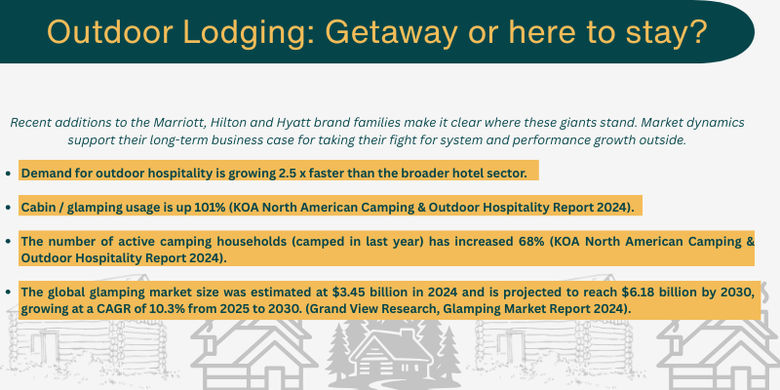
Fig. 1. High demand, unfilled products gaps point to major upside for outdoor lodging.
Here are their core topics up for discussion.
·Durability. “Market growth [see Figure 1] reveals increasing mainstream adoption and growing demand,” said Rosenberg. “Many major-brand loyalty members are expressing interest in outdoor travel. Across wellness, reconnection, and nature-based travel, the signals all point to a long-term shift, not a temporary reaction to the last few years.
·Resilience. Rosenberg said, “Drive-to demand and wellness travel remain strong even when discretionary budgets tighten. Quick, restorative escapes are proving to be a durable consumer behavior. Outdoor lodging offers both cost discipline and highly experiential stays, which stabilizes performance. Travelers increasingly view outdoor stays as a form of self-care or micro-retreat, accelerating shorter, more frequent trips in drive-to markets.”
· Risks and rewards for 2026-27. Rosenberg predicts ADR will remain strong based on travelers’ willingness to pay for nature-forward experiences. He sees the biggest upside in midweek group demand, from retreats and wellness gatherings to small corporate groups. Seasonal patterns and weather volatility remain the biggest variables, he said.
· Market dilution. Investors have seen launches cannibalizing their core markets. That’s not a factor in the outdoor segment, in Rosenberg’s view. “The guest motivations are fundamentally different. They’re looking for immersion, quiet, space, and simplicity rather than a traditional hotel experience,” he said.
Growth is coming from travelers seeking short, restorative trips that hotels often overlook. “As major hotel brands adopt this category into their portfolios and loyalty platforms, we’re seeing incremental demand we wouldn’t have reached through traditional flags alone,” he added.
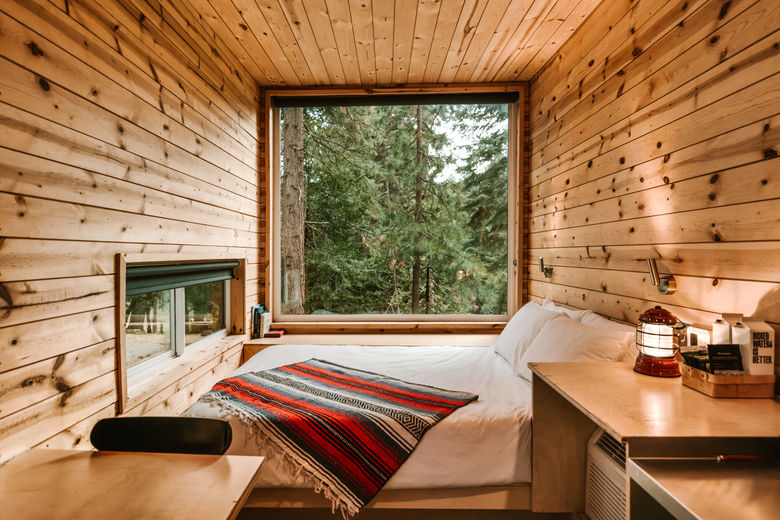
Postcard Cabins offers nature driven getaways within two hours from most major cities.
·Brand differentiators. Rosenberg check-listed modern design with hotel-level essentials: from private bathrooms to efficient kitchenettes, workspace, climate control, and curated outdoor areas like firepits; mission-driven touchpoints such as s’mores kits redesigned to support social impact organizations; pet-friendly amenities, and “modern comforts without the noise of traditional hotels,” including fresh linens, secure surroundings, and easy access to onsite trails and shared outdoor spaces.
·What customers want next. “Younger travelers prioritize adventure, simplicity, and social-sharing value, all of which align with outdoor lodging formats,” he said. “Consumers who once were satisfied with rustic camping now actively choose elevated outdoor lodging that blends comfort, quiet, and nature immersion. Comfort-forward design and dependable hospitality standards continue to be decisive factors in converting casual campers into loyal outdoor lodging guests.
·Development targets and costs. “Most guests use outdoor lodging as a quick, close-to-home escape, so a two-hour drive radius fits naturally into how they travel,” said Rosenberg. “Postcard Cabins are intentionally located [typically] within two to three hours of major cities, giving guests an easy way to explore nearby landscapes in a secluded, nature-forward setting. That proximity built familiarity and repeat visitation, which helped accelerate early brand adoption.” On the cost side, he said per-unit build costs are “notably lower than select-service hotels.” Land preparation and utilities are the biggest variables market-to-market.
·Labor. “The product itself reduces complexity, as the cabins are built for low-touch service,” Rosenberg said. “A self-guided, contactless check-in model matches guest expectations and lowers labor needs. Cross-trained teams ensure coverage across maintenance, grounds, and guest service.”
·Revenue optimization. Rosenberg said being part of a major brand ecosystem immediately lifted contribution. “Guest mix is averaging more than 70% of demand flows through loyalty channels. ADR has held strong, averaging 10% OTA reliance, for Postcard Cabins, “which is rare for a newer category,” he noted.
·Filling the gaps. “We rely heavily on analytics that give us visibility into booking behavior, pickup, segmentation and pricing windows,” he said. “Building shoulder-season and midweek demand through wellness, retreat, small weddings, and small-group travel is a major opportunity. We’ve also leaned into small, experience-driven touches that elevate perceived value without complicating operations. A unified destination fee enhances revenue while enriching the guest experience through built-in touches — firewood bundles, s’mores kits, and other simple comforts — that help guests settle in, slow down, and truly enjoy the outdoors.”
·Loyalty fuels growth. Postcard Cabins also gives loyalty members an entirely new way to redeem points for an outdoor stay, a shift Rosenberg said “broadens engagement with a category many travelers hadn’t previously considered.” Consistent quality without forcing a standardized feel across natural settings has resulted in superior levels of guest satisfaction and loyalty.
“Hotel Equities’ commitment to being entrepreneurial, owner-centric, tech-forward, revenue-driven, and people-powered ensures outdoor lodging is approached as a scalable, durable asset class — not a short-term trend,” Rosenberg concluded.
Mary Scoviak is custom & design content director for Hotel Investment Today by Northstar.
The views and opinions expressed in this content do not necessarily reflect the opinions of Hotel Investment Today by Northstar or Northstar Travel Group and its affiliated companies.