Driftwood Capital’s Carlos Rodriguez talks about the new realities of
loan-to-value and why a slowdown in construction likely isn’t changing any time
soon.
Hotel
Investment Today is writing a series featuring interviews with hospitality
experts about the current state of the hotel refinance market. Today, we
interviewed Carlos Rodriguez, founder, chairman and CEO of Driftwood Capital.
For Part 1 with JLL’s Kevin Davis, click here. For Part 2 with Peachtree
Group’s Jared Schlosser, click here. For Part 3 with Berkadia’s Michael
Weinberg, click here. For Part 4 with CBRE’s Michael Straw, click here. For
Part 5 with Arriba Capital’s Ryan Bosch, click here.
NATIONAL REPORT — Carlos Rodriguez is seeing a difference
in the role preferred equity and mezzanine financing are playing in the capital
stack for hotel refinancing.
Rodriguez, founder, chairman and CEO of
Miami-based Driftwood Capital, said preferred equity or mezzanine was
previously used to get the loan-to-value percentage (after the senior loan) in
the 70% to 85% loan-to-value space.
Now, Rodriguez says that financing is used to get loans
above 50%. “I’m seeing more borrowers willing to do [preferred
equity] than before,” he said. “[Borrowers] used just to be happy for a senior
loan that got up to 70%, and then it would be equity from there, but since
they’re now only getting to 50%, and they need to bridge the gap, that’s when
we’re seeing more mezz or preferred equity than we used to see.”
Driftwood is a vertically integrated commercial real
estate firm with investment, development, lending and management platforms. For
hotel refinance deals, it works primarily in the mezzanine funding space (or
preferred equity) and will also assist in finding a senior lender when it does
provide that financing.
Rodriguez said that because financial institutions are
offering fewer loans, there’s “bigger room for us to come in with a nice spread
for ourselves and our investors.” He said Driftwood is working with a higher-quality
borrower now.

Construction has dwindled to a minimum, and I don’t see it having an uptick for the next five years. I see construction being very little around across the board.
Carlos Rodriguez, Sr.
“What I’m seeing is really good quality operators and
sponsorship groups in need of [financing}, and it provides a great opportunity
for us to grow and have exposure in groups that we probably wouldn’t have seen,” he said.
“The people coming to us now are a result of the financial institutional
shutting off the spigot.”
Driftwood is doing a higher number of refinance deals
than it has in the past few years. Rodriguez said the company’s sweet spot is
in the $15 to $25 million range, but it will go as high as $50 million.
Slowdown in construction
Where there is a slowdown, Rodriguez said, is in
financing for new construction. He said he thinks that trend is going to stick
around.
“Construction has dwindled to a minimum, and I don’t see
it having an uptick for the next five years,” he said. “I see construction being very little
around across the board... Before, we used to build 2% a year supply growth; now I don’t know if we will reach 0.5%.”
It’s because deals aren’t penciling, Rodriguez said, and
he doesn’t think the Federal Reserve lowering interest rates will be a quick
fix, either. “While I believe that a rate cut will stimulate
construction, that still might not be enough to make the deals pencil,” he said.
Rodriguez said it’s a different case for Driftwood as the
company has changed its strategy. The firm has adopted a “white knight” strategy
with investors who have been developing for several years but are having
trouble getting capital. “We come
in, inject the capital they need or help them get the loan they need… So, we’re
bringing the capital, and we will help them develop the hotel.”
Because of that strategy shift, Driftwood currently has
about $1 billion in its pipeline.
State of the market
Borrowers are getting more creative in this market,
Rodriguez said. “Before,
it used to be a higher loan to value that you would get. Nowadays, you’re willing to get the same interest rate for a much
smaller loan in the capital stack.”
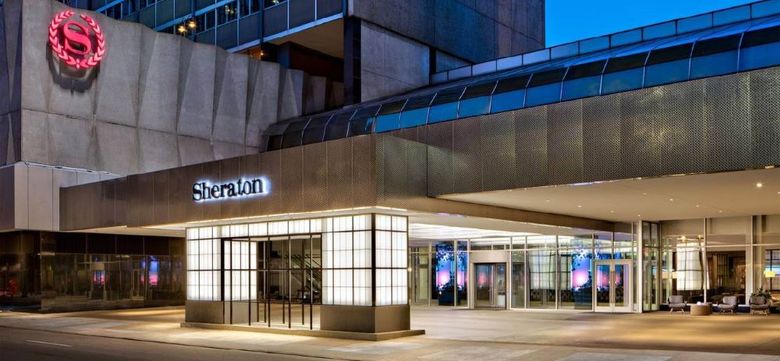
Driftwood Capital provided mezzanine financing on the refinancing of the Sheraton Dallas Hotel earlier this year.
It’s still a
competitive market for senior loans, Rodriguez said, with banks being
substituted in part by debt funds. While debt funds are easier to work with,
there’s a catch. “It’s just more costly in general,” he said.
“But they are a lot faster, a lot easier and a lot more efficient in getting it
executed."
The acquisition market is also much
slower for Driftwood too. Rodriguez said the firm would typically buy five to eight hotels yearly, but
it’s only bought a few in the past two years.
Another area where Driftwood is increasing its activity
is in EB-5 investments. Rodriguez said it requires a lot of work. “For the project, it’s a cheaper source of capital. It
takes time to develop it,” he said. “In certain ways, it’s not only cheaper,
but it’s easier on the project for debt servicing.”
Rodriguez said that type of financing requires patience
because of the time it requires plus the uncertainty. “If I go to market on a loan, typically, you negotiate
terms, you do due diligence, and you’re able to close in 30 to 60 days,” he said.
“On EB-5 [financing], you can be raising the money for three to six months or
even a year without certainty that you’ll be able to raise it at all.”