CEO Sean
Hehir discusses some of Trinity’s recent deals, his feelings on the broader investment market, rescue capital and
why larger portfolio deals could be in the future.
HONOLULU — Trinity Investments
has been one of the more acquisitive hotel investors in the past few years as
the company has recently purchased a number of high-profile, large, upper upscale assets
like the Fairmont Olympic Hotel in Seattle and The Standard, London.
While CEO Sean Hehir said the
company does a lot of underwriting on the assets it acquires and repositions,
it also spends a great deal of time thinking about who will buy it from
Trinity.
“I learned a long time ago from
one of my mentors that you don’t make your money when you sell an asset. You
make your money when you buy it. You have to buy it right,” he said.

I learned a long time ago from one of my mentors that you don’t make your money when you sell an asset. You make your money when you buy it. You’ve got to buy it right.
Sean Hehir
Hehir said buying it right
requires discipline regarding the markets you are in, the brands you are
dealing with, and the lenders you are working with. But, internally the company
also talks a lot about the “greater fool theory.”
“If we’re the fools buying the
asset today and we do our work, what is the profile of the buyer who’s going to
buy it from us?” he said. “We are always thinking three to five years ahead.
We’re buying this asset. We’re going to fix it, reposition it and stabilize it.
What is the profile of that buyer?”
Hehir used as an example
Trinity’s 2023 acquisition of the 1,000-key oceanfront Diplomat Beach Resort in
South Florida.
“A lot of groups either don’t
have the in-house capabilities or they don’t have the desire to do the heavy
repositioning, but they’re happy to buy the asset once it’s repositioned and
it’s showing a stable cash flow,” he said. “Hospitality should be viewed as a
much more favored asset class given how well we performed during COVID, with
high inflation, high interest rates and all of those things. I could see the
Diplomat going into a sovereign wealth fund or REIT or something like that.”
Hehir also used the example of
Trinity’s acquisition and repositioning of the 427-key Ritz Carlton Dallas, Las
Colinas from a Four Seasons.
“That probably fits well with a
REIT. A lot of REITs don’t have exposure in Dallas and would like to have it,”
he said. “Obviously, things change, but we at least want to think through these
things during the underwriting and the acquisition.”
Hotel Investment Today also talked to
Hehir about some of the company’s recent acquisitions, his feelings on the
broader investment market, rescue capital and why larger portfolio deals could
be in the company’s future.
Larger transactions
Trinity has executed over $3.5
billion of financing and refinancings in the last 12 months. A Bloomberg report
in December said the company was considering making a bid on Aliso Viejo,
California-based REIT Sunstone Hotel Investors. The story said Trinity could
pay a premium per share for the REIT but added that the two groups are not
currently in active discussions.
Hehir said that doing larger
deals will create some interesting possibilities as Trinity continues to scale
up its business.
“Doing larger transactions,
portfolios and so forth is going to be very interesting,” he said. “That could
be REITs. It could be REITs if they want to sell a subset of their assets. It
could be groups that have bought a portfolio and want to exit.”
Trinity is known for buying
“value-add” properties that benefit from the company’s ability to convert and
reposition the asset. Hehir said that the value-add idea also makes sense for
bigger deals.
“I often say that buying a
100-room hotel is as much work as buying a 1,000-room hotel. So, I’d rather
focus on a 1,000-room hotel,” he said. “It’s the same thing to buy a 10-pack.
It’s the same as buying a one-pack in terms of work and effort. So that’s where
we’re trending.
“But it has to come back to: are
we buying it right? Are we in the right markets? Are they the right brands?
Does it underwrite and all of that stuff?”
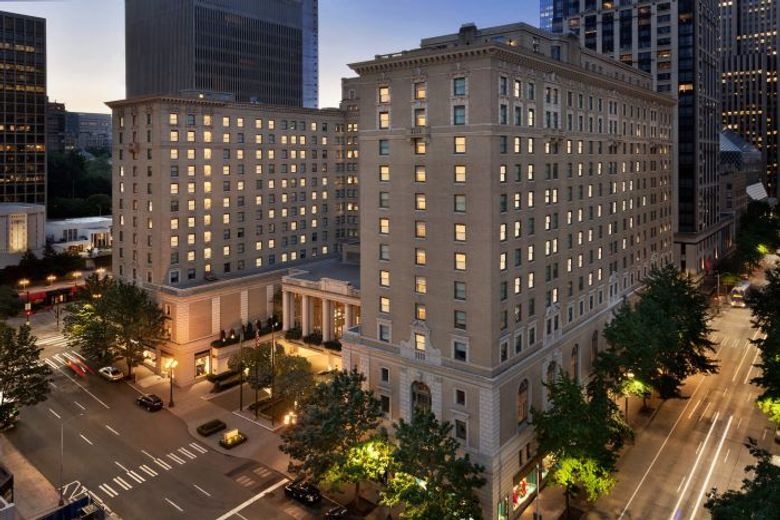
Trinity Investments recently acquired the 450-key Fairmont Olympic Hotel in Seattle.
Fairmont Olympic
Hotel
When asked about Trinity’s
recent acquisition of the 450-key Fairmont Olympic Hotel in Seattle, Hehir
complimented the sellers and said there were many reasons to like the deal.
“I spend a lot of time looking at counterparty risk
these days. Who are you negotiating with? The sellers (Ivanhoé Cambridge and
Rockwood) were phenomenal to work with,” he said.
Hehir said there’s a lot to like
about the market, too. “We had identified Seattle about
a year ago as an interesting market. It went through a lot of trouble during
COVID… but we could see the tide turning,” he said.
Hehir said the tide really
turned when Amazon announced it would have workers return to the office five
days a week starting in 2025.
“It’s one of those markets, like
San Francisco, where you’re constrained by physical barriers to entry like
water and mountains and stuff like that,” he said. “This was always an iconic
asset.”
Add in the chance to work with
the Fairmont brand and Accor, and Hehir said the deal “hit all the boxes” for
the company.
“We’ve wanted to work with
Fairmont and Accor for a long time,” he said. “We figured if we could bring our
expertise to bear to renovate, reposition and take this hotel to the next stage
in its life, it would open up a lot of opportunities within the Fairmont family
of hotels,” he said.
The Standard, London
For Trinity’s acquisition of the
266-key The Standard, London, in partnership with Oaktree Capital Management
and Partners Group, which also owns a minority stake in Trinity, Hehir said a
confluence of factors led to the deal. Those factors ranged from managing
partner Ryan Donn moving to London almost 18 months ago (at the behest of the
company’s joint venture partners) to working with a favored brand partner.
“What we loved about The
Standard was that it’s a very well-built hotel right at Kings Cross. So, it’s a
great location,” he said. “But it was interesting when we heard that Standard
was being bought by Hyatt. That was a game changer for us because we have a
very close relationship with Hyatt.”
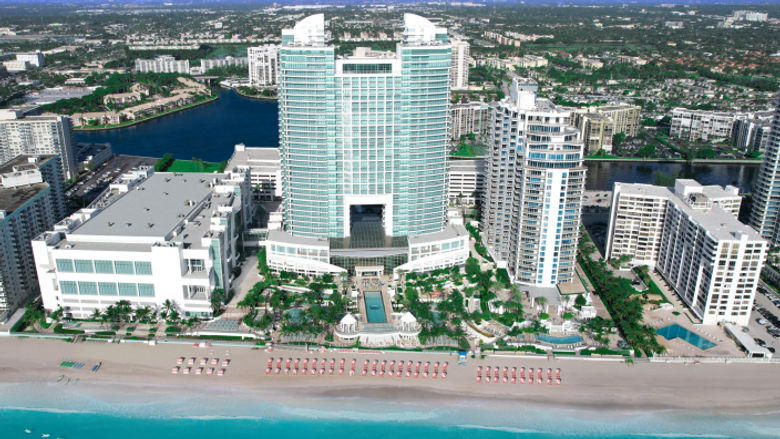
The Diplomat Beach Resort in South Florida was Trinity's largest acquisition to date.
The Diplomat Beach
Resort
Trinity’s largest acquisition to
date was the reported $835 million purchase of the 1,000-key Diplomat Beach
Resort in South Florida. Hehir said the deal offered many different
possibilities, especially with the adjacent parcels that Trinity has also been
dealing with.
“It had been on the market for a while, and we kept
looking at it. We all know what’s happening in South Florida; it’s just
unstoppable right now,” he said. “When we looked at it, we thought this would
be an ideal asset to go into because Hilton had managed it
previously, but they didn’t have an asset of that size in South Florida.”
“We’d be able to target their
group engine and their business. We bought it in partnership with Credit
Suisse, which is now UBS. We assumed the existing CMBS loan when we
bought it because the debt markets were a little bit choppy (Trinity later refinanced
the property)… It just gives us so many levers to pull as we’re repositioning
these assets.”
Current financing
landscape
Despite a “choppy” credit
market, Hehir said Trinity hasn’t had a problem finding acquisition financing
or refinancing lenders. He credits the power of relationships.
“A lot of it comes down to relationship lenders who
lend to us on a repeated basis. Then there are times when the SASB or the CMBS
market works in the U.S. and we’ve been able to refinance some of the big
assets through that,” he said.
Regional banks have also played
a pivotal role for Trinity. Hehir uses the example of the company’s continued
relationship with the Bank of Hawaii on several deals (Hyatt Regency in
Greenwich, Connecticut and the Fairmont Olympic) as a positive.
I’m a huge believer in the need for regional banks. You need the regional banks who understand all of the players and the different industries.
Sean Hehir
“I’m a huge believer in the need
for regional banks,” he said. “You need the regional banks who understand all
of the players and the different industries.”
Hehir said Trinity also relishes
its ability to provide rescue capital for assets with broken capital stacks.
“A big part of our focus is
going to be continuing to do what we do, which is buy, fix, reposition, sell,”
he said. “The other side of it is being a friendly transitional capital
provider to help these sponsors get from point A to point B because these are
good sponsors, and this is great real estate. It’s just broken capital stacks
and that’s nobody’s fault. That’s a function of what happened over the last few
years with COVID.”
While providing capital could
also create opportunistic acquisition situations for the company, Hehir said he
doesn’t think that is Trinity’s role. He sees the rescue capital side of the
business increasing for Trinity, maybe even to 40% of its total.
“We’re
not here to take your asset if it doesn’t go according to plan,” he said. “We
have the expertise to step right in and take over, but that wouldn’t be the
primary goal. We would earn the requisite returns for the rescue capital.”