Dubai-based
Sunset Hospitality Group eyes the lifestyle hotel market, poised to bring
Mondrian-style luxury to the world.
DUBAI - The
West has produced lifestyle hotel brands that prioritize F&B revenues
through immersive experiences and entertainment. Think Dream Hotels, 1 Hotels,
Edition and those gobbled up by Accor such as Hoxton, Mama Shelter, SLS and
Mondrian, among others. Now, an Ennismore of the East may be in the making.
Dubai-based
Sunset Hospitality Group is a rising sun in a space thus far defined by the U.S.
and Europe. Known more as a leading restaurant, beach club and nightclub
operator in the Middle East, the group is now anchoring a global hotel
expansion to its lifestyle expertise.
Last
November, it launched Sunset Hotels & Resorts, led by CEO Jaime Buxo Clos,
formerly its president for Europe, North Africa and Turkey. Assisting Clos as
COO is Philipp Knuepfer, who joined this month (July) after more than two
decades of experience with Mandarin Oriental Hotel Group.
The
mission is to operate 20 new hotels by end-2025, from a clutch today that
includes four Mett resorts in Turkey and Spain. The brand counts the likes of
SLS, Mondrian, Nobu and Edition in its competitive set.
Beautiful
Singapore sunset
In
Asia, Knuepfer let on that Sunset is closed to signing an urban resort and a
city hotel in Singapore. One is a newbuild with 160 rooms under a management
contract, and the other a takeover of a 100-room hotel under a potential lease
agreement. Sunset is co-investing in the latter although generally the company
is asset light.
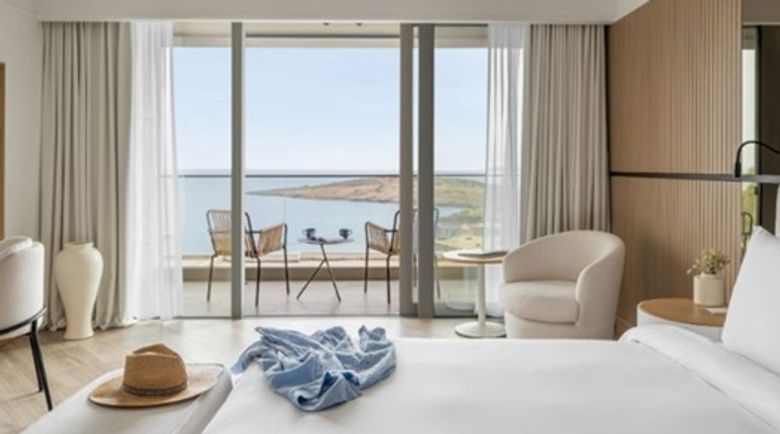
Mett Hotel & Beach Resort Bodrum, the first Mett-branded hotel in operation.
Last
November, Sunset also announced the debut of a new brand, Somus, with a 250-key
hotel opening in Uluwatu, Bali, in 2025. But the deal has fallen through. “We
will not proceed with the Somus Hotels,” Knuepfer said.
In
Europe, Sunset is co-investing in the Gran Hotel La Florida Barcelona which it
will manage under a lease agreement. The hotel will be closed in November for a
renovation that will preserve its heritage while breathing lifestyle elements
into it. The opening will be in time to celebrate its centenary next year.
By
end-2025, Knuepfer envisions the addition of five to six Sunset hotels in
Europe, six to eight hotels in Asia, and three to four hotels each in America
and the Middle East. Target destinations are Singapore, Thailand, Maldives,
Vietnam, Indonesia, Japan, China, Malaysia, Australia, the U.S. (Miami, New
York, Chicago, Beverly Hills, Aspen, Scottsdale), Italy, Greece, Switzerland,
England, France, Austria, Croatia, Portugal and Turkey.
“We
are already present in 22 countries. They are not new markets for us. They are
new markets for our hotel expansion, but we already have an operating structure
in many of those markets,” he said.
Like
Ennismore, F&B accounts for at least 50% of hotel revenues, assuming the
property has three F&B venues. Similarly, these outlets are a magnet for
non-hotel guests.
“I’ve
just returned from our Bodrum hotel and 70% of the F&B business is
non-hotel guests,” said Knuepfer, who is based in Singapore.
F&B-driven
approach
The
difference between Sunset and companies that expanded into hotels from F&B,
say Nobu or Hard Rock, is that the group operates more than 40 diverse dining,
daylife and nightlife brands, half of which it owns, the rest through
partnerships. These brands include Mott 32, in which it has a controlling
stake, Black Tap, Sushisamba, Aura Beach Club and Mood Lounge.

We have the brands and expertise in-house – almost any cuisine, bar, nightclub, entertainment you can think of – and that’s our true differentiation.
Philipp Knuepfer
Founded
in 2011 by two entrepreneurs, Antonio Gonzalez and Ahmad Nazih Hafez, Sunset is
present in 22 countries and has expanded beyond the Middle East to Europe, Asia
and North America with nearly 80 venues, thus far chiefly non-hotels.
So, why hotels now? The group figured that since they operate a lot of venues in
nice hotels, they might as well do hotels themselves, according to Knuepfer. “Now
we have enough fire power to make it happen,” he said, referring to the launch
of the hotels division, the group’s global presence and F&B chops.
“When
I talk to owners, developers and asset managers, the moment they see the food
and beverage power of Sunset, they get very interested in us. F&B is always
important, especially to lifestyle. But many owners, developers and asset
managers need to go to third-party restaurateurs, third-party chefs or
celebrity chefs. We have the brands and expertise in-house – almost any
cuisine, bar, nightclub, entertainment you can think of – and that’s our true
differentiation.”
Knuepfer
said he treats the company’s daylife, nightlife and dining divisions “almost
like a third-party,” seeking their inputs on what facilities and brands are
best for the hotel in question.
He
agrees there is an F&B rejuvenation in hotels globally but having a
restaurant perspective makes Sunset fundamentally different. “I’ve been a
hotelier and F&B director. I don’t want to offend hoteliers, including
myself [chuckling], but when hotels do F&B, it’s different from when
free-standing restaurateurs do F&B.”
That
said, not having a hotelier perspective to run hotels should be a concern to
investors, especially for a fledgling brand like Sunset’s Mett. The appointment
of Knuepfer should address that, given his luxury hotel background, albeit
Mandarin Oriental is classic luxury.
Knuepfer
is excited to embrace a changing luxury with Sunset. “Customers want a
different luxury experience. I don’t think they want to reduce their standards,
but they want a more relaxed luxury or lifestyle. There is a focus on getting
together, on having fun, be that through dining in our case, or through
wellness or sustainability.
“Our
mission is to bring people together and have them enjoy life. We do this
successfully in our restaurants, and in our hotels. It’s about having a choice
in luxury, rather than being pressed into dress codes.”
Loh
Lik Ping, director of Singapore-based Unlisted Collection, owner-operator of
hotels and restaurants in Singapore, Shanghai and London, sees Sunset
succeeding in hotels although there are likely to be challenges.
An
example is entering a market like Singapore, which has so many restrictions and
regulations on foreign manpower. “None of the other markets they operate in
have such onerous rules. They have to adapt their operations to be very much
less reliant on foreign talent. They come from the Middle East but almost all
their executives are Western and Western-trained,” Loh said.
Nevertheless
Loh, who has had a fair amount of interaction with Sunset said, “They are
really smart, ambitious and growth focused. There’s a strong streak of the
cowboy in them but in a refreshing rather than wild way. So, I can see them
succeeding because they are bold and willing to take some risk but with a good
grounding in the business fundamentals.”