Acquisition of the Four Points by Sheraton
Nagoya is a start, but don't expect Far East Hospitality Trust to be aggressive
in going beyond its Singapore roots.
SINGAPORE
– Singapore-centric Far East Hospitality Trust has taken its first step to
expand beyond the Lion City by acquiring the Four Points by Sheraton Nagoya for
JPY6 billion ($40 million). The price is 23% below an independent valuation,
and lower than an estimated JPY7.8 billion replacement cost, including land
value, reconstruction cost of similar standard hotel and incidental expenses.
The acquisition is a milestone for the REIT which, since listing in August
2012, has focused only on the home market. It boasts one of the largest
hospitality portfolios in Singapore by asset value at S$2.52 billion (US$1.9
billion), comprising nine midscale and upscale hotels and three serviced
residences with 3,015 rooms/units in the city. It also holds a 30% stake in
Fontaine Investment, developer of three hotels on Sentosa Island off
Singapore’s southern coast. All of its assets in Singapore are managed by Far
East Hospitality Management.
Other Singapore REITS that focus on hospitality assets include CapitaLand
Ascott Trust, CDL Hospitality Trusts (CDLHT), Frasers Hospitality Trust and
Acrophyte Hospitality Trust. CDLHT completed two acquisitions in 4Q24, Hotel
Indigo Exeter and Benson Yard Liverpool, the latter marking its entry into
student accommodation.
Far East Hospitality Trust has announced an expansion of its investment
strategy to include a global scope and other adjacent lodging asset classes
while maintaining Singapore as its core market. Adjacent asset classes could be
purpose-built student accommodation or rental housing (i.e. accommodations that
are rented out to guests on short stays for leisure, business or both), said
CEO Gerald Lee in an interview with Hotel Investment Today.
When asked if the new mandate indicates a too heavy exposure in Singapore or
too many opportunities overseas, Lee explained that Singapore's limited land
supply and stable economy sustain an intrinsic real estate value, while its
status as a tourism and business hub ensures that accommodation is always
needed.
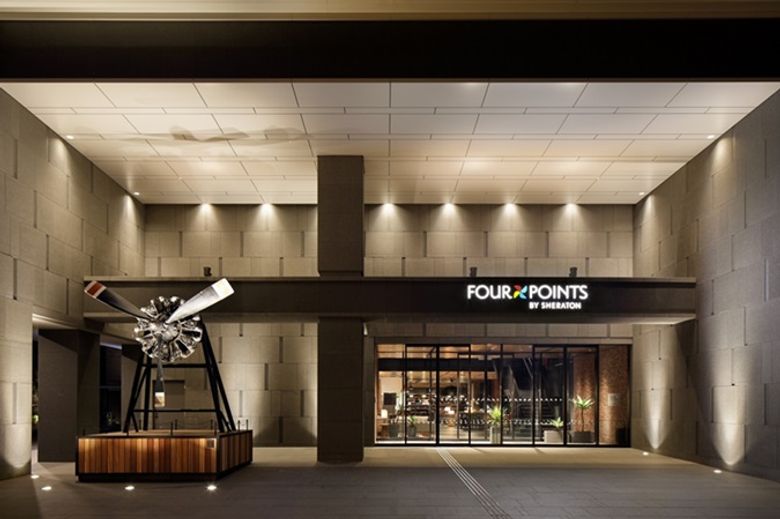
Far East Hospitality Trust acquired the Four Points by Sheraton Nagoya for $40 million.
However,
interest rate sensitivity can constrain growth; likewise, an oversupply or a
slight downturn could impact the REIT for several years. Diversification into
markets such as Japan, with its multiple cities like Tokyo, Osaka and Nagoya,
offers the group another growth engine.
But it’s unlikely that Lee, who advocates “prudence” in managing the REIT, will
rush headlong into globalization. He’s avoiding emerging markets such as
certain countries in Southeast Asia whose currencies are known for their volatility.
He emphasizes growing in Japan first, before investing in markets such as the U.K.
and Australia. Far East Organization, the REIT’s sponsor, is present in those
markets; its network and experience would be valuable be it in, say, opening
doors to off-market deals, or securing financing.
“When the time is right and the interest rate has come down, we can consider
cities such as London and Manchester where there are tradable assets and yields
are generally high,” Lee said.
Far East Hospitality Trust’s gearing ratio is low, thus it has ample debt
headroom if needed, he said, when asked about capital availability for
expansion.
“Our
gearing ratio is 32.9% [after completion of the latest acquisition], well below
the Singapore REIT average gearing of 39.7% and the MAS [Monetary Authority of
Singapore] regulatory limit of 50%. We intend to keep our gearing below the
average.
“But as an illustration, if our gearing ratio rises to 40%, it would allow for
an additional S$412 million in debt that could fund the acquisition of five to
six properties in Japan, similar in size to the Four Points by Sheraton Nagoya,
assuming an average acquisition cost of S$70 million per property,” he said.
Acquisition details
The
319-room Four Points sits on a 9,750 square-meter freehold land, 70% of which
is leased to a carpark operator. Subject to planning approval, this land could
be repurposed into an additional hotel or other commercial uses, presenting
opportunities to further enhance the acquisition’s long-term value.

Nagoya has so much hidden potential that customers today wish to experience, especially those who have visited Japan several times.
Gerald Lee
The hotel opened in November 2018 and, with low occupancy during COVID, is in
relatively new condition with modern interiors and an average room size of 26
square meters, bigger than the traditional Japan business hotel. It is located
within a 6-to 10-minute walk of Nagoya Chubu International Airport, and a
6-minute walk of Aichi Sky Expo, Japan’s fourth largest exhibition center.
International passenger volumes at the airport hit 68% last year and are
expected to reach 2019 levels this year. A second runway is scheduled to start
construction in 1H25 and to complete by 2027, increasing capacity by 50%.
Aside from business travel, meetings, global conventions and events, the
hotel’s new owner is banking on Japan’s aim to encourage tourists to visit
lesser-known regions such as Central Japan, which offers scenic and
culture-rich attractions such as Takayama, a well-preserved old town with
traditional architecture in the Gifu Prefecture
“Nagoya has so much hidden potential that customers today wish to experience,
especially those who have visited Japan several times,” Lee added.
Bigger picture Japan
Japan continues to attract investors as 2024 arrivals climbed 47% to nearly 37
million and the government targets 60 million visitors and JPY15 trillion
tourism receipts by 2030.
But the space is becoming more competitive. Kenneth Gaw, president and managing
principal, Gaw Capital Partners, speaking at HICAP Conversations on March 26,
said, “Japan has been one of the strongest markets in Asia but unlike in the
rest of the world, interest rates there are actually increasing [impacting borrowing
costs]. It’s also very competitive to buy an asset there.”
Japan has been one of the strongest markets in Asia but unlike in the rest of the world, interest rates there are actually increasing [impacting borrowing costs]. It’s also very competitive to buy an asset there.
Kenneth Gaw
Far East Hospitality Trust’s Lee observed there are more local investors who
have abandoned their cautiousness during COVID and are joining foreign players
in bidding for projects as they see the surging tourism numbers in Japan.
When asked to name a risk in investing in Japan, Lee said, “We can’t discount
earthquakes in Japan, but buildings that rise after 1980 must adhere to laws
such as the ability to withstand an earthquake of a certain magnitude. I think
we will see natural disasters in many countries, including Japan. The
Japanese people have dealt with it a lot; they are able to manage it.”
Marriott International will continue to manage the Four Points by Sheraton
Nagoya. On using third-party operators for overseas projects, and not sister
Far East Hospitality Management, Lee said, “As a listed company, we need to
have an arm’s length transaction to see what is good for the shareholders of
our REIT. If Far East Hospitality [Management] can give us a good value
proposition for any asset we acquire [overseas] in the future, we will
consider.”
Lee is aiming for 70% to 80% of its business to be in Singapore and the rest
outside. “We have a positive outlook on hospitality in Singapore. With the
construction of Terminal 5 [at Changi International], there must be plans to
grow more traffic into Singapore. We’re seeing more family offices, new
manufacturing and services companies, project teams working on various
infrastructure projects, events and concerts, all of which make Singapore a
more vibrant city, which benefits hotels,” he said.