The pioneering Black businesswoman has built something
unique with the Salamander Collection: a venture that has perfected community
building and an approach to hospitality that puts the emphasis on experiences.
Note: This story first appeared on Travel Weekly
MIDDLEBURG, Virginia – As a woman of considerable means,
Sheila Johnson has the luxury of choice.
The 75-year-old billionaire could choose to spend the
majority of her time anywhere in the world, be it an overwater bungalow in
Bora-Bora or a superyacht along the sun-drenched Amalfi Coast.
But instead, Johnson spends much of her life here in this
small, rural enclave located roughly 50 miles from the nation’s capital, where
she’s anchored a growing hotel brand.
This picturesque hamlet of rolling hills and horse stables
is home to the Salamander Middleburg, a 340-acre resort that opened in 2013 as
the first branded property in Johnson’s hospitality empire, Salamander
Collection. The 168-room resort, home to both a sprawling spa and equestrian
facilities, has become a magnet for Washington elites and other leisure
travelers seeking a countryside escape.
The property’s success has been a catalyst for growth.
Today, Salamander Collection operates six properties, including the Hotel
Bennett in Charleston, South Carolina; Half Moon in Montego Bay, Jamaica; Aspen
Meadows Resort in Colorado; and Innisbrook, a golf resort in Palm Harbor, Florida.
The group’s most recent addition is the Salamander
Washington DC, which joined the fold in late 2022. Formerly operating as the
Mandarin Oriental Washington DC, the 373-room property is close to wrapping up
a top-to-bottom revamp, trading in Mandarin Oriental’s ornate, Asian-inspired
aesthetic for a lighter, brighter and more contemporary look.
BET and walking through fire
Salamander isn’t the first empire Johnson has built.
Although she began her professional life as a violinist,
Johnson’s rise to prominence began in 1980, when she and her then-husband
Robert Johnson launched the groundbreaking TV network Black Entertainment
Television (BET), addressing a glaring void in media representation for Black
audiences.
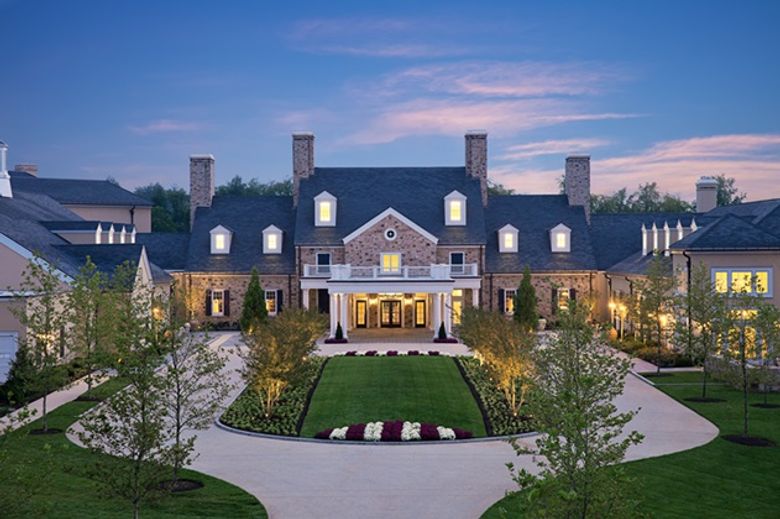
Main entrance to Salamander Middleburg in Virginia
BET made history in 1991 as the first Black-owned company
listed on the New York Stock Exchange. Johnson broke another barrier in 2001,
when the network’s $3 billion sale to Viacom made her the first Black woman in
the U.S. to reach billionaire status.
Since then, her list of accomplishments has continued to
grow.
Johnson is the only Black woman to have a principal
shareholder stake in three professional U.S. sports teams: the NBA’s Washington
Wizards, the NHL’s Washington Capitals and the WNBA’s Washington Mystics. She’s
dabbled in the world of cinema, executive producing several documentaries and
feature films, and she’s also known for her philanthropy, lending support to
global humanitarian organizations like Cooperative for Assistance and Relief
Everywhere, or CARE, an organization fighting global poverty.
Most recently, Johnson added published author to her resume.
Last year, Simon & Schuster released “Walk Through Fire: A Memoir of Love,
Loss, and Triumph,” which delves into both her triumphs and hardships.
Many of those stories are deeply personal, including her
parents’ divorce, a 33-year marriage marked by emotional abuse, the loss of a
child and her battle with depression.
Professionally, Johnson details her struggles with
self-doubt and the challenges of overcoming institutional racism as a Black
woman in business.
But as the title suggests, Johnson has emerged from these
trials stronger and more resilient. It’s a powerful theme reflected not only in
her memoir but also in the Salamander name.
It stems from her farm near Middleburg, once the property of
former Rhode Island governor Bruce Sund-lun. His wartime exploits — surviving a
plane crash in Nazi-controlled territory and escaping to France — earned
Sundlun the nickname “Salamander,” for the amphibian’s mythic ability to endure
fire. That symbol of resilience and survival is a theme throughout Johnson’s
memoir, and her life.
Creating connections
For Johnson, Salamander Collection represents more than just
a successful and highly resilient business venture. The company is also a
testament to her passion for creating spaces that foster connection and
celebrate diversity.
This commitment came into sharp focus when Johnson sat down
for an interview at the Salamander Middleburg in mid-August.
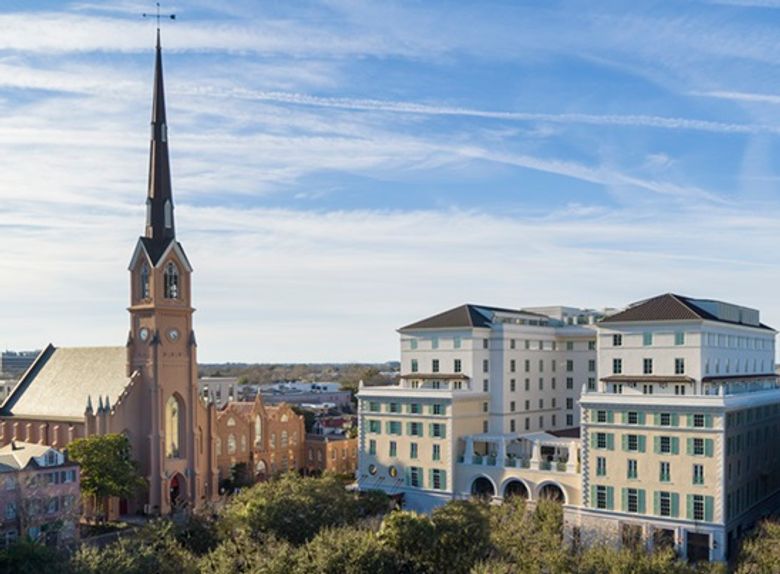
Hotel Bennett in Charleston, South Carolina
The interview coincided with the resort’s fourth-annual Family
Reunion food festival, a four-day ticketed event celebrating Black culture and
contributions to the culinary world. Johnson serves as the event’s co-host,
alongside the event’s headliner, Chef Kwame Onwuachi. The partnership between
Johnson and Onwuachi has flourished, expanding to the Salamander Washington DC
with this fall’s launch of Onwuachi’s newest restaurant, Dogon.
Drawing roughly 1,000 attendees, this year’s festival
featured an impressive roster of Black culinary talent, including TV
personality Carla Hall and celebrated restaurateur Alexander Smalls.
“I stress diversity,” said Johnson, as she sat on a patio
overlooking the Salamander Middleburg’s immaculate back lawn. “It’s important
for me as an African American woman to be able to prove the point that we are
so embedded in this country and that we need to be celebrated. Salamander is a
place of celebration and love, and everyone just gets inspired when they come
here.”
Throughout the Family Reunion, inspiration came in many
forms. The event featured Michelin star-worthy lunches, wine tastings, spades
tournaments, cooking competitions, musical performances and panel discussions
on topics like women’s financial independence and preparedness.
To call this particular blend of luxury hospitality,
meaningful dialogue and diverse representation unique would be an
understatement.
“We’re using this resort as a vessel to be able to think out
of the box and curate some of the best experiences ever,” Johnson said. “I
mean, what we’ve been able to do here the past four years [with the Family
Reunion] is unprecedented. No one in the whole country does what we do.”
The Salamander experience
Johnson and her team appear to have mastered the art of
experiential hospitality, setting Salamander apart in a crowded industry. But
innovative experiences and programming aren’t the only ingredients in the
company’s secret sauce, Johnson said, pointing to personalization and community
engagement as key pillars.
“It’s not just coming and checking in,” she said. “I always
ask my front desk, my general manager and the management team to do a little
bit of homework. See what these guests really like. What should we put in their
rooms when they come in? Should I be there to greet them, especially if I know
them or we have a connection in some way?”
For Johnson, however, guest satisfaction isn’t the be-all
and end-all. She champions what she calls the “double bottom line” approach — a
business model that aims to achieve both financial returns and positive social
impact.

Aspen Meadows Resort in Colorado
“We always have to reach out into the community,” Johnson
said. “I have to go into these communities, whether it’s giving speeches or
raising money for charity or a school — I have to be there. That’s really,
really important.”
Johnson’s commitment to diversity has also emerged as a key
differentiator at a time when the broader hospitality sector’s enthusiasm for
diversity, equity and inclusion (DEI) programs has started to fade.
“DEI is drying up quickly,” she said. “I’ve known many
people that have been hired for DEI and they’ve now lost their jobs, because
[their companies are] just checking a box. There’s a certain culture that has
to be demonstrated within companies, and if you’re going to do it, do it right.
Do it with passion and authenticity, because if you don’t, people can see right
through it.”
Looking toward Salamander Collection’s future, Johnson
remains committed to growth, but not at the expense of the high standards she’s
set for the brand.
“Every week, we get presented with ideas, [but] I want to
find a place that I know not only we can build our brand but also where I feel
comfortable and the staff feels comfortable getting into the community and
doing what we’re doing here,” she said. “If it’s not the right fit, it’s not
going to work.”
That’s not to say that Salamander Collection takes a
one-size-fits-all approach to expansion.
“I don’t like cookie-cutter ideas, because then it’s
boring,” Johnson said. “Every one of our properties is different when you walk
in the door, but you can still feel the Salamander presence and what our value
systems are about.”
The promise of hospitality
Given the Salamander Middleburg’s proximity to Washington,
the discussion inevitably touched on political matters.

“I’m in my third act: first as a concert violinist, teacher and orchestra director; second [was] BET. And third, now, I’m in the hospitality business. This is the happiest part of my life.”
Sheila Johnson
Johnson is acutely aware of the impact that the upcoming
election could have on the country at large.
“We’re entering the most contentious election year ever, I
think,” she said.
Despite this, Johnson remains optimistic about the future,
particularly when it comes to the next generation of voters and leaders.
“For the first time, we are reaching that younger
generation,” she said. “They’re the future, and we have got to bring up a new
power base.”
During one evening, the election was thrust into the
spotlight as Johnson took the festival stage to read a letter from vice
president and Democratic presidential nominee Kamala Harris.
In the letter, which was addressed to the event’s attendees,
Harris thanked Onwuachi and Johnson for celebrating the contributions of Black
hospitality professionals and showcasing the industry’s progress toward a more
inclusive and equitable future.
“To all those convened today: Your creativity, innovation
and dedication help create prosperity and opportunity throughout the industry
and across our nation,” Harris wrote. “A hospitality industry is vital to
strengthening our economy [and creating] welcoming spaces for communities to
come together.”
It’s that ability to bring people together that seems to
keep Johnson hooked on hospitality.
“Meeting all of these incredible personalities and different
people coming from all over the country — for them to come here and see what I
created, this is what gives me so much enjoyment,” Johnson said.
Indeed, it’s the happiness of others that appears to be
Johnson’s greatest reward. During an onstage conversation with CBS News
contributor Nancy Giles, Johnson told the audience that it’s her latest stage
of life as hotelier that has brought her the most joy.
“I’m in my third act: first as a concert violinist, teacher
and orchestra director; second [was] BET,” said Johnson. “And third, now, I’m
in the hospitality business. This is the happiest part of my life.”
Johnson said she hopes that this three-act journey, with all
its highs and lows, can serve as an inspiration to others. She dedicated “Walk
Through Fire,” her memoir, to “all the women who’ve walked through fire and
lived to tell about it.”
Addressing the audience, Johnson elaborated on this
metaphor.
“We have all walked through some kind of fire,” she said.
“It may be little flames, it may be big flames, but we have all experienced
adversity. It’s the only way you can grow. You need to learn to fail. Don’t
quit there. If that path isn’t going to work, learn to walk another path.”