The Australian fund manager is diving into Japan’s mid-market
hotels, ryokans and luxury properties – a thrilling journey that can be
challenging.
SINGAPORE – Salter Brothers is in discussions for a joint venture with a
domestic ryokan operator which, if successful, would jumpstart its aim to
expand in the space in Japan. Simultaneously, it is actively working on
transactions in the mid-market sector and hopes to announce a few closings in
the coming months. A third prong is the luxury segment, in which it has
just signed a partnership with Tokyo Century Corp, its first deal in Asia since
announcing plans to expand in the region last year.
Japan, and Salter Brothers home base Australia, are where
its existing and new investors want to put their money, said Rahul Ghai, the
company’s first Asia head who joined last November as managing director for the
region based in Singapore. While his hands are full with the two key markets,
the company is still pursuing a value-add Asia fund focusing on opportunities
in Thailand, South Korea and Vietnam, said Ghai when asked about the company’s
plan for the rest of Asia.
“Currently we have a lot of interest in Australia, where we
are successful, and Japan, where even new capital is coming in and working with
us. The third stage will be the value-add Asia fund, which is still on track
for launch early in 2025,” Ghai said.
“We’re a thematic shop in terms of the countries and sectors
we want to focus on. The mid-market and ryokans, which we have identified as
our themes in Japan, have been well received and appreciated by our clients.”
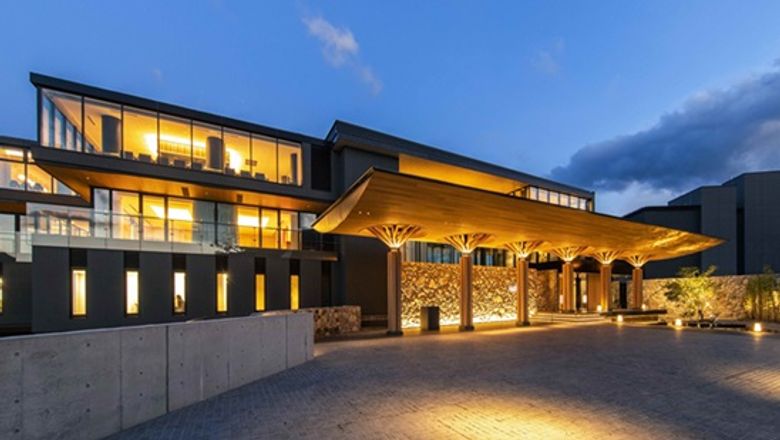
The ANA InterContinental Beppu Resort & Spa in in Kyushu, Japan
Japan’s mid-market, especially its plentiful inefficient
traditional business hotels with 100 to 200 keys, is de rigueur for most fund
managers seeking to add value. Ryokans, on the other hand, are known to be
trickier, and although Salter Brothers has the experience with small retreats
in rural areas in Australia, thanks to its 2022 acquisition of Spicers
Retreats, it’s a continent apart from Japan.
Nevertheless, a growing desire among customers for new
experiences beyond Japan is driving fund managers to consider ryokans. “There
has been a number of attempts. I would be skeptical given the human touch
needed,” said Daniel Voellm, CEO and f ounder of AP Hospitality Advisors. “Yes,
there is inefficiency in ryokans given their small scale, and opportunities to
consolidate overheads across a portfolio. However, a ryokan is a distinct guest
experience – how much it lends itself to institutionalization while maintaining
its appeal to the critical domestic market remains to be seen. If catering
exclusively to foreigners, there would be more flexibility [to reinvent the
experience].”
SC Capital Partners Chairman and Founder Suchad
Chiaranussati at a recent forum said since the firm has acquired a sufficient
number of city hotels, it is looking for secondary locations and “I don't know
whether one day we will be able to be smart enough to internationalize and
institutionalize ryokans.” His attempt to modernize a sake brewery was an
“absolute failure,” he said.
Asked how he would do it, Ghai said, “We are finalizing our
joint venture partnership with the domestic operator which already has
experience in the space, and this will allow us to access more pipeline. In the
meantime, we are using our network to accumulate assets one by one.
“It’s a highly unsophisticated market because most ryokans
are owned by individual owners, unlike in Australia where you can buy a
portfolio to start with.”
Serendipity in luxury
Unlike ryokans, Japan’s luxury expansion is more
serendipitous, with Tokyo Century focusing on upmarket properties.

A ryokan is a distinct guest experience – how much it lends itself to institutionalization while maintaining its appeal to the critical domestic market remains to be seen.
Daniel Voellm
The partnership starts with Salter Brothers assuming the
asset management of Tokyo Century’s 89-room ANA InterContinental Beppu Resort
in Kyushu. A five-year-old resort under management contract with IHG.
Ghai declined to discuss the hotel’s current performance and
return criteria with Salter Brothers as asset manager.
But clearly Salter Brothers will have to be on its mettle
from the start, since its aim is to build a successful partnership and acquire
further luxury assets with Tokyo Century. Ghai said the partner likes this
asset class and is committed to growing it.
Tokyo Century also owns Hotel Indigo Karuizawa, opened in
2022 and managed by IHG. As well, it is co-developing a luxury hotel with
Mitsubishi Estate, opening in 2028. The hotel will be located on the upper
floors of Torch Tower, set to be the tallest building in Japan, and will be
operated by Dorchester Collection.
Asked if Salter Brothers would be the asset manager for the
other two properties, Ghai said, “There is a possibility, but we’ve just
started with our first asset and a lot depends on the performance. So, our
focus is to do a great job with what we have and delivering on returns for our investors.”
Still loving it
But while Japan continues to be the darling of hotel
investors, there are risks.
Japan, alongside Australia, is one of the largest institutional markets in Asia. Singapore is, of course, an amazing institutional market but it is tightly held, few transactions, very competitive. So, Japan offers the ability to access Asia with a lot of transparency and institutional track record.
Rahul Ghai
One is geopolitical tensions in north Asia, which can have
an impact on Japan and other markets in Asia; likewise any unforeseen “force of
nature” such as earthquakes and tsunamis, Ghai said.
Another is the question about whether Japan’s infrastructure
can cope with millions more arrivals. The country is targeting for 60 million
foreign arrivals by 2030, nearly double the record 32 million visitors in 2019.
In 1H24, arrivals totaled 18 million, beating the first-half of 2019 by a
million.
On top of that is a stable domestic market. JTB, one of
Japan’s largest tour operators, forecasts 273 million domestic travelers this
year, 94% of the figure in 2019.
“Japan has excellent infrastructure, but it was never
catering to 60 million people,” Ghai said. “So, that’s a risk in itself, that
infrastructure such as airport capacity, bullet train capacity, etc., can
actually handle the growth. We are watching [infrastructure development]
closely, as obviously it influences which cities we want to invest in.
“And if room supply does not catch up with demand, Japan can
be a pretty expensive stay. In Tokyo,
room rates even after currency depreciation are quite expensive because in the
inner city there’s hardly any new hotel development. Supply is not catching up
yet and that’s also because of the rise in construction costs globally.”
So why are investors still loving Japan? Prospects of 60
million arrivals in 2030 aside, it still has positive carry.
“Even though interest rates have risen in Japan for the
first time in 20 years, you still have a positive carry between the yields you
get from properties of 3% to 4%, versus the cost of borrowing. Few markets in the world have that,” Ghai said.
“Japan, alongside Australia, is one of the largest
institutional markets in Asia,” Ghai added. “Singapore is, of course, an
amazing institutional market but it is tightly held, few transactions, very
competitive. So, Japan offers the ability to access Asia with a lot of
transparency and institutional track record.”
The company is opening a Japan office in Tokyo in November.
It now has 115 staff and offices in Melbourne, its headquarters, Sydney,
Brisbane and Singapore.