Resort or destination fees are
profitable for owners but under attack from legislators and consumer
groups. We shine a light on the practice and
proposed solutions.
NATIONAL REPORT – Whatever you want to call
them — resort, destination, or “junk” fees — industry experts say they
aren’t going anywhere anytime soon.
In addition, many say most of
the proposed solutions aren’t intended to end the practice but just to make the
hotel industry more transparent on what its real rates are.
“This goes back to how you
feature something on a website when you’re booking. And I think that they’re
often hidden as service offerings of the hotel,” said Lily Sanders, director of
asset management at The Ascott Ltd., Singapore. “So, you’re basically bifurcating
the service offering. And if you’re not clear what you’re giving, I think it
becomes kind of junky.”
These fees, common at resorts
for things like beach chairs or gym access, are now showing up at
many hotels under different names. Hotels are getting more creative with what
they name these fees and what they charge. The first resort fees started
showing up in 1997, according to a Federal Trade Commission report, and they’ve
only grown since then.
“They seem to be a good
source of revenue for hotels to try and tack on an additional fee in exchange
for providing access to certain services… It was always about that value-add to
capture some additional revenue,” said Romy Bhojwani, senior vice president and head of asset
management at HHM Hotels, Philadelphia.
“They’ve been a significant
source of top-line revenue," Bhojwani continued. “What’s great about resort fees is that they don’t
have a lot of operating costs associated with them. Usually, the infrastructure
to provide that service already exists at the hotel. So, the flow-through
margin contribution from that additional revenue is pretty significant to the
bottom line. So owners love them, and asset managers love them.”
But whether consumers love
them is a different story.
Consumer Reports reported
that the hotel industry brought in a then-record $2.9 billion in resort and
other fees in surcharges in 2018.
There’s little doubt that the
number has skyrocketed over the past few years. The fees have received renewed
attention from travelers coming out of the pandemic because they booked a rate
only to see the daily total rise 25% or more on the final bill because of taxes
and fees.
Transparency as a
solution
Experts say successfully
implementing fees is more a matter of being transparent with your communication
with guests about how much they cost and what they are for.

Lily Sanders, director of asset management at The Ascott Ltd.
“I do see [transparency]
becoming the norm, and effectively it’s just putting a fixed component into
your ADR,” Sanders said. “But at the same time, it forces many of these
properties, which have added them hastily, to rethink what they offer. I think
there’s a lot of junky junk fees out there, to be honest.”
Sanders said that
transparency can also be used to enhance the experience for guests. She used as
an example a hotel in Niagara Falls that offered guests a free flight of beers
from an adjacent brewery as part of an amenity fee.
“That transparency forces the
consumer to evaluate what they’re paying for. And I do think that there is some
real value in using the amenity fee to engage the guests,” Sanders said. “The
idea is it gets the guests connected to the neighborhood, but then encourages
the guest to use the services on site.”
Government, industry intervention
A plethora of litigation and
legislation has been proposed to improve or end the practice of adding hotel
fees.
Earlier this month, the
California Hotel and Lodging Association announced its support for the
California Transparency Standard for Lodging Fees, which supports a single
standard across all lodging.
“Equal requirements must
exist for hotels, short-term rentals and other transient accommodations, as
well as the various booking channels that exist, from direct options to online
travel companies and even metasearch sites, as all mandatory fees are included
in upfront pricing so guests can more clearly see any costs associated with
their stays,” Lynn Mohrfeld, president and CEO of CHLA said in a press
release.
President Biden brought the
topic of junk fees up in the State of the Union address in February. And
the U.S. Senate has proposed legislation, though there is skepticism anything
can happen during a Presidential Election cycle.
There has been lots of
movement on the litigation side, with highlights including the Texas Attorney
General suing Hyatt regarding the true price of its hotel rooms.
Travelers United also sued Hyatt in a class action lawsuit last month for the
same thing.
And there has been movement
on the transparency end this summer, with Marriott saying in May it would
include resort fees in the first price travelers see on its site and app. Hyatt
did the same a few months later.
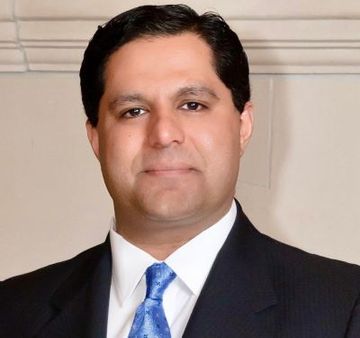
Romy Bhojwani, senior vice president and head of asset management at HHM Hotels
“When you look at the
lawsuits that some of the state attorney generals have filed, it is not about
the fee itself. It’s not about they’re not trying to control the ability of
businesses to charge the fee. It is about transparency,” Bhojwani said.
Experts say that the big
brands have already done a lot of work on assigning a value (4x, for example)
for services that come with any resort fees. But that doesn’t mean there still
isn’t room for bad actors in the industry.
“If you’re a branded hotel,
there are some good guardrails in place,” Bhojwani said. “When a brand approves
the hotel charging this fee, they undergo a rigorous exercise. You need to
submit an application. You need to provide the list of services that you will
provide in exchange for the fee. You need to calculate the retail value of
those services.
“So for branded hotels, for
the most part, it’s not a concern, where some of these frivolous services come
into play is more the unregulated independent hotels where a
customer could potentially not perceive as much value in the in the services
that are being offered.”
Sanders said the spotlight on
the fees is forcing hoteliers to take a new look at what they are charging and
how much it is valued.
“Personally, the flow through
for my resort fees is not 100%. When you start to look at
things in more detail, there’s always a cost associated with any service
you’re offering,” Sanders said. “The devil is in the details… What’s
happening is the brands are encouraging and enforcing some true value to be
represented, which then does have an impact on the bottom line. But they’re
still incredibly profitable… They are more profitable than room revenue.”
While experts said, for
the most part, ridiculous fees for things like electricity have been taken out
of the equation, there are legitimate revenue opportunities that come with
research.
Christoph McLaughlin, vice president of
asset management strategy at Ashford Inc., said in 2019 that he found out about a
“historic preservation” fee that fit in some of their portfolio, particularly
for its Remington management company.

Christoph McLaughlin, vice president of asset management strategy at Ashford Inc.
“And I realized that they
were helping offset some of their R&M costs by targeting this historic
preservation fee," McLaughlin said. “And realize that we could be doing the same. Back
then when we started rolling it out it was somewhere around $5 per night. But
we’re starting to see it as high as $15 per night at some hotels.”
He said the new revenue
allowed the hotels to do additional renovations that probably wouldn’t have
been done otherwise, but it did help offset a lot of repair and maintenance
costs.
“It had a significant
improvement on our bottom line,” McLaughlin said. “What we found when we did
the analysis on it was that it was going to add millions of dollars of value to
our portfolio, and given that we have a sizable portfolio and number of historic
hotels it was very, very material.”
Why resort fees could
be here to stay
Experts say charging fees is
already baked into current hotel investments despite the legislation and
lawsuits.
“I don’t think the policies
are going to be changed. In my experience, any fees are underwritten on an
acquisition basis. They’re also penciled in renovations,” Sanders said. “These
have become accepted by the investment community. So it’s hard to say, ‘Oh,
yeah, because this legislation has been introduced, everything will change
immediately.’”

I do see [transparency] becoming the norm, and effectively it’s just putting a fixed component into your ADR. But at the same time, it forces many of these properties, which have added them hastily, to rethink what they offer. I think there’s a lot of junky junk fees out there, to be honest.
Lily Sanders
Sanders added that it’d be unusual to
underwrite something without a fee that’s in place, “So if
you’re underwriting a hotel with an amenity fee that generates $2 million a
year, I think it’d be unusual to underwrite the deal without that $2 million,” he said.
And even if legislation were
to happen and fees were banned, Sanders said it isn’t as easy as increasing the
room rate to compensate for that lost revenue.
“I don’t find that possible
in highly competitive markets… like urban markets. You would tend to
see these fees being allocated extra services on site,” Sanders said. “I would
expect food and beverage costs on the property to jump proportionately so that
they can cover their costs… I would envision because everyone’s gotten
comfortable with this added income that you’d see more charges as you go
through your hotel.”
Bhojwani added that resort
fees aren’t as much of an issue during this unique post-COVID recovery for the
hotel industry. If that changes, then adding fees could become even more
popular.
“Resort fees are very popular
when it was harder to grow rate in general,” he said. “This has been an
ADR-driven recovery, and in previous cycles, it’s been more of an
occupancy-driven recovery. When that changes, this topic will get more
of a focus when owners and asset managers look for different ways to drive
revenue.”