CEO David Tsang talks about how Pontiac Land is expanding
its footprint across continents with its signature blend of luxury, design and
sustainability.
SINGAPORE – Singapore-based Pontiac Land Group, a low-key
company whose distinctive real estate collection speaks for itself, is more
committed than ever to mixed-use developments that over time can transform
neighborhoods and communities.
No longer Singapore-centric, Pontiac Land now owns
residential, commercial and hotel assets in the Maldives (Fari Islands), Sydney
(Capella Sydney and the Lands by Capella) and New York City (the Manhattan
condominium 53W53 adjacent to MoMA). It is looking to invest further in
Singapore, Australia and the U.S., and in new markets such as the U.K., Japan
and selective Southeast Asian countries.
“One of our thoughts now is centered on integrated
developments,” CEO David Tsang told Hotel Investment Today. “We’ve seen
tremendous synergies [in mixed-use] with what we’ve done in the past with
Millenia Singapore and what we’re doing in Sydney.”
In Sydney, the privately held company owned by the Kwee
family is restoring two iconic buildings, the Education and Lands buildings
located in the commercial district. Pontiac Land outbid competitors in 2015 to
purchase a long-term lease on the buildings, hailed as historic government
sandstones.
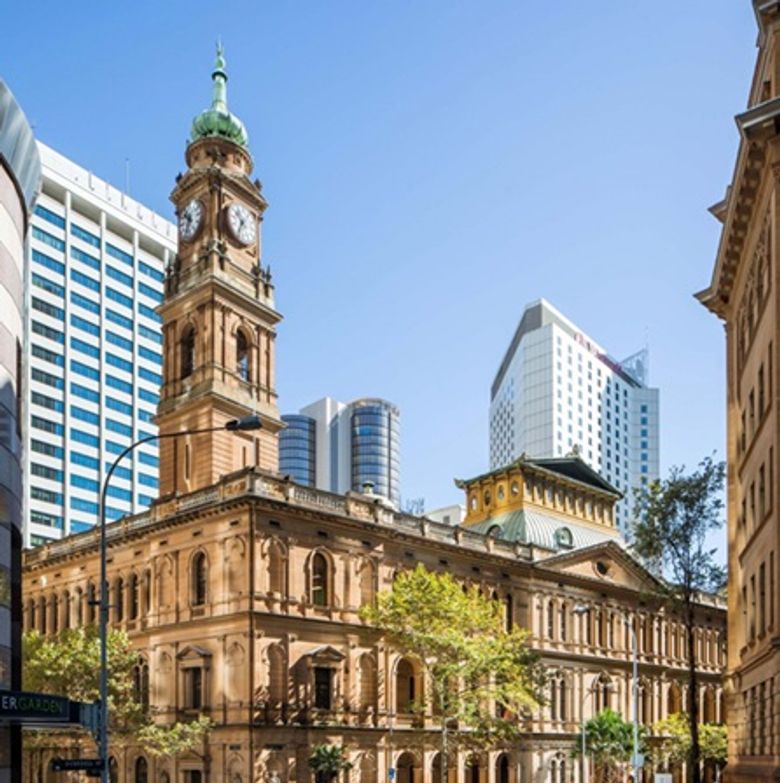
The Education Building in Sydney reopened as a 192-room Capella Sydney, while work to restore the Lands Building is ongoing.
The Education Building reopened last year as a 192-room
Capella Sydney, while work to restore and link the Lands Building to the hotel
is ongoing. When completed in 2026, it will host larger-scale events and
meetings, curated retailers, and signature F&B establishments.
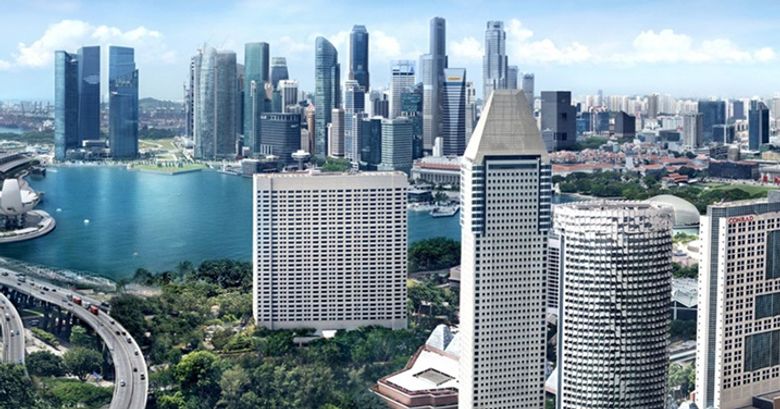
Millenia Singapore, launched in the mid-90s, is a lodestar
for Pontiac Land on the importance of visionary planning, particularly in
developing mixed-use spaces on previously vacant reclaimed land, ahead of the
nearby Marina Bay Sands. This integrated development comprises two luxury
hotels – Ritz-Carlton and Conrad – two office towers and a retail mall. The
five buildings were designed by award-winning architects, hallmarking Pontiac
Land’s focus on design, art and quality in real estate development.
Be it green fields or restorations, Pontiac’s approach to
projects hinges on keywords such as “long-term” and “foresighted thinking.”
And it’s content over concrete.
“For us, the key question is, what could we create in the
location that would enhance the overall hospitality experience? We strive to
build the right asset of high quality and design because we intend to hold the
asset long term. We think about how the community around it will look like in
the future, and position ourselves strategically to participate in its
transformation,” Tsang explained.
Investor sentiments that a standalone hotel doesn’t cut it
anymore are becoming louder. Speaking at HICAP recently, Minor International’s
Group CEO Dillip Rajakarier said, “It doesn’t work because of the land cost. So.
then you have to bring in a mixed-use concept – residences, timeshare, hotels,
wellness, F&B, and so on.”
Tsang concurs that a standalone hotel is not viable in
markets where cost of land, construction and operating a hotel is high. “So, a
lot of people now are asking, what else could we put together to make the
economics work better? We believe there’s a lot of opportunities in the Western
market, which has not capitalized on mixed-use as much as Asia. Land in
Singapore, for instance, is so scarce, so people are trying to find the optimal
mix, whereas in the more established Western countries, they will just do
retail or office.”
Owning versus managing
Pontiac Land’s assets under management across hotels,
mixed-use, commercial and residential developments reportedly exceeds S$10
billion (US$7.6 billion).
The company owns seven hotels, while its wholly owned
subsidiary Capella Hotel Group, which operates the eponymous Capella brand and
a sister brand Patina, is growing rapidly through management deals.
An additional 10 Capella managed hotels will open in the
next three years, joining the seven in operation today in Bangkok, Shanghai,
Ubud, Hainan, Singapore, Hanoi and Sydney.
Millenia Singapore, launched in the mid-90s, is a lodestar for Pontiac Land.
The upcoming hotels are in diverse locations: Taipei, Kyoto
and Macau in 2025; Riyadh (Diriyah) in 2026; Nanjing and Florence in 2027; and
Yang Yang (South Korea), Shenzhen, Kenting and Elanan (NEOM) in 2028.
Patina, which had a slow start after launching amidst the
pandemic in 2020, is beginning to find its footing. There’s only one in
operation, Patina Maldives, owned by Pontiac Land, but next year will usher in
Patina Osaka, followed by Patina Tianjin in 2026, both under HMAs.
“We want to provide the Capella team with the freedom and
flexibility to grow when they see the right opportunity, not for the sake of
opening a certain number of hotels in a certain number of cities by a certain
time,” Tsang said.
“For a hotel to be a Capella, or even a Patina, it must have
certain attributes that fit the brand. This is especially important for a
younger brand that is establishing its presence.
“Probably the most important factor for the Capella team is
that they are allowed to be involved in the design development – the selection
of architects, designers, interiors, etc. – so that what comes out is a great
product for Capella and the owner.
“They’ve been very successful in creating something that is
different in each property, which adds to the strength of the brand and now the
Patina brand.”
Branded residences foray
Capella Hotel Group is also foraying into branded
residences, marking a significant evolution beyond hotel operations and one
that adds another component to Pontiac Land’s future mixed-use developments.
Tsang sees the evolution to branded residences as natural.
Hotels and residences have started to cross paths, he said, with hotels
adopting a more residential feel, and residences offering more services and
amenities.
“We’ve actually been blending many principles of hospitality
into our residential and even our office developments,” he said. “This is
becoming more pronounced in the market, particularly in Western countries like
the U.S. where offices are incorporating hospitality-related elements to get
people to return to work.
“As owner and operator, we’re lucky to see both sides. We
hope to create something new in branded residences.”
Working with other operators
But with a flourishing hotel management subsidiary, does
Pontiac Land see a future where all of its owned hotels will be managed by
either Capella or Patina?

The world is entering uncharted territories. We will continue to grow, but at this point it’s likely to be a more moderate growth.
David Tsang
Of the seven hotels it owns, two are managed by
Ritz-Carlton, located in the Maldives and Singapore, and another two are Conrad
hotels in Singapore. The remaining three are a Capella in Singapore and Sydney,
and the Patina Maldives.
Tsang said the decision is based on brand fit and
positioning. “The Conrad Centennial in Singapore is a good example. It has more
than 500 rooms. It’s in the heart of the city. Does that speak to us as a
Capella? Probably not.
“We enjoy working with different operators. We have a great
relationship with Marriott and Hilton. They are well run, professional chains
with great talent and effective distribution network. But we are also open to
talking to other operators if the brand is appropriate for our next project.”
Strong sector
Tsang won't divulge financial figures, only saying that as
an asset class, hotels continue to do “pretty well.”
“Most of the markets are above where they were in 2019 in
overall occupancy, rate and RevPAR. So. It’s still a strong sector, with some
good tailwinds. Tourism numbers are continuing to rise in the markets we’re
in,” he said.
Luxury hotel investment remains strong, Tsang said.
Replacement costs for new hotels, especially in developed markets, may be high
due to wage inflation and rising material costs, pushing up transaction values
for existing hotels. But at the same time, hotel performance has strengthened
significantly, which helped sustain the high rates of luxury hotels.
“So, you have this duality: on one hand, high replacement
costs, and on the other, strong performance of existing hotels. This dynamic
attracts investors who see an upside in tourism, especially in the luxury
sector where they can continue to achieve good returns despite the high
absolute price per key.”
Moderate growth
But geopolitics, wars, a record year of elections –
including the U.S. presidential election – create “a bit of a pause” for
Pontiac Land, which thinks long-term with each project. Foresighted thinking is
a lot harder in a sea of uncertainties.
“The world is entering uncharted territories,” Tsang said.
“We will continue to grow, but at this point it’s likely to be a more moderate
growth.”
What’s certain is Pontiac Land is “very comfortable” with
real estate, although Tsang said the company does spend time looking at
different asset classes.
“Sectors such as data centers, logistics and life sciences
are three high growth areas,” he said. “Although there are opportunities, we
haven’t found something that is super exciting for us, where we can compete
effectively and deliver value. We’ll leave that to others who can do it
better.”