Through a combination of asset recycling and strategic
acquisitions, Ovolo Group rebuilds its mandate through new vehicle TriO Capital.
HONG KONG – TriO Capital’s asset recycling and strategic
acquisitions plan is well in motion. The hospitality investment and asset
management firm of Ovolo Group is closing a deal to divest a fourth hotel,
believed to be in Melbourne. Last September, TriO made its first acquisition
since its launch 18 months ago, the 177-room Hilton Garden Inn Phuket Bang Tao,
at a time when the Thai resort destination is bouncing strongly from the
pandemic.
TriO marks a new chapter for Ovolo Group, diversifying its
business as an owner-operator to a fund manager working with third-party
capital – and its own – to unlock the value of underperforming hotel assets
across Asia Pacific.
The strategy is also aimed at growing Ovolo Hotels, and in
locations beyond its traditional turfs Hong Kong and Australia, although TriO
is brand agnostic. Assets under its management need not be under the Ovolo
brand, said TriO Capital Managing Director Tim Alpe.
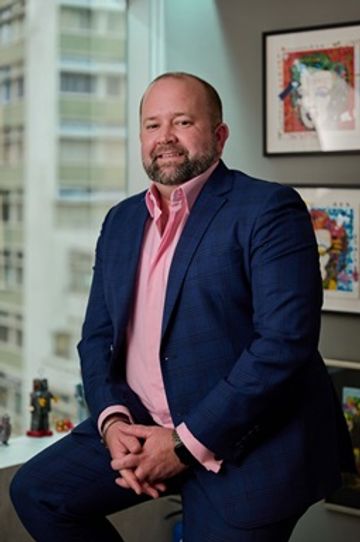
TriO Capital Managing Director Tim Alpe
There are nine properties listed on Ovolo Hotels’ website
and the business is overseen by its Founder Girish Jhunjhnuwala, following the
departure of the CEO Dave Baswal last September. Jhunjhnuwala launched the
independent chain in 2010.
TriO, named after the three Os in Ovolo, boasts asset under
management of around $400 million and has raised north of $120 million through
asset disposal, including the imminent fourth, according to Alpe. The three
hotels already sold were The Woolstore 1888 by Ovolo, Sydney; The Sheung Wan by
Ovolo, Hong Kong; and The Inchcolm by Ovolo, Brisbane, the former two in 2024
while the latter in 2023.
The group’s diversification by way of creating TriO isn’t
surprising. Hong Kong faced the double whammy of student protests in 2019 and COVID-19
with the strictest pandemic lockdown in its key market China, a lesson hotel
investors will unlikely forget.
Ovolo Group started looking at a more global footprint,
including Southeast Asia, the U.S., the U.K. and New Zealand. It wasted no time
in acquiring a 194-room resort in Bali in 2019. The former Citadines Kuta Beach
Bali is now under a newly created brand, Mamaka by Ovolo.
Focus on Southeast Asia
Fast forward to today, TriO’s focus is on Asia Pacific,
which Alpe said has “so many opportunities, especially in Southeast Asia, that
there’s no need to spread ourselves too thin” with longer-haul markets such as
the U.S. and Europe.
Asked why Southeast Asia, in particular, Alpe said half in
jest, “You know, you talk to some of the big firms and they say, ‘we’ve just
raised our largest APAC fund.’ About 60% of it is going to Japan, 20% is going
to [South] Korea, and the rest is going to Australia. That’s not really an APAC
fund.”
Apart from diversifying from just Hong Kong and Australia
into Southeast Asia, another diversification is a change in product theme.
Historically, the group concentrated on smaller properties in Hong Kong and
Australia and made its name as a lifestyle brand that offers “little luxuries”
like free mini-bar and breakfast, and cutting-edge technology. Its cool and fun
ethos remains but TriO’s focus is on larger “urban resorts” such as the Bali
and Phuket acquisitions with 194 rooms and 177 rooms, respectively.

The transparency in Australia, the low cost of debt in Japan, the robust nature of Singapore, for example, tend to attract a lot of that capital [whereas] it is a lot more challenging for certain markets in Southeast Asia.
Tim Alpe
“We don’t like resorts with sprawling landscapes, multiple
pools and villas. We like the efficiency of an urban type of product in a
resort environment,” Alpe explained.
Hence, the hotels divested so far were the ones that were
smaller in size and big in capital appreciation since the group had held them
for years, he said. The first hotel TriO divested, the Inchcolm in Brisbane,
for example, had just 50 rooms. It was sold to Invictus Developments Singapore
in 2023 for A$25 million, said to be the record price per key for the Brisbane
market at the time.
On Southeast Asia, Alpe sees quite a large pipeline, but
“not a lot” of institutional capital focusing on the region for a couple of
reasons.
“One reason is a regulatory environment that is somewhat
cloudier than in other parts of Asia Pacific. At the same time, there are
challenges with foreign ownership [in markets like Thailand]. Obviously,
leasehold opportunities are a lot more common, but they don’t necessarily drive
the right value or the leasehold component doesn’t really sit well with a lot
of investors that are real estate-focused,” Alpe said.
TriO’s Hilton Garden Inn acquisition is one of fewer than
500 hotels in Thailand where 100% ownership was allowed.
“TriO has made an entry into Phuket that has location,
location, location. Given their PE [private equity] structure, the interesting
part of the deal is how they will add to the current asset to increase its
value,” said Phuket expert Bill Barnett, managing director of C9 Hotelworks.
Another reason for light institutional capital investment is
a lack of data on comparable transactions to determine the exit strategies and
ability to underwrite the exits, resulting in extensive discussions with
potential partners to build confidence in the investment, he said.
“The transparency in Australia, the low cost of debt in
Japan, the robust nature of Singapore, for example, tend to attract a lot of
that capital [whereas] it is a lot more challenging for certain markets in
Southeast Asia,” Alpe added.
Aside from Thailand, TriO is also looking at Indonesia,
Singapore and the Maldives, as well as Australia and New Zealand.
Navigating the challenges is a significant hurdle but Alpe
said TriO’s exposure in Australia and gateway cities on the Eastern Seaboard,
its track record in managing and transforming assets, its acquisition of the
hotels in two core markets Bali and Phuket – each coming with its own
intricacies – speaks for the company’s ability to support capital partners.