Miami-based investor continues to find off-market deals with
some form of distress and has three more lined up.
MIAMI – Despite all the uncertainty in the global economy, the “R” word being bandied about in the U.S. and headwinds surrounding the
cost of capital, Miami-based investor Gencom is never in a wait and see mode,
according to Chief Investment Officer Alessandro Colantonio. “We are net
buyers, regardless of the cycle,” he told Hotel Investment Today last week.
As evidence, Gencom sees the convention business pace picking up in New
Orleans and with next year looking even better they decided to acquire the 758 keys in
The Ritz-Carlton, New Orleans and the connected Courtyard by Marriott New
Orleans French Quarter/Iberville. The $200 million price tag suggested by
industry experts was a “fair estimate,” according to Colantonio, who added that
three more acquisitions are in the works – two urban and one resort hotel
expected to close in the next 60 to 120 days.
Gencom is also busy in Bermuda, where last September it
closed a $550 million recapitalization of the 593-key Fairmont Southampton
resort, funding a major redevelopment and expansion of the resort
set to reopen next year.
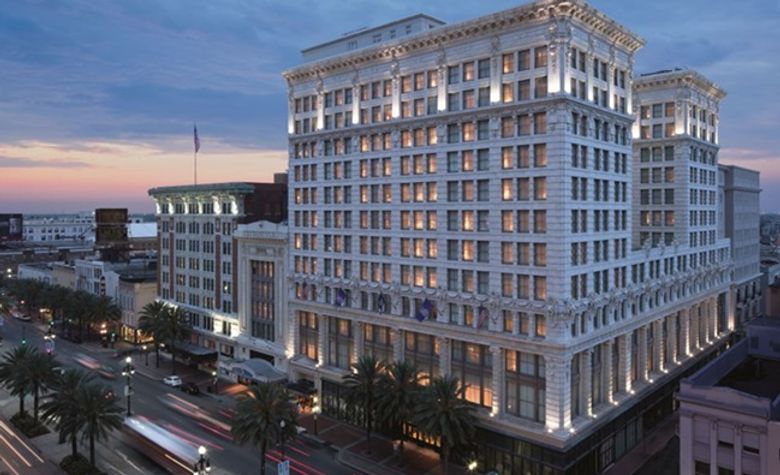
Gencom has acquired The Ritz-Carlton New Orleans and the adjacent Courtyard by Marriott New Orleans French Quarter/Iberville.
“We continue to be opportunistic,” Colantonio said. “We’re
spending a lot of time in Europe, even further out past Europe in some cases.
We’re not quite there yet, but we hope to have more transaction volume in those
parts of the world. We’re excited. We’re going to stay optimistic and stick to
what we know.”
Gencom Founder and Principal Karim Alibhai told Hotel
Investment Today last year, that when markets are choppy and it’s difficult to
pin down values and potential, “that’s usually a good market for us to get into
projects.”
Colantonio backed that up saying what they’ve learned, especially over the last several years with the global financial crisis and the pandemic, is
that distress comes in many different forms. “Historically, distress was always
defined as a foreclosure, a debt issue. You buy the note and you take over the
asset. Now, distress may be a seller who’s highly motivated to exit, or there’s
a brand that’s up for termination and you can go and cut a deal and create a
relationship there on the branding side to help your capital stack. So, the
last few transactions we almost looked at them as distressed deals, each for
different reasons. We’re never in wait and see mindset and because of that you
can always find opportunity.”
Hotel Investment Today discussed with Colantonio a number of
timely and topical challenges and opportunities facing the investment
community. Here are the highlights.
Hotel Investment Today (HIT): Are you a seller at all?
Alessandro Colantonio: No. What we’ve done the last couple
years is recapitalized a number of our projects. We’re able to revalue and
maybe recycle out legacy equity partners and capital and bring in new long-term
partners that buy into the next phase of a business plan.
The Ritz-Carlton Key Biscayne is a great example. We
developed that asset in the late ‘90s and continue to own it in different
controlling or co-controlling positions. It’s never made sense to fully exit,
but instead we’ve recycled partners. Most recently, we acquired the interest
back from Brookfield because we see another phase of upside. Now, we’re about
to close on May 1 and do a significant renovation and repositioning of that
asset. We see value not only on the buy side, but also on just harvesting your
own land within the existing portfolio.
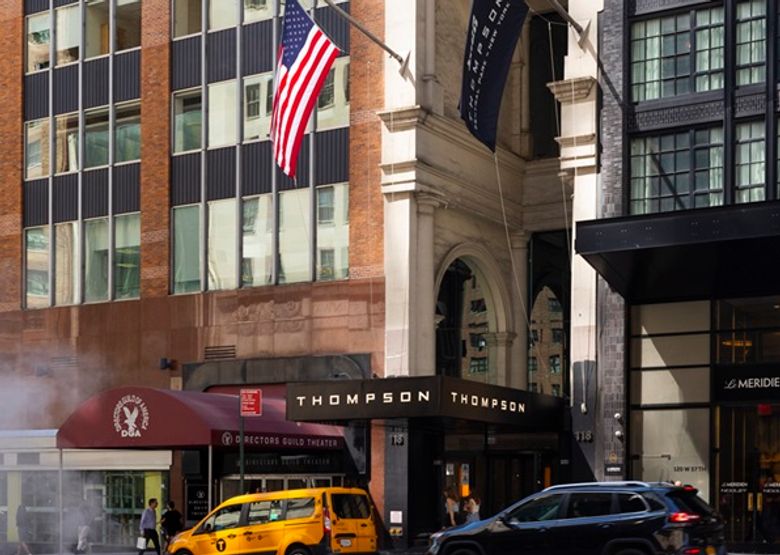
The Thompson on Central Park in New York City continues to perform well for Gencom.
HIT: Where’s asset pricing right now from your perspective?
Colantonio: Pricing is only relevant when you put it all
together with the rest of the deal structure… You create the value by going in
and working on a structure with the brand or using a lender relationship where you
can get some more attractive pricing. When you add up all those different
pieces, your purchase price is less sensitive.
We’ve seen a few deals out there where we love the real
estate and the markets. We’re not going to chase trophy pricing unless we have
an angle with a lending or a brand relationship that we can offset some of that
value through the capital stack. We’ve been able to do that on these last
couple deals, which is what has gotten us fairly excited.
HIT: How are you managing development cost escalation?
Colantonio: Luckily, with some of our projects, we’re
already so far advanced that we’ve been able to lock in fixed pricing, and then
we feel pretty good about where we are and where things may go in the future…
You can cut corners, but at the end of the day if you want
to try to value engineer to save a few bucks to offset tariffs and price
escalation, it’s going to hurt you in the long run. We have to be careful about
how far prices goes, but you have to deliver the right product at the end of
the day, especially in the luxury asset class.
HIT: How is your portfolio performing?
Colantonio: We’ve seen strong performance across the board. We’ve
seen it in our resort markets – Costa Rica, in particular – in Bermuda, where
we have the Rosewood. Even into our urban assets such as the St Regis, Chicago,
Thompson Central Park, and now the Ritz-Carlton New Orleans – performance is
there.

We’re still standing behind the fact that demand is there. If we have the right product, we’re seeing the pricing power hold.
Alessandro Colantonio
It also comes back to, at some point, the guest doesn’t
necessarily push back on pricing, but they want to see upgraded amenities. They
want to see the dollars put into these assets. They want to see the food and
beverage experiences evolve.
We’re obviously optimistic that this asset class will
continue to have legs, but you have to take care of your product.
HIT: Inbound numbers are weak. What is Gencom’s take?
Colantonio: I look at it as opportunity further down the
road.
Right now, there’s a lot of demand within the U.S. for some
of these assets and destinations.
The next few years we expect international will pick back up
and that’s opportunity. As good as we’re seeing performance at our resorts and
urban assets today, it’s good to know that there’s still untapped international
demand that hasn’t fully returned.
HIT: Is Gencom concerned about the potential impact of a
recession in the U.S.?
Colantonio: The short answer is ‘no.’ The jury is still out on where things are
going with tariffs and interest rates, and if there is a recession coming. I
don’t think we have a full view on that yet. We’re still standing behind the
fact that demand is there. If we have the right product, we’re seeing the pricing
power hold. So, we haven’t seen the impact yet.
HIT: What’s your big picture message to the hotel investment
community?
Colantonio: Don’t overreact to what’s happening day to day.
Stick to what you know. Stick to your business plan and believe in your team
that’s in place to execute because it’s very easy to get turned upside down if
you start following every news report and every metric.
Don’t get out over our skis and do stuff that you’re not
historically accustomed to doing.
Buy asset classes that you know, work with lenders, brands and partners that you know.