After COVID-19, global hotel chains believe that independent
Asian owners have realized the power of being affiliated with them. The lens of
younger Asian owners on this may differ.
BANGKOK – Earp Siriphatrawan is a next-gen hotel owner who is out to
protect his family legacy as a small, independent hotel group in Thailand for
more than two decades.
Asia is seeing a rising number of younger owners like him,
as traditional family businesses pass on the torch to their offspring. Typically,
these adult children have been educated overseas, have traveled extensively
abroad and are more attuned to global trends than their parents.
Siriphatrawan, owner/director of Amora Hotels & Resorts,
has a bachelor’s degree in economics at London School of Economics and
Political Science, and a master’s degree in management at London Business
School. Before joining the family business during COVID in 2021, he was a
consultant with PricewaterhouseCoopers and an investment banker with Siam
Commercial Bank.
He speaks confidently about guiding Amora’s transition into
a 5-star brand, from 4-star, and his strategy to invest further in Thailand and
Australia, and in destinations such as Singapore, Hong Kong and Bali in the
longer term.
Growing up, Siriphatrawan watched his father, the late
Tanapun Siriphatrawan, who made his fortune in airport duty-free shops, buy
their first hotel in Melbourne in 1997, then the Phuket resort in 1999.
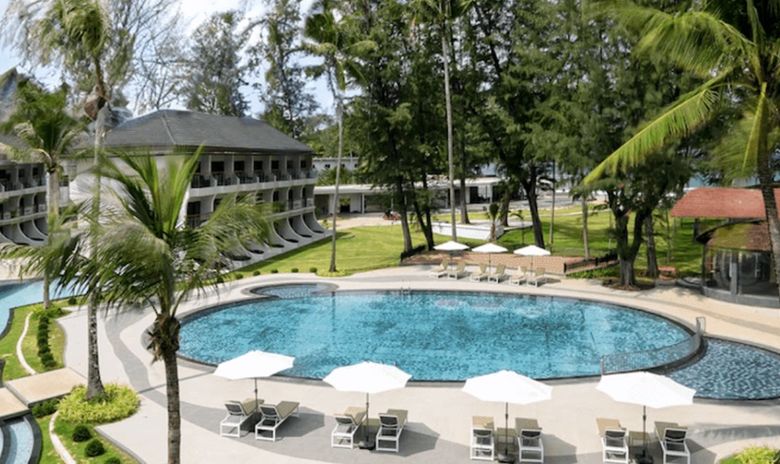
The Amora Beach Resort Phuket
Today, the group owns three Amora hotels in Australia, in
Sydney, Melbourne and Brisbane, its latest acquisition. It bought the former
Novotel Brisbane during the pandemic in 2020 from CDL Hospitality Trusts for
around A$76 million ($51 million) and reportedly spent another A$30 million to
upgrade the hotel, which will have a grand reopening in February 2024.
Over in Thailand, the group has also completed a 500 million
baht ($14 million) renovation of its Amora Beach Resort Phuket. Aside from
Phuket, the company owns an Amora hotel in Chiangmai and a boutique property in
Bangkok under a sub-brand called Neoluxe.
The six-hotel portfolio comprises a total of 1,350 keys.
In short, it’s an owner/operator that has survived for 26
years on its own. Siriphatrawan believes the group can continue to thrive
independently in future, while global chains believe the opposite because COVID-19
opened the eyes of independent owners on the value of being part of their
systems.
“Chains do have more distribution, more marketing power and
more brand followers. We don’t have their scale or their following of 10
million or 100 million customers, whatever it may be. But what we have is more
personalized service,” Siriphatrawan said. “Our staff have been with us since
we started and we treat them as family. In turn, they treat our guests as
family – they recognize who they are, what their story is and what they like.
If you like sparkling water, they will serve you sparkling water when you come
back again.”
It’s these little differences that chains can’t get to, Siriphatrawan
said, because they don’t keep their people at the same hotel for very long. “In
contrast, we have legacy staff who have been with us for 16 to 20 years,” he
said. “Our financial controller worked his way up to group financial controller
and is now, in his 70s, overseeing our hotels in Australia.”
M&A strategy
Siriphatrawan wants to “bring something to the table” for
Amora, especially by leveraging his background in M&A and finance to grow
Amora as a leading luxury, modern lifestyle brand in Asia Pacific.

We plan to continue to grow through the same acquire-and-renovate model. We already have some target cities and markets. In Australia, for instance, we want to cover all the key CBD cities, such as Adelaide, Perth and Melbourne, as our existing Melbourne hotel is more on the outskirts of the CBD in an area called Richmond.
Earp Siriphatrawan
His M&A strategy is the same as his dad’s, which is to
acquire then add value to the asset. “It’s passed down through the bloodline,”
Siriphatrawan said with a laugh, “but, of course, I try to use the experience I’ve
had outside as well.”
Siriphatrawan said Amora always buys freehold. It doesn’t
only evaluate the financials and the usual metrics like property value, land
value, et cetera, but the fit and synergies the asset can bring. “With the
Brisbane property, for example, we expect a return of 7% to 10%, but we also
expect the property to have a positive revenue effect on our Sydney hotel, in
that domestic travelers in Brisbane would know our brand due to our presence
there and stay with us if they are in Sydney. It is hard to measure the value
of this synergy.”
Hotels are an attractive asset class, he added. “For us, it’s
about leveraging our portfolio and expanding it. And sticking to our expertise
as an owner-operator so we don’t have to invest and put in a chain or a brand.
This means there are no management fees, no marketing fees, and so on –
everything flows down to the margins.”
One key lesson Siriphatrawan took from his role at PwC was
realizing an asset’s real value post-deal. “In a deal cycle, there’s the due
diligence part, then the valuation part and the transaction part, but what
people typically forget is the post-deal integration part, which is important.
It’s actually the part where you have to make sure that whatever you buy, you’re
able to realize its value.”
Siriphatrawan gave an example of how he added value to the
Phuket resort. Demand in Phuket has changed, with markets such as India and the
Middle East replacing China, which hasn’t recovered fully, he said. That means
the need to create new facilities to ensure the property will appeal to an
array of new market segments.
Among the new facilities at the resort are a beach club,
which targets not just in-house guests but locals; a kids club to cater to the
family market; a beachfront event lawn to attract the weddings market; and a
grand ballroom and four meeting rooms to draw more meetings to the resort.
“We plan to continue to grow through the same
acquire-and-renovate model,” Siriphatrawan added. “We already have some target
cities and markets. In Australia, for instance, we want to cover all the key
CBD cities, such as Adelaide, Perth and Melbourne, as our existing Melbourne
hotel is more on the outskirts of the CBD in an area called Richmond. We’re
just waiting for the right opportunity, the right price and the right fit.”
There aren’t a lot of buyers anymore in the Australian
market, which could be an opportunity for Amora, he said. “Rising interest
rates have made it a bit difficult for companies that don’t have a lot of cash
or equity to go in and buy a hotel. Markets such as Adelaide and Perth aren’t
exactly attractive to investors who don’t have hotels in Sydney and Melbourne
which they can leverage on,” he observed.
While Australia is a corporate market play, Siriphatrawan believes
there’s a need for the group to expand in leisure destinations in Thailand, in
the capital city of Bangkok and resort destinations such as Samui and Pattaya.
“Eventually we’ll have to look at key markets
such as Singapore and Hong Kong. Vietnam and Bali are a growth opportunity, as
well,” he said.