Based on multiple one-on-one interviews, here is a roundup
of some of the news and updates coming out of the NYU conference.
NEW YORK CITY – Hotel investment conferences are all about
the meetings, dealmaking opportunities and networking.
What Hotel Investment Today learned in multiple interviews
during the NYU International Hospitality Industry Investment Conference is that
lean and mean is among the other new normal practices, upscale is the hot
development sector and the bid-ask spread is slowly closing.
Here is a roundup from some of the interviews:
Mission’s mission. Mike Wilbert, senior managing director
and head of acquisitions at Mission Hill Hospitality in Denver said he has some big
news coming soon. Today with 33 hotels he said the portfolio is performing
“fairly well” with some pull back in leisure demand.
The group is going through some brand conversions and ROI
projects and Wilbert said some seasonal markets performed very well in the
winter months.
Mission Hill is targeting drive-to leisure and mixed demand
markets (think evergreen government, medical and university business) for
growth in the select-service segment. It will also start turning over some assets
by next year.
What it will not pursue is 25-year-old, tired, legacy assets
in tertiary markets.
Wilbert said sellers need to reset value expectations as
assets are still priced too aggressively. However, as room rates start to
stabilize, he is seeing movement in seller values the bring the bid-ask spread
from 25% to closer to 10%. “Assets are starting to come to market at reduced
prices,” he said.
HEI squeezes more juice. HEI Hotels & Resorts used to be
a more of a PE fund raiser and bigger investor. Now, as more of a pure
third-party manager, it still likes to invest sliver equity on a deal-by-deal
basis with a select group of capital partners. HEI has a portfolio of about 105
hotels and its latest addition in late May was The American Hotel Atlanta
Downtown, a Tapestry Collection by Hilton hotel.
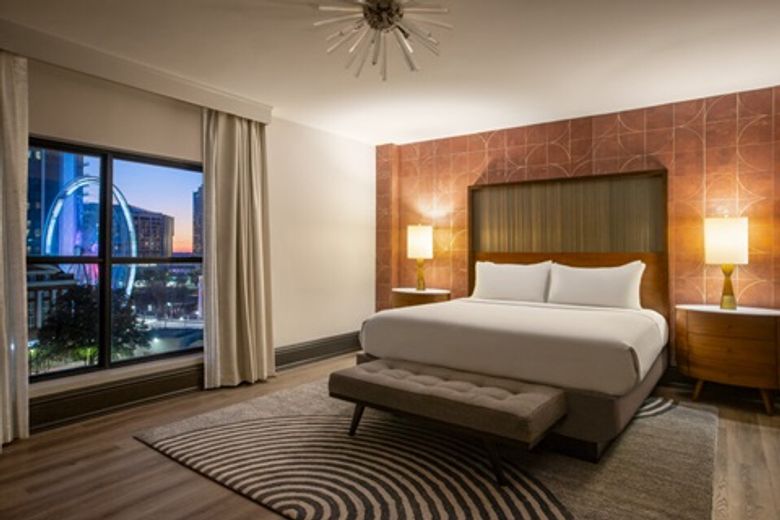
HEI has new management of The American Hotel Atlanta Downtown, Tapestry Collection by Hilton
Managing Director of Investment Steen Petri said HEI is
still known for squeezing more juice out its assets with some of its centralized
services creating efficiencies and activations driving ancillary revenues. He
referenced the Marriott Westchester (New York), acquired with a capital partner
in a market that had lost some 1,250 rooms during COVID. They converted it from
brand-managed to franchise to create instant value, update the hotel with a
massive renovation, and continues to take advantage of having more meeting
space than any hotel in the market. “You have to find the right pockets,” Petri
added.
HEI has also expanded beyond its traditional full-service
space to include more premium limited-service properties and has also picked up
new capital partners who are newbies in the now-favored hotel space.
Petri said it takes some courage to invest in today’s hotel
market and probably requires underwriting a slightly longer hold period. That
said, he said HEI is busy because there are still lots of opportunities to
create value. “The problem is that you still have the gap between the buyers
and sellers. Pricing expectations are definitely coming closer,” Petri said. “We’re
working on deals that we’ve underwritten three or four times with each time
coming closer to something where there can be a trade.”
Choice activation. Choice Hotels showed off new design
pieces for its upscale Radisson and Radisson Blu, where it seems to be placing
a lot of emphasis on growth.
Director of Upscale Brands Philipp Mirow said Blu
development will be “strategic” and core Radisson is prime for conversions. “We
will be selective until the brands strengthen,” he said.
Some initial focus is on operational efficiencies and
refreshed designs. A new F&B concept will roll out in 4Q24, as will a rooms
package for Radisson Blu. In fact, Choice is spending $15 million on a refresh at
the flagship Mall of America Radisson Blu.
Choice has also created an Ambassador program for better
core Radisson performers to create a live lab.
Davidson update. Another big player in the third-party space
is Davidson Hospitality with some 85 hotels and 23,000 rooms.
President and CEO Thom Geshay said Davidson has some 48
investors and has made about 59 deals since 2020, netting 31 during that time
frame. He was proud to exclaim that Davidson saves about 70% of its contracts
when ownership changes hands.
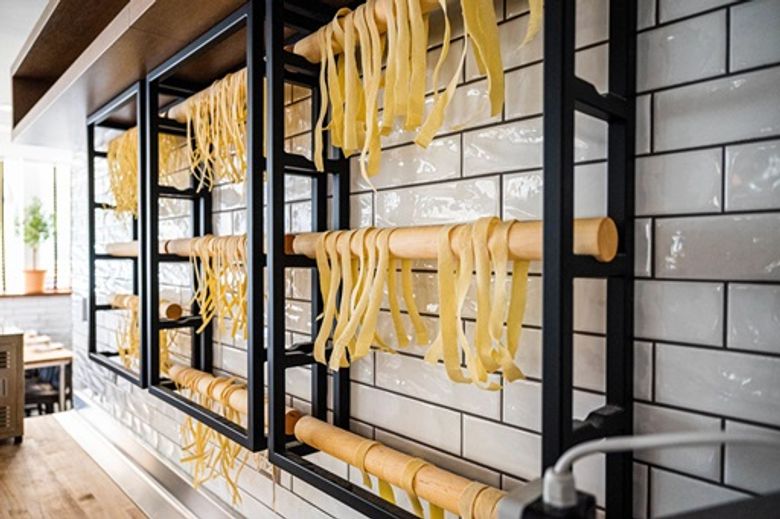
Davidson Hospitality's Il Modo at Kimpton Harper in Fort Worth, Texas, offers popular pasta making classes.
Geshay said Davidson will soon announce new deals in the
resort space, a hot growth segment for the group that also generated $625
million in F&B revenue (60% via restaurants and 40% in catering) with overall
profitability of 32.84%.
Davidson self-operates its F&B business that includes 30
restaurants surpassing $3 million in revenue. Davidson also makes “a couple of
million” in F&B consulting.
Geshay said Davidson is not playing in the select-service
space – yet. It also is not actively seeking or being pursued as a merger
candidate.
GHA turns 20. The
Global Hotel Alliance (GHA) is celebrating its 20th anniversary and today
represents some 40 brands with 800 hotels and 135,000 rooms. CEO Chris Hartley
said the group will hit 1,000 hotels by 2025.
With members like Kempinski, Pan Pacific, Minor and
Corinthia as main shareholders, the biggest challenge for the GHA is U.S.
inventory, especially with U.S. outbound being its biggest demand generator.
Recent adds include the Lore Group and Cheval Collection.
The GHA has 27 million loyalty members generating $2.3
billion in revenue (Elites account for 40% of revenue) and some 10 million room
nights. About two-thirds of their guests are repeats.