Hotel Investment Today talked to CEO Puneet Chhatwal about fast growth,
why everyone is coming to India and how IHCL’s ‘crown jewel’ drives its
business.
MUMBAI — The Indian Hotels Co. Ltd. (IHCL) is not only the largest hospitality company in India but also
the fastest-growing in terms of signings and openings — certainly not typical for the Mumbai-based icon.
“It
took us 115 years to get to our first 120 hotels,” said CEO Puneet Chhatwal. “Then in the last
six years, we raced ahead to, as of yesterday, 305.”
Chhatwal
said it isn’t about just dots on the map or growth for sheer growth’s sake for the
company, and that’s because it has been a “Taj-minded” business, speaking of
the IHCL’s signature luxury hotel brand.
He
said Taj remains the “crown jewel, not just of our company, but of India.” So, there is a great deal of emphasis on not doing anything that damages that
brand.
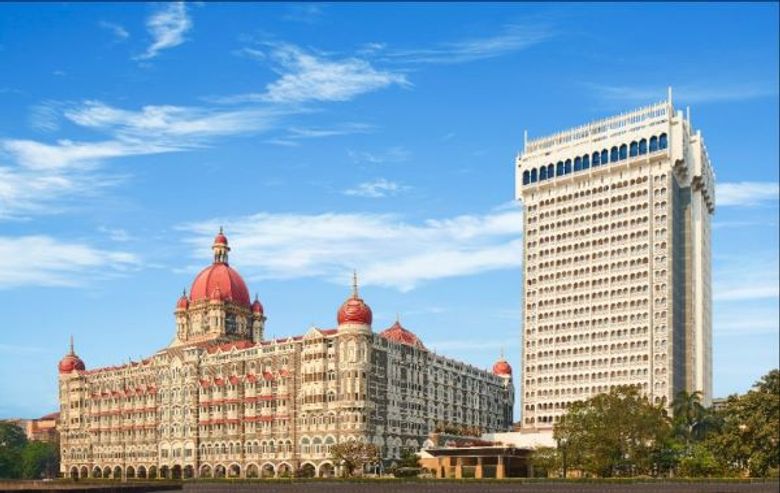
The Taj Mahal Palace, Mumbai recently celebrated its 120th anniversary.
“We
are very proud of that heritage and want to maintain that,” Chhatwal said. “Taj is
the financial and reputational backbone of the company.”
Chhatwal also said IHCL’s fast growth has happened because of how India has changed. “As
India started growing into Tier 2 and Tier 3 cities and people started
traveling more as a need than as a discretion, there was an opportunity to grow
the midscale and the upscale segments, and that’s what we did. We started
riding that wave,” he said.
That
demand is so great that Chhatwal said IHCL will launch another upscale
full-service brand (just below Taj) in the coming months. He said they are
still working out the details of the brand name. “We
can’t take Taj everywhere because it will lose its luxury position,” he explained.
“If
we take an existing brand and change it, people have a certain perception. They
have a brand recall but tend to place it in a certain box, and we want to move
it up. If we get a new one, no one knows until the brand is established.
It’s something we are debating which way to go.”
There
is no debate on IHCL’s rapid expansion, as it is opening at least two hotels a
month right now, and Chhatwal said that the “journey will continue and only
accelerate.”
Expansion outside India
IHCL
currently has two hotels in the U.S.: The Pierre, A Taj Hotel, New York in New
York City, and the Taj Campton Place in San Francisco. It sold its third
property in Boston about six years ago.
Chhatwal
said expansion in the U.S. isn’t a priority. Still, IHCL wouldn’t be against
looking at opportunities in cities like Los Angeles, Chicago or Washington D.C.
— anywhere with a strong Indian diaspora and a lot of business travel coming to
and from India.
Elsewhere
outside the Indian subcontinent, Chhatwal said IHCL has a few properties in
London, three in Dubai, and one in Cape Town, South Africa. The company will be
adding one in Frankfurt, Germany, early next year.
“Our
heavy presence will be on the Indian subcontinent,” he said. “There’ll be
selective growth, one or two hotels a year in key gateway markets of the world,
especially where our airlines would be flying. (IHCL is part Tata Group, which
now owns Air India.)”
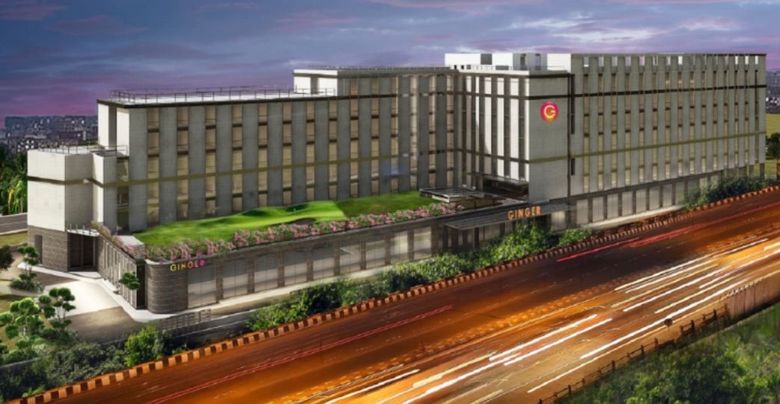
The 371-key Ginger Mumbai, Airport opened in November.
Others are expanding into India
India
has become a focus of growth for many in hospitality, especially the larger
U.S. companies. What does that look like to an insider?
“It’s
good to have competition,” Chhatwal said. “Brands have tried to come into
India, and those that have succeeded are thanks to somebody who put them on the
map — a strong Indian promoter — as that’s how the business works.”
Chhatwal
said that makes growth in India difficult, and a pure asset-light model does
not work well in the company because somebody needs to put their skin in the
game.
“It’s
an interesting time,” he added. “On one hand, so much growth is coming into
India, and so many new international brands are doing very well in India. On
the other hand, how do you make it work?”
Asset heavy vs. asset light
Chhatwal
said that competition hasn’t changed the company’s strategy, which is to build
a portfolio that is a “good marriage between asset heavy and asset light.”
He
said 80% of IHCL’s growth in the last six years has come from the asset-light
side, but the asset-heavy side is where the value creation comes from.
Chhatwal
said he learned to create this mix from his almost three decades of European
hospitality experience. “I
came to realize we have such iconic assets. But mathematically, you could only
go for a balanced portfolio. Say we have 50% heavy and 50% on the light side.”
He
said this mix has worked well for IHCL, especially when the hotel market
returned post-COVID.
“The
operating leverage in the asset-heavy is giving us strong absolute returns, and
the new growth, which came from asset-light with very high margins, is giving
us the market expansion,” Chhatwal said. “So, that’s how we guided that in this
business cycle by the end of next financial year (IHCL recently reported its
third quarter for FY 2023-24), we would have a portfolio of 300-plus hotels and
33% EBITDA margin.”

“In any business that we are in we want to be perceived as the premium in that business.. we want to be the best in class in those brands because if you don’t do that, it will damage the Taj brand.”
Puneet Chhatwal
It
also helps to be a company with almost no debt, except for one property in
London.
State of hotels in India
Chhatwal
said the hospitality sector in India is doing very well.
“The
demand has outpaced supply significantly and will continue to do so because the
speed at which you build hotels in the Western Hemisphere is not possible in
India,” he said. “The demand has returned strongly, but the supply side was
closed because of a lockdown… There is a lag between the supply while the
demand is growing, driving occupancies and rates.”
Chhatwal
said both ADR and RevPAR for IHCL are seeing double-digit growth. He also said
luxury ADR has not hit a ceiling for the company and attributes that to the
fact that less than 50% of IHCL’s revenue comes from rooms. The rest comes from
MICE, weddings, or its food and beverage business, all showing strong demand.
He
said two segments IHCL is interested in getting more into are branded
residences and all-inclusive; both will be a priority once it launches its new
upscale full-service brand.
Where is the growth heading?
While
Chhatwal said IHCL’s growth will be steady, and scale is important, value
creation is even more important.
“In any business that we are in we want to be perceived as
the premium in that business,” he said. “If we are in upscale, we should be
perceived as the best brand… If we are in that full-service, upper midscale or
upscale, we want to be the best in class in those brands because if you don’t
do that, it will damage the Taj brand.”
Chhatwal
said that clarity for all of its brands is key to its success.
“We
will make selective choices for investments and drive comprehensive asset
management to make our assets more and more profitable,” he said. “Some of
these assets are 100 years old or 70 years old, and they have lots of spaces
that can be utilized better. This is what we have been doing also to drive our
performance. We want to keep guiding the market on the key parameters
continuously.”