Michael
Blank of Woodmont Lodging talks about developing in smaller markets,
opportunities in the sub $10-million deal space and why renovations are
creating a bid-ask spread.
BETHESDA, Maryland — It’s a
challenging time for a smaller company like Woodmont Lodging to acquire hotel assets. So, the company is moving in the other direction: developing
several new hotel projects when others aren’t.
“We’re always looking to
acquire, but in this environment, we don’t have that kind of captive cash that
I wish we did. It’s a challenge for us,” said Michael Blank, principal at
Bethesda, Maryland-based Woodmont Lodging. “So, we are doing something a
little counterintuitive these days.”
That’s not to say new
development isn’t still a major challenge in 2025. But Blank said because of
the lack of new supply in most markets, the benefits can outweigh the risks.
“We’ve been working on [the developments] for a
little while now and there’s still a lot of potholes that could pop up…
but we definitely believe there is a great opportunity now to be a
developer… Obviously. people will tell you there are too many headwinds. But if
you can get that hotel open in the next 24 months, there is nothing behind
you.”

We definitely believe there is a great opportunity now to be a developer… obviously people will tell you there are too many headwinds. But if you can get that hotel open in the next 24 months, there is nothing behind you.
Michael Blank
Blank founded Woodmont 10 years
ago with Elliott Estes, as both had REIT experience, most recently at
Bethesda-based RLJ Lodging Trust.
“One of the things that we
thought was really intriguing for us was that there’s a lot of different
ways to buy hotels and make money in hotels,” Blank said. “When you become
captive to the public markets, that bandwidth of seeking opportunity narrows
exponentially.”
The company currently has a
portfolio of five owned hotels in North Carolina, Pennsylvania, Virginia and
Wisconsin, ranging from a 400-key Sheraton to a 20-key independent. The company has also taken on
several consulting clients in the past 10 years.
Blank said the atmosphere is
right for Woodmont to pursue new development right now and it’s currently
developing in the Chicago bedroom communities of Michigan City, Indiana, and New
Buffalo, Michigan. He said the company is also looking into public-private
partnerships for the first time in its history for several reasons.
“We’re pushing forward on a
couple of these projects… We’re doing something that we’ve never done because a
lot of municipalities put out RFPs for deals,” he said. “We’re exploring those
avenues because not only does it provide a captive opportunity, but we also
know that there will likely be incentives from the city, state, and county that
will help make the math work a lot better.”
The opportunities exist in those
markets, and many others, Blank said, because of a lack of new supply and
demand drivers adjacent or nearby. Just because the markets are small
doesn’t mean they can’t command a stronger ADR.
“What people don’t realize... if you look at the average rates of these markets, you
may think they are $100, but they are $160-170 ADRs. It’s surprisingly
strong,” he said. “We wouldn’t do it if the numbers didn’t pencil, but it was
there. These markets don’t have enough good product and the demand is there.”
Woodmont sources capital on a
deal-by-deal basis, which can be challenging for a smaller firm, but the money
is there, Blank said.
“We’re tapping some interesting
sources [for funding] that I have to stay vague on, but there are lenders out
there that are looking to invest in urban renewal, and having that
public-private partnership provides some credit quality beyond Woodmont,” he said.
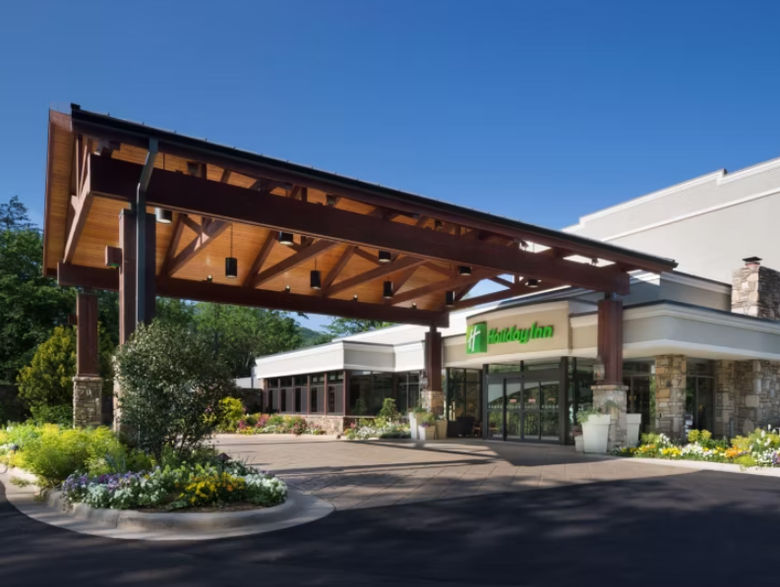
Woodmont Lodging owns the Holiday Inn Asheville in North Carolina
Opportunities for
smaller deals
Blank said while the larger
players put out a lot of capital, many don’t think it’s worth their time for
deals smaller than $10 million. That creates opportunities for local investors
in markets where they aren’t worrying about potentially divesting the assets
in, say, seven years.
“The lack of deal flow and maybe the potential for
more deal flow coming, particularly on the lower dollar size deals, presents a
tremendous opportunity for these local, regional players,” he said. “They are
waiting for some of these deals to break free. The opportunity is that some of
these institutional guys need to recapitalize their portfolio. Maybe their
portfolio has lost its value, and they want to get out of these deals… So, assets that may have not been pried away are now starting to get pried away.”
Blank uses Asheville, North
Carolina, as an example, where Woodmont owns a Holiday Inn.
“There are a couple of assets in
Asheville that a REIT owns. In a different environment, the REIT wouldn’t ever
consider selling these assets, but they’re going to come free,” he said. “I
guarantee you, the person who’s most likely to buy it is the local person who
already owns five hotels, who knows the market well enough to know that they
can extract more value than maybe somebody who’s sitting in LA with an analyst
who just does numbers and compares pro formas.”
Reasons like that make Blank
think there could be a number of potential deals for local investors happening
in the next few years.
“You will see a lot of
opportunities for the smaller player who quietly has the capital to invest in
deals. They may be recourse loans, so [those owners] are more comfortable
putting their balance sheet on the line, which means they can get better-priced
debt,” he said. “All those little advantages open up the opportunities for the
smaller guys.”
Capex clouding deals
Blank said Woodmont is still
seeing a bid-ask spread in the market for many deals, especially for hotels
that need renovations.
The seller believes that the renovation will cost $20,000 a door. We know that it will cost anywhere between $30,000 to $40,000 a door... That’s really where I’m finding a lot of that disconnect. Is that because they undervalue what capex really needs to be put into these hotels? We’ve had enough experience and knowledge to know that capex kills.
Michael Blank
“The seller believes that the
renovation will cost $20,000 a door. We know that it will cost anywhere between
$30,000 to $40,000 a door and that the disruption for that renovation will
impact that cap rate from 9% to 7%,” he said. “If the debt is 8%, I can’t
afford that deal. That’s really where I’m finding a lot of that disconnect. Is
that because they undervalue what capex really needs to be put into these
hotels? We’ve had enough experience and knowledge to know that capex kills.”
Blank said the company is
working through this right now with its hotel in Asheville and working with the
brand on timing and how to execute it.
“Do we execute it in pieces
versus all at once? Because both the cost and the disruption in time and the
age of that hotel is in Asheville, where it’s already been disrupted, it’s
probably not the best use of our capital given the environment we’re in,” he
said.
Blank said the expectation was
that there was going to be a “waterfall of renovations” because brands stopped
telling owners they could delay PIPs or renovations, but the reality is a lot
of owners can’t afford it.
“It’s more expensive than ever
and the brands can’t afford to lose units when they’re not growing units,” he
said. “I am hearing from people that the brands are much more flexible than I
think the general perception is that they would be. Particularly if you are
performing well enough so you’re not in the red zone and your guest scores are
good enough, they’ll give you leeway.”