A deeper dive into the details of the new $2.5 billion strategic partnership
between Weller Development Partners and Mohari Hospitality.
BETHESDA, Maryland — When thinking about an
ideal location for a luxury resort, Marc Weller said that sometimes an accessible location is absolutely necessary. But
sometimes, a more difficult journey can be worth the destination.
“One of the
things I find interesting about our industry is that some of the most
interesting projects out there that are the most successful are the hardest to
get to,” said Weller, president and founding partner of Bethesda,
Maryland-based Weller Development Partners. “[Those destinations] are the less
likely, or the least obvious, or the least obvious of what you would think.”
Weller and
Mohari Hospitality announced a strategic partnership on Monday to co-invest up
to $2.5 billion in luxury hospitality and mixed-use projects in North America
and the Caribbean. The investment will bolster Weller’s current investments,
including the Six Senses Napa in California and Six Senses Grand Bahama in the
Bahamas, and provide a platform for future investments.
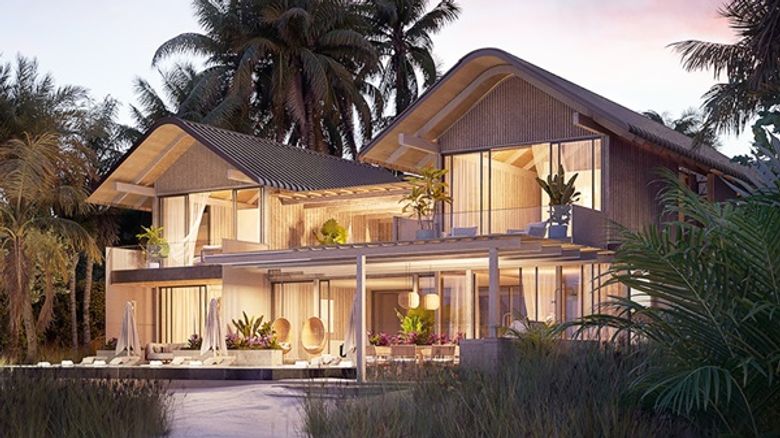
Rendering of the Six Senses Grand Bahamas villa
Mohari has several luxury hospitality investments, including Peninsula Papagayo, a 2,200-acre sustainable master development in Costa Rica anchored by a Four Seasons luxury resort; The Ritz-Carlton Yacht Collection; Centro Canalejas, which features the first Four Seasons branded hotel in Spain; 1 Hotel Toronto and the 205-key Waldorf Astoria, Miami, which will be the tallest tower south of Manhattan. Mohari also has several branded residential projects, including the Four Seasons Private Residences in Washington, D.C.
Weller said
the partnership represents Mohari’s programmatic investment in Weller
Development Partners – a deal that took a little over a year to come
together.
“It allows
us to consider, look at and pursue projects throughout North America and the
Caribbean. It gives us financial support and some of the experience and support
that the Mohari team brings to the table while allowing us to grow without
worrying as much about how or where we’ll be looking for our funding for these
various projects,” he said.

The core of what we’re looking for, primarily, is built around luxury hospitality with branded residential.
Marc Weller
Weller said
a small amount of the $2.5 billion investment is for the two Six Senses
resorts, where development is already well underway (both are scheduled to be
completed in 2026 or early 2027). The investment is a joint venture, with each
future project being an individual JV.
“This is
really about growth for the future pipeline,” he said. “That being said, it
never hurts to have a new partner on board… We think it adds a lot of
credibility to the projects and shows the strength and desire to be involved
with them.”
In terms of
the pipeline for new deals, Weller said he thinks there are probably five to
eight luxury projects that will fit into that $2.5 billion investment. However,
he also doesn’t want to lock into any ideas because there is so much
flexibility about the type of projects that could be involved. He said there’s
nothing to announce yet, but he’s happy to be taking a lot of calls.
“The core of
what we’re looking for, primarily, is built around luxury hospitality with
branded residential,” he said. “There are so many intangibles, and so
many different criteria, and so many different lenses that you can look at
these through to determine the best luxury hospitality projects.”
Weller also said those investments don’t necessarily have to be new builds. “There’s
always a tremendous amount of benefit to be considered when you’re doing
projects with existing infrastructure and a built environment there,” he added.
For the
ultra-luxury projects, Weller said these resorts would likely be smaller (think
70 to 95 keys) with branded residential that could range anywhere from 15 to 70
units, depending on the project’s size and scope.
The draw of luxury
Looking at
all of North America and the Caribbean geographically opens up many
possibilities. Weller said he doesn’t want to necessarily stick to the hottest
or most obvious locations for luxury destinations. “It always
surprises me when I go somewhere that’s so interesting and fun,” he said. “I
don’t want to limit ourselves to only a few of the warmer states… There’s just
incredible opportunities throughout the U.S. and we want to keep open-minded to
those.”
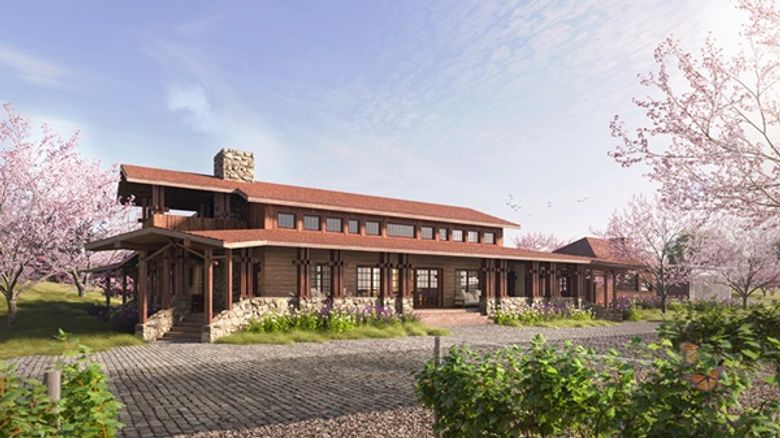
Rendering of the Six Senses Napa social hall
Weller said
the Caribbean also has increased accessibility and almost unlimited
possibilities, especially for new-build projects. “With
today’s technology and building, I believe you can build with more resiliency
to protect yourself against weather events,” he said. “The idea of new
construction being built in some of these incredible islands is a far better
business proposition than 40 years ago.”
Weller
already has several hospitality projects in its portfolio, including the
Sagamore Pendry in Baltimore. “After
COVID, we made a significant shift to luxury hospitality combined with branded
residential because we saw the incredible need and desire for it,” he said. “We
also saw that it aligned with our personal interests and passions around
pursuing these types of businesses.”
For future
projects, Weller said he loves his current collaborations with IHG and Six
Senses but is brand-agnostic.
Branded
residential
Weller said
branded residences are part of the two Six Senses resorts and will be a big
part of the deals in this partnership. Branded residential has recently been
used to help deals pencil, but Weller said he wants these to be accretive to
the bottom line and that the hotels should be able to stand on their own. He’s
also interested in standalone branded residential projects (like several in
Mohari’s portfolio).
We won’t do a project for branded residential that is needed to make the hotel work. The hotel project has to stand on its own, and branded residential should enhance the project.
Marc Weller
“We won’t do
a project for branded residential that is needed to make the hotel work,” he
said. “The hotel project has to stand on its own, and branded residential
should enhance the project.”
Weller said
he believes that in the long term, the luxury brands at the top will continue
to see great growth and demand. “We think the branded
residential market, in particular, is a market that will continue to see growth
because there are only so many brands at the true luxury level that can offer
these exclusive residences in incredible locations tied to these brands,” he
said. “That’s a very finite amount of product.”
Weller
Development Partners has plenty of experience in non-hospitality related
residential, so while he loves luxury markets with high barriers to entry,
Weller isn’t ruling out mixed-use projects in much easier-to-access locations.
“Generally speaking, right now, we’re very focused
on places that are a little more remote or a little more removed, even if
they’re near a population,” he said. “But there’s an appetite for this product
in a more urban environment, in a mixed-use environment as well… If you were in
the right ZIP code, with the right mixed-use project, near the right amenities – many of these brands would be amenable to going into those projects.”