CEO Sean Hehir discusses Trinity’s latest transactions, what he's seeing in the M&A market right now and the robust state of leisure travel.
NATIONAL REPORT — While Trinity
Investments has sold a majority stake of the 374-key Hyatt Regency Greenwich in
Connecticut to Certares, that doesn’t mean the company is exiting the property.
It just means Trinity added an institutional partner later than it normally
does.
“With Greenwich, it was a very
exciting opportunity for us when we bought it a few years ago, and we elected
to buy it on our own through our fund,” said Sean Hehir, managing partner,
president and CEO of Trinity.

We are constantly talking to Certares about acquisition opportunities. They are one of our favorite joint venture partners. We see the world in a very similar way and have several successful investments together.
Sean Hehir
“We executed on the renovation
and as we were exiting the renovation, we decided that was the time, once the
opportunity was de-risked, to bring in a capital partner… We have a long
history with the principals at Certares… So, they were logical partners.”
Hehir said Trinity retained a
25% equity stake in the property and will continue to be the general partner
and will still operate the property on a day-to-day basis. He said Trinity
would love to partner with Certares on more deals.
“We are constantly talking to
Certares about acquisition opportunities. They are one of our favorite joint
venture partners,” he said. “We see the world in a very similar way and have
several successful investments together. So, we’d love to do a lot more with
them.”
Hehir talked to Hotel Investment
Today about other notable transactions this year for Trinity, the company’s
pipeline and why the leisure market is still looking strong this summer.
Trinity’s sale in
Phoenix
Earlier this year, Trinity sold
the 950-key JW Marriott Phoenix Desert Ridge Resort & Spa in Arizona to
Nashville-based REIT Ryman Hospitality Properties for $865 million, one of the
largest hotel transactions of the year.
Trinity purchased the property
for $602 million in 2019 and in 2023 put nearly $100 million in capital
investments into the resort, including renovating its rooms, lobby, adding a
new water complex and reimagining its F&B outlets.
Hehir said it was the perfect
time for Trinity to divest and find a buyer that wanted to take the property to
the next level.
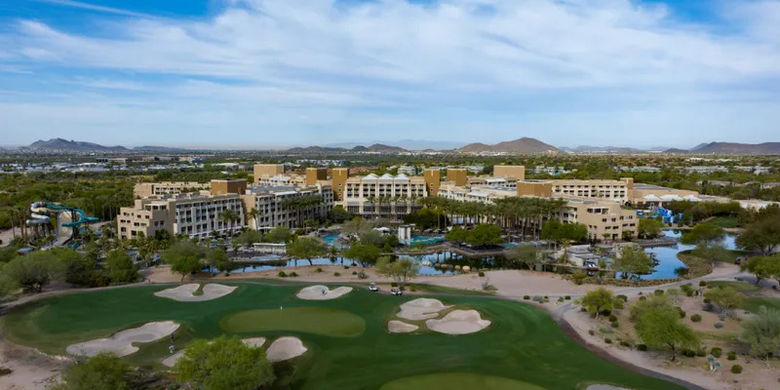
Earlier this year, Trinity sold the JW Marriott Phoenix Desert Ridge Resort & Spa in Arizona to Ryman Hospitality Properties for $865 million.
“Once our assets hit
stabilization, that’s really the time for us to start looking to exit. With
that property coming out of the renovation, it came flying out of COVID with
really strong performance,” he said, noting that Ryman is a logical buyer for
the property because it matches a property it bought in Texas in 2023 (the
1,002-room JW Marriott San Antonio Hill Country Resort & Spa in San
Antonio, Texas, which it bought from Blackstone for $800 million).
“They’ll be terrific stewards of
Desert Ridge, and they were a truly phenomenal firm to work with, their
professionalism, the way that they executed on their due diligence and
underwriting and ultimately the purchase,” he said.
Despite Trinity already doing a
lot of renovations on the Desert Ridge property, Hehir said there are still
plenty of opportunities for the new owner.
There was obviously a dislocation between buyers and sellers in terms of cap rates and sales prices, but there seems to be a convergence now occurring where they’re converging around what the right cap rate is, which is holding in the 7% to 8% range on average.
Sean Hehir
“There continues to be upside.
There’s a lot of excess land, so there are ways to look at monetizing that.
There’s the ability to expand the size of the hotel by a couple of hundred
rooms. The meeting space is under renovation right now,” he said. “It’s always
good to leave a bit for the next owner to do and to realize upside through.”
Hehir said Trinity has a robust
pipeline right now.
“We do not develop. We only
focus on high-barrier-to-entry markets, irreplaceable real estate,
under-renovated, under-appreciated, under-asset managed, and there is a whole
plethora of those opportunities out there,” he said. “The capital markets and
the debt markets are cooperating. We’re obviously raising capital through our
funds that allow us to have the equity to execute on these opportunities.”
Hehir also said he thinks the
deal environment is starting to pick up right now.
“There was obviously a
dislocation between buyers and sellers in terms of cap rates and sales prices,
but there seems to be a convergence now occurring where they’re converging
around what the right cap rate is, which is holding in the 7% to 8% range on average,”
he said. “There’s a lot of credit capital out there, so debt financing is
attainable for the right sponsors. I see transaction activity picking up going
through the second half of this year into next year.”
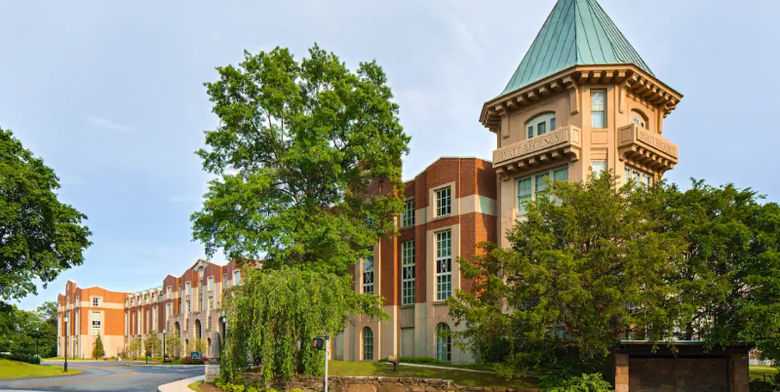
Last week, Trinity Investments sold the majority stake of the Hyatt Regency Greenwich in Connecticut to Certares
Leisure ‘really strong’
From what he saw with his family
in Europe this summer and what he’s seeing at Trinity’s properties, Hehir said
the leisure traveler seems robust right now.
“We’ve seen it be really
strong,” he said. “I was in Europe with my family for a couple of weeks over
the summer, and everybody seemed to be there. Then I look at the performance of
our hotels in Florida, Texas, Arizona, Southern California, Hawaii and Cabo.
They all seem to be there as well.”
The experiential travel trend
that started during COVID continues to be strong, Hehir said.
“Technology can’t replace
experiences and people are traveling for those experiences,” he said. “I know
it’s not true with all assets and all markets, but those destination-oriented
resort markets seem to be holding very well…. We just hope that continues and
we don’t see any reason why it shouldn’t continue.”
Trinity’s focus continues to be
on TRevPAR (total revenue per available room) at its properties, Hehir said.
“Especially when we have a group
base, or the ability to have a group base in our hotels, [the goal is] how do we capture as
much revenue from all of the different departments on site and in-house as
possible?” he said. “Even with your leisure guests, how do you keep them
on property? The way to keep them on the property is to provide the amenities
that they’re looking for… It’s really our job as the owner to make sure that we
have that amenity offering, to ensure that the guests are happy to stay on
property and to spend their discretionary dollars with us at the hotels.”