A
newcomer in Asian hospitality investment, Axe Management Partners, could be
IHG's lynchpin to grow its new brand, Garner, outside the U.S., starting with
Japan.
JAPAN – To
grow its latest brand, Garner, outside the U.S., IHG goes with a young pan-Asia
multi-asset real estate player with offices in Tokyo and Hong Kong that has
just made its first hotel investment. The challenge for the newcomer, Axe
Management Partners, will be how to make profits while charging less than a
Holiday Inn Express rate.
The
company recently acquired three WBF hotels in Osaka from CapitaLand Ascott
Trust for JPY10.7 billion (US$71 million) and will reopen them as Garner hotels
in the fourth quarter.
Axe
founders, Gary Kwok and Sam Lau, rub shoulders with the likes of Adrian Cheng
in Hong Kong, brother of Rosewood Hotel Group's Sonia Cheng. Adrian Cheng is
among its capital funders, along with financial institutions and large family
offices based mostly in Greater China and Hong Kong, Kwok told Hotel Investment
Today.
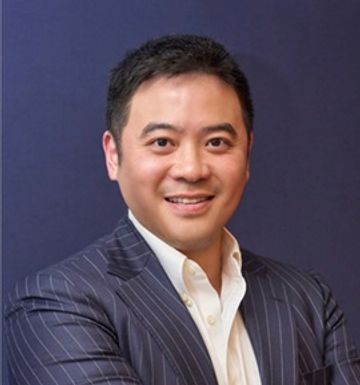
Gary Kwok, Axe Management Partners
IHG
launched Garner last August with an aim to create a new sweet spot in midscale,
just below Holiday Inn Express. Kwok said Axe likes the brand because it will
offer guests a better choice than the traditional midscale business hotels in
Japan without paying a lot more.
Kwok,
who is CEO of Axe, illustrates that if a Holiday Inn Express rate is JPY20,000,
Axe would charge JPY10,000 to JPY12,000, lower than the Express but higher than
the average rate of a Japanese business hotel of around JPY8,000.
Guests
will enjoy a “younger version” of the Express, he said. Each Garner hotel will
have a unique design and localization to meet Japanese and international
travelers’ needs. Perks include welcome amenities, free hotel breakfast and
daily snacks. Guests also enjoy full IHG One Rewards benefits.
“Japan
has high quality midscale hotels, like WBF and APA [Hotels & Resorts]. But
they are local brands and are pretty standard. We want to offer a premium
midscale product that is a notch above what is available because there is
demand for it. Although the three hotels we bought are new and nice, we are
investing more capex to refurbish and rebrand them,” Kwok said.
The
company is spending at least JPY1.07 billion (US$7.1 million) on capex, or more
than US$13,700 per key.
Kwok
is confident of an ROI of 20%, which bucks the usual 6% to 12% average returns
for a hotel investment, citing the attractive deal price and IHG's
international brand association as key factors.

Financing remains very cheap. The room rate may be low, but it’s higher than where these assets would typically trade. While IHG may well have higher fees than the previous operator [WBF], the premium does flow to the bottom line supported by above mentioned efficiencies.
Dan Voellm
Dan
Voellm, CEO and founder of AP Hospitality Advisors, said the price of JPY10.7
billion that Axe paid for the three hotels was “overall, attractive” when
compared to the purchase consideration of JPY10.29 billion in 2018.
The
hotels became part of CapitaLand Ascott Trust when Ascendas Hospitality Trust,
now merged with it, bought them in 2018 for JPY10.29 billion, excluding fees
and transaction costs.
Located
in the Honmachi district, the three hotels finished construction and opened in
2018. Hotel WBF Kitasemba West and WBF Kitasemba East each has 168 rooms, while
Hotel WBF Honmachi has 182 rooms.
Observed
Voellm, “The properties are relatively new, have a freehold title and a decent
size where efficiencies of scale come into full effect. Given that these are
relatively new hotels with compact rooms of 11sqm to 15sqm, the renovation
amount does not have to be very high.” The capex allocated seems a “reasonable”
amount, he added.
Keys
to success
But
is there really a gap for the brand in Japan? “This segment has yet to be
tested for IHG,” Voellm said. “IHG members on leisure travel and some corporate
may take advantage of the new value offering in a portfolio that is rather
top-heavy. Moxy is one comparison, though it has larger rooms, and it is doing
well in Tokyo and Kyoto.”
Voellm
believes the hotels will be profitable, although the ROI target of 20% is
“ambitious, perhaps even eye-popping to some in today’s hotel investment world,
but not entirely out of question for this deal.”
“The
key is the low entry price,” Voellm said. “With the World Expo 2025 in Osaka
and the distribution power of IHG, the deal has many macro positives. Furthermore,
the clustering of the three assets will reduce overhead costs and drive the
bottom line. As a limited-service hotel with breakfast only offering,
profitability will be healthy.
“Lastly,
financing remains very cheap. The room rate may be low, but it’s higher than
where these assets would typically trade. While IHG may well have higher fees
than the previous operator [WBF], the premium does flow to the bottom line
supported by above mentioned efficiencies.”
The
hotels will be managed by a team assembled by Kwok, who was CEO of Agora
Hospitality Group, a small chain that operates full- and limited-service hotels
in Japan.
“We
can be cost-effective; it’s what I have been doing for many years. You can run
some of these hotels with just 10 full-time staff and some part-time staff.
Functions such as housekeeping are all outsourced,” Kwok explained.
The
partnership with IHG is non-exclusive. “We are open to work with IHG on its
other brands in the future, as well as with other partners. Internally, we have
a target [to grow Garner] but we’d rather focus on doing it right than just
chasing the target,” Kwok added.
There
isn’t any capital involvement from IHG but “they’ve been supportive,” according
to Kwok.
“We
know they care a lot for this brand and believe it’s the next growth engine for
them. We’re working on the brand concept together, as it’s the first time they
go outside America with it. Just a few hours ago, we were on calls with them on
design matters,” Kwok said.
The
IHG factor
IHG
is experienced in launching new brands in Asia Pacific. Australia was the first
global destination for the Vignette Collection in 2021.
The current cycle is good because the fundamentals are strong. Tourists are coming in because Japan is a great destination. We expect that to continue because of [pro-tourism] national policies. The cycle is also good as interest rates remain low.
Gary Kwok
“These
global brands are rooted in the heart of this region, ensuring their growth
resonates both locally and globally,” said Rajit Sukumaran, IHG’s senior vice president
and managing director, East Asia & Pacific. “We expect the same to be true
for Garner, which delivers all the important things guests traveling in this
region value most. And, as a midscale conversion brand, Garner gives us the
ability to grow quickly by giving owners of independent hotels the flexibility
to easily transition to a global stage with IHG’s powerful systems.”
Japan
makes perfect sense for Garner, Sukumaran added. “It boasts a sizable yet predominantly
domestic midscale hotel segment and is undergoing remarkable growth amid the
government’s ambitious inbound tourism targets and evolving international
strategy. These factors are reshaping Japan’s travel industry dynamics,
presenting strong opportunities for us.”
Axe
is actively looking at opportunities in key cities including Tokyo, Osaka and
Kyoto. On Japan’s decision to raise interest rates for the first time in 17
years, ending an era of negative interest rates, Kwok said, “We talked to other
investors and, like us, they seem unfazed by it. Compared to the rest of the
world, Japan’s interest rate is way too attractive still.“
The
Bank of Japan recently raised short-term interest rates to 0-0.1%, from minus
0.1% previously. “The
current cycle is good because the fundamentals are strong,” Kwok said. “Tourists
are coming in because Japan is a great destination. We expect that to continue
because of [pro-tourism] national policies. The cycle is also good as interest
rates remain low.”
Beyond
Japan, Axe sees opportunities in Hong Kong, China and South Korea and,
“potentially” Southeast Asia.
IHG,
meanwhile, is already seeing “a strong appetite” for Garner in markets
including Australia, Indonesia, Singapore, Thailand and Vietnam, Sukumaran said.