Head of Hospitality Investments Shai Zelering said the PE
giant wants to focus on the operations fundamentals of the business through
capital infusions or collaborations.
NEW YORK CITY – Private equity giant Brookfield is a bit of
a contrarian investor and its Managing Partner and Head of Hospitality
Investments Shai Zelering hinted that this moment in time, one still lacking in
liquidity, might be their opportunity to get “really active.”
But instead of Brookfield Asset Management’s more typical “buy, fix, sell”
model, Zelering told Hotel Investment Today that he expects the company with $23
billion in hospitality assets under management to be more of a “fixer” over the
next 24 months.

We’ll be very focused on problem solving, where before it was growing platforms. By that I mean fixing broken capital structures or capital deprived platforms or [single asset] hotels. We can join venture, provide capital solutions, preferred equity.
Shai Zelering
“We’ll be very focused on problem solving, where before it
was growing platforms,” said the New York City-based 11-year veteran of the
firm. “By that I mean fixing broken capital structures or capital deprived platforms
or [single asset] hotels. We can join venture, provide capital solutions, preferred
equity.”
What has not and will not change for Brookfield is its
owner-operator mentality. Zelering said they are not interested in financial
engineering fixes. “We really want to focus on the operations fundamentals of
the business – either through capital infusions or guidance and collaboration
with the managers,” he explained.
Given Brookfield’s scale and scope, the “fixer” focus will
more likely be on platforms than individual assets, and Zelering points to its
May acquisition of Generator Hostels’ European brand and hotels from Queensgate
Investments for €776 million ($869 million) as an example: buying a platform,
growing it, improving it and refreshing a brand to make it more profitable.
“We believe that through consolidation and acquisition, we
can double the size of the [Generator] platform,” Zelering said. “What we
really like about it, practically and philosophically, is its affordability of
travel. We want people to get into the habit of traveling. For us, it ties into
so much of our strategy, which includes our student housing business.”
The question about Generator, Zelering added, is how they
continue to elevate the brand without charging more because the demographic
suggests keeping it affordable. The biggest answer, he said, is the opportunity
surrounding revenue management because the mix of room types is much more
complex than typical hotels. “We’re very excited about that,” he added.
While Generator is typical of the niche plays Brookfield
likes, Zelering said that if they find single assets in the luxury sector or other
well-niched segments, they will pursue those deals, as well.
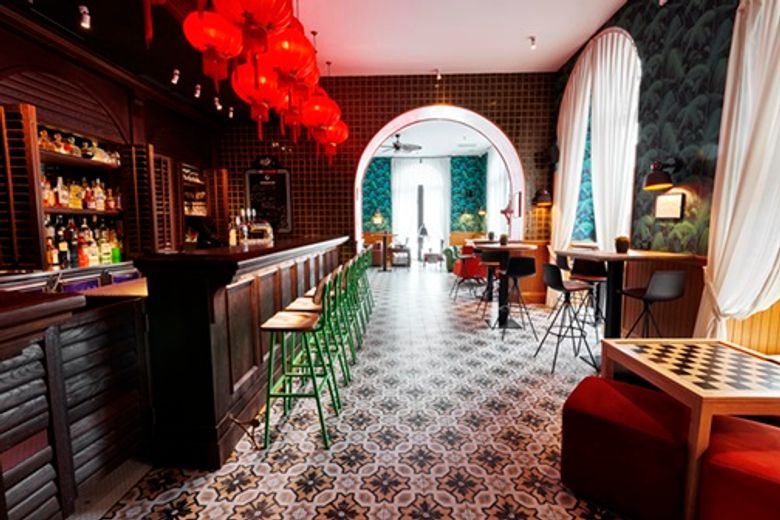
Bar at the Generator in Rome
Part of what is driving this strategy is the headwinds of
the past five years, starting with COVID and lingering today with the ongoing side
effects from Liberation Day and sluggish U.S. inbound travel.
“During those five years, many owners got very creative with
structures and financial solutions,” Zelering continued. “What I expect to see
is people saying, ‘I just need a simple partner. I need to simplify the
structure.’”
At the same time, he said certain owners that deprived their
assets from capital investments will be looking for capital infusions and
assistance.
“So, I think those are the two situations that we’ll be
focused on most,” Zelering said.
Macro plays
With 12 different hospitality platforms and about 45,000
rooms in its system, Brookfield has other opportunities and challenges to
manage and create long-term value.
It owns Atlantis Paradise Island resort in the Bahamas and
in August completed a $1.93 billion refinancing.
Over the past five years, Brookfield has invested more than
$260 million in the resort, including renovating guest rooms, the Atlantis
Casino and several new F&B outlets. With the recapitalization, they aren’t
done yet with Zelering explaining there is a five-year, $450 million capital
investment plan in place.
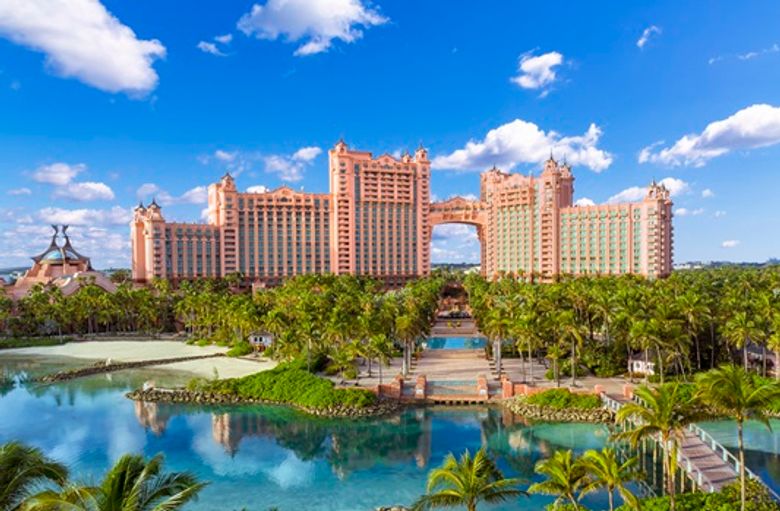
Iconic Atlantis Resort on Paradise Island, Bahamas
“This is an asset that the more you give it, the more you
get back,” he said. “It’s an iconic hotel and a family experience like no
other. That’s a place [family travel] that we like to invest in, and we see
incredible return on capital.”
Zelering more than once emphasized how increasingly
important it has become to be positioned with assets that thrive on bringing
families together. “If I look at the demographics of baby boomers, they want to
spend more time with their families, and I think that changes the way that they
travel. It’s partially why you see cruises doing so well.”
In addition to family travel, Zelering said positioning
assets around the affordability of travel is important to Brookfield, which
partially explains the Generator deal and led him to say “maybe we’ll find a
platform that needs reinvigorating like the old roadside motel concept. And maybe
it’s going to be experiences that are not luxury but are just differentiated.”
Zelering also believes the hotel industry is going to
continue to have dynamic opportunities surrounding live events. He said the
country has a chance to reverse the decline in inbound traffic in 2026 with the
FIFA World Cup and, if done well, it will provide a long tail till the 2028
Olympics in Los Angeles.
“We must, must, must be focused on this,” he said. “It’s the
difference between value extraction and value creation. We have an opportunity
to create value for the industry. Will we do it? Are we really focused on
getting the most out of these events?
“I came back from Dubai and every country that is looking to
grow should take a lesson there in terms of their focus on the hospitality
industry as a steppingstone for everything else. What they’ve accomplished in a
relatively short time is quite formidable, and the sense of service and
welcoming, law and order, and product is something that we should all be
envious of... Maybe we cannot fix everything, but at least having a welcoming
attitude and a service mentality will go a long way.”
New markets
While a majority of Brookfield’s hotel activity has been in
North America and Europe, it is stretching to markets like India and has its
eyes on the U.A.E.
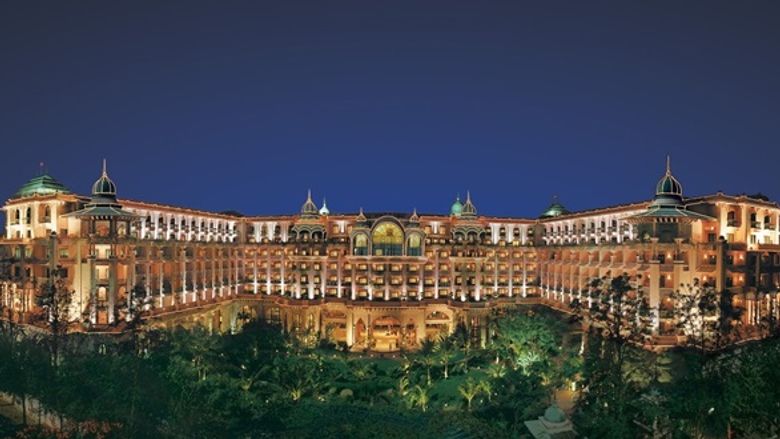
Brookfield took the Leela Palaces brand public this summer.
Brookfield owns India’s luxury Leela brand, which it took
public in June and previously stated it plans to add seven properties by 2028,
primarily in India.
“I don’t think Leela belongs in all markets. It’s one of
those brands that belongs where it is. But we have a lot of opportunity to grow,”
Zelering said. “India is one-third the size of the U.S. and has five times the
population. There’s so much room to grow with discipline and Leela Palaces
gives an incredible experience at a fraction of the cost, relative to the U.S.,
Europe, and everywhere else... You have to look market by market, but India is
growing at an incredible pace.”
Zelering is also a fan of Dubai and confirmed they are close
to a deal for a single asset there.
“Our team is in heavy, heavy discussions with opportunities,
but it’s undeniable that there’s a lot of interest in that region and we
haven’t closed anything yet,” Zelering said, adding that they have developed a
stretch on the beach in Dubai with restaurants that are performing very well.
M&A outlook
When asked about the near-term future of hotel M&A
activity, Zelering pointed to the 2008 financial crisis and how it took two
years to regain momentum. But once it did, he said, there was 14 to 16 months
of incredible transaction pace.
For the record, Brookfield has sold about $1 billion worth
of hotels this year and has acquired about $1.5 billion, according to Zelering.
“Not a great year, but a productive year,” he added.
We need to get back to the liquidity phase. We need to transact and you’re seeing some very smart money already doing so.
Shai Zelering
“There’s a lack of liquidity in the market right now,”
Zelering continued. “However, it has set the stage for more activity... So, I
think that the opportunities are coming. We have a robust pipeline, and we remain
very pragmatic. But I don’t think somebody is going to flip the switch and you’re
going to see all this activity. I think it’s going to be slow moving, and the
advantage will be with groups that have the scale and the scope to respond to
the market dynamics.”
Bigger picture, Zelering thinks the worst of economic
uncertainty is behind owners. “Inflation is tamed. Liquidity is coming back.
Capital markets are open for business,” he said.
He praised owners and operators for maintaining their fiscal
discipline and suggested hotel valuation are reasonable compared to other asset
classes.
“CMBS default rates are not flagging hotels,” he said. “We’ve
had a tough period, and we are past that.”
Zelering added that sitting and waiting is not a hotel
investment strategy. “We have to get in the game. Some people will not like the
outcome but if you keep on dwelling on the past, you’re going to miss the
future opportunities... We need to get back to the liquidity phase. We need to
transact and you’re seeing some very smart money already doing so.”