Appeal includes saving money by cutting down on construction
costs, speeding up timelines and taking advantage of tax credits.
NATIONAL REPORT – In seeking ways to save on development
costs while still creating unique and memorable hotel experiences, adaptive
reuse is becoming a frequent tool for developers.
A study of Yardi Matrix data by RentCafe found that in 2023
hotels accounted for more than one-third of all adaptive reuse projects in the
U.S. with more than 4,500 units delivered. That momentum carried forward into the
following year, when a May 2024 study found that hotels accounted for the most
adaptive reuse projects with 151,000 units in various stages of development.
That’s up 24% from 122,000 units in 2022, again according to RentCafe.
Chicago-based hotel development and management company First
Hospitality has seen the trend firsthand. In February, the company unveiled the
118-room Hotel Ardent, a Hilton Tapestry Collection property that’s housed
inside Dayton, Ohio’s historic, century-old Renaissance revival structure
Barclay Building.
First Hospitality President and CEO David Duncan praised the
value inherent in adaptive reuse, saying such projects can better stand out for
customers who are looking for unique properties and memorable hotel
experiences.
“Adaptive reuse projects often come with built-in history,
architecture and character that naturally support brand storytelling,” he said.
“These elements elevate the guest experience, create an emotional connection
and differentiate the hotel in a way that new builds often can’t.”
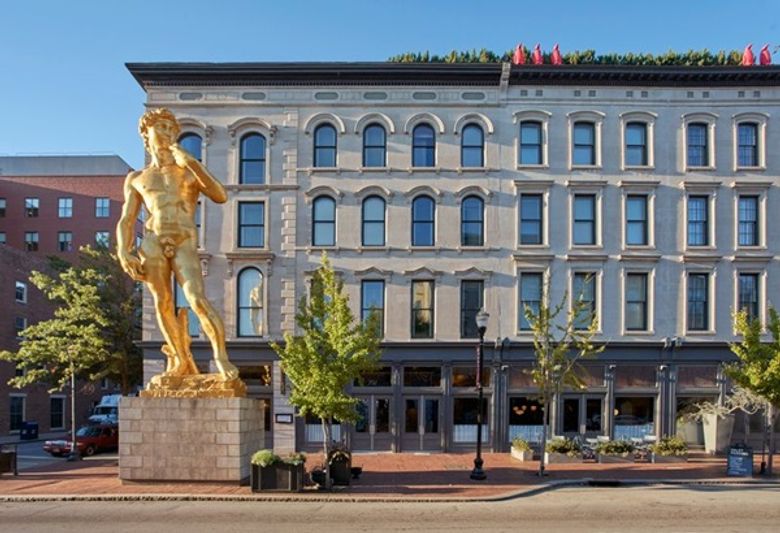
21c hotel in Louisville, Kentucky
21c Museum Hotels is no stranger to adaptive reuse, with
properties in places such as Durham, North Carolina, Louisville, Kentucky and
St. Louis, among others. “We love when we can preserve historic bones, but
juxtapose them with contemporary art and simple, clean finishes creating a
dynamic tension between the past and present,” 21c COO Sarah Robbins said.
Benefits of adaptive reuse
In addition to the customer experience, there are sound
financial reasons that are pulling hotel developers to consider adaptive reuse,
experts said.
“It can save money by cutting down on construction costs,
speeding up timelines and taking advantage of things like tax credits,” Duncan
said.
Robbins agreed. “Adaptive reuse can come with complex
construction costs, but we’ve also found it creates opportunities for tax
credits, historic preservation credits and property tax abatements,” she said,
adding, “We embrace exposing the scars.”
Kris Feldman, design principal at CREO Architecture,
acknowledged the complexity of adaptive reuse, but said developers of such
projects can see lower costs.
“If done carefully and thoughtfully, there can be economic
benefits. You have an existing structure” that does not have to be razed.
He added: “These projects typically work better when you’re
holding over the medium- to long-term. Those holding for the long-term can tap
into the inherent value in contributing to the urban landscape.”
That’s also the goal of 21c’s projects, Robbins said. “We endeavor to preserve and revitalize buildings and
neighborhoods,” she said. “With a longstanding commitment to preservation, our
founders’ vision was that 21c, and in many cases the buildings we occupy, could
be a catalyst for urban development and revitalization, while also being a
powerful tool for climate change.”
Best practices
If developers are going to maximize the return on their
adaptive reuse project, there are things that they need to be on the lookout
for, sources said. For one, such projects often require a healthy dose of due
diligence to make sure things such as modern utilities, staircases, ceiling
height and others are all up to modern day standards.

You need to find those gems that have a story and a character that you can build upon. Because without that sort of inherent value, these projects are typically not worth it.
Kris Feldman
“Older buildings often need a lot of work and have things
like outdated plumbing, wiring or layouts that don’t quite fit what today’s
hotels need,” Duncan said. “Getting everything up to current codes, including
fire and safety and accessibility, can be complicated and expensive.”
It’s important to find out about these surprises as early
into the project as possible, Feldman said. “Obviously, money can solve most of
the issues. But at a certain point, it just doesn’t make financial sense to do
this investment,” he said.
A solution? Selective demolition at the beginning of the
project to identify potential trouble points, Feldman said.
“That helps you really understand what you’re dealing with
and what the challenges and opportunities are,” he said.
What to look for
One of the most important things to look for in an adaptive
reuse project are characteristics that are going to help the project be
financially viable, such as things that help offset renovation costs.
“These projects work best in lively, in-demand areas like
city centers or cultural hubs where new construction might be tricky or
expensive,” Feldman said. “The building should be easy to convert into a hotel
layout and it helps if local zoning and regulations support hospitality use,
especially if there are tax breaks or preservation incentives available.”
From a construction perspective, Feldman said he looks for
buildings that have “architectural integrity.”
“You need to find those gems that have a story and a
character that you can build upon,” he said. “Because without that sort of
inherent value, these projects are typically not worth it.”