Major
hotel chains are rolling out new partnerships and membership perks as smaller
players make waves as the battle for loyalty heats up.
NATIONAL REPORT -- The battle for loyalty is heating up in the hotel industry,
as major chains roll out new partnerships and membership perks and smaller
players make waves with alternative models.
The push comes at a time when loyalty program participation
is surging. According to a Phocuswright report released in December titled “Playing
Favorites: What Makes a Go-To Brand in Travel, and Why Do Customers Stray?” Fully, 52%
of leisure travelers had some form of redemption on their most recent trip.
Yet according to Madeline List, manager of research and
special projects at Phocuswright, loyalty program members are surprisingly
disloyal: Phocuswright’s research indicated that while 42% of leisure travelers
said they had go-to accommodation brands, 63% of those with a favorite brand
still used an alternative in their past 12 months of travel.
“People might have earning goals that they hold on to, but
that doesn’t necessarily mean that then they’re going to be long-term,
consistent users of a brand, because they are still hopping around according to
what really meets their needs in terms of travel products for any given trip,”
said List. “As soon as their favorite brand isn’t working well for them, they’ll
just go to the next one to find the best product fit.
In other words, competition for their business is
increasingly cutthroat — or innovative, depending on how you look at it.
Marriott International, which has long offered its roughly
260 million Marriott Bonvoy members access to experiences via its Moments
platform, is leaning further into what chief customer officer Peggy Roe calls “passion
points” that range from music or sports experiences to culinary and outdoor
programs. More recently, the company has been testing experiences that appeal
to members across tiers, going beyond traditional bucket-list events that often
require hundreds of thousands of points.
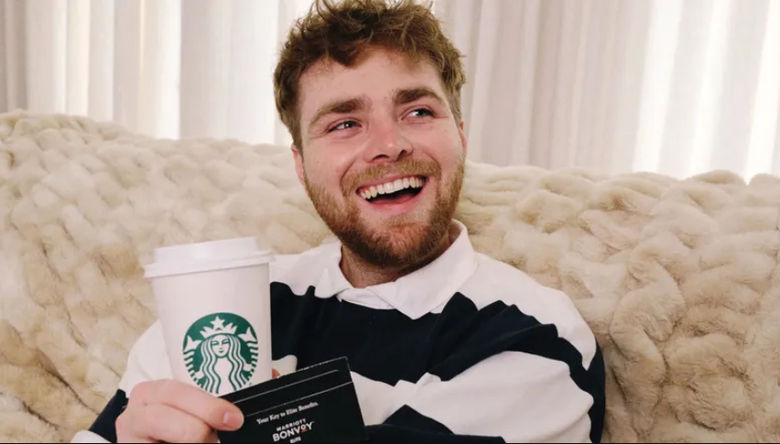
Singer-songwriter Alex Warren partnered with Marriott Bonvoy and Starbucks on a private one-day concert. (Credit: Starbucks)
This fall, Bonvoy partnered with Starbucks to host a private
concert in New York with up-and-coming musician Alex Warren, offering
everything from “one-point drops” that granted members event access for just
one Marriott Bonvoy point to premium packages with rooms that were auctioned
off.
“We wanted to do something with an emerging artist,” said
Roe. “And we varied the audience type. We wanted to get more young people to
come into the portfolio, but we also want people who burn points after a long
time to feel rewarded.”
Marriott’s “passion point” focus also extends to the great
outdoors, with the company launching the Outdoor Collection by Marriott Bonvoy
this fall. The collection showcases nature-focused brands like Postcard Cabins
as well as other Marriott properties with access to activities like skiing and
hiking.
Roe cited post-pandemic research indicating that “around
80-something percent of people said that they’re planning at least one trip in
the outdoors.”
“And they said they’d be even more likely to do so if they
could have a bed and a bathroom,” she added.
Among Hilton’s latest loyalty moves is a partnership with
the luxury cruise line Explora Journeys, with Hilton Honors members able to
earn and redeem points on cruises starting next summer. The tie-up joins a new
Hilton Honors offshoot called Hilton Honors Adventures, which showcases not
only Explora Journeys but Hilton’s partnership with AutoCamp, an outdoor
lodging brand best known for its luxury Airstream trailer accommodations.

Not every trip is created equal, and an upgrade on one trip can be worth much more to people than an upgrade on another trip.
Chris Silcock
“This is the next step, giving [members] access to other
ways to stay and other travel and adventure experiences,” said Chris Silcock,
president of global brands and commercial services at Hilton.
Hilton, which has grown Hilton Honors to over 230 million
members, has concurrently revamped its tier structure, lowering the
requirements for Gold and Diamond status while introducing a top-tier Diamond
Reserve level that requires 80 nights and $18,000 in annual spending.
Hilton Honors is also expanding its automated advance
upgrade notification system, which debuted in 2021, addressing what Silcock
described as a “key anxiety point” for members. Eventually, Hilton Honors plans
to launch “confirmable upgrades” that would enable members to choose which
trips they want to secure upgrades for rather than leaving it to chance.
“Not every trip is created equal, and an upgrade on one trip
can be worth much more to people than an upgrade on another trip,” Silcock
said.
Smaller players, meanwhile, are putting their own spin on
traditional loyalty models.
Starwood’s 1 Hotels brand introduced its
Mission Membership in December, rejecting the usual points-based system and
focusing instead on environmental impact.
For every qualifying Mission Membership stay, 1% of spend is
donated to one of three environmental nonprofits, and for every new member who
joins the program, 1 Hotels plants a tree through its partnership with the
Arbor Day Foundation. Members also receive benefits like upgrades and late
checkout based on frequency rather than tier status.
Journey specializes in independent hotels
Journey, a loyalty concept launched by John Sutton in 2024,
is taking a different tack from brand- or company-specific programs by building
a network of independent hotels and promising them a program with the
large-scale data capabilities typically available to major chains.
Journey’s business model also differs from most in that
hotels only pay Journey a cut when members book stays through the platform.
Additionally, Journey pays hotels the equivalent of the best available rate for
point redemptions and suite upgrades, which, for guests, means no restrictions
on when they can redeem points as well as the ability to guarantee a confirmed
upgrade ahead of check-in.
Sutton, whose background includes leadership roles at
digital media giant Red Ventures, said his inspiration for Journey came while
staying at boutique properties.
They can see what the user has shared with us, and we try to synthesize and summarize it for these busy people to take action on it.
John Sutton
“My best experiences were at the places where they started
to get to know you,” said Sutton. “They knew you by name, they knew the kids’
names, all those types of things,” he said.
The startup has backing from Brian Kelly, founder of the
travel media platform The Points Guy, which is owned by Red Ventures. Kelly
serves as an investor and senior advisor for Journey.
Journey has more than 1,500 properties within its fold, with
these properties sharing guest preferences across the network to better
personalize stays. Journey provides hotel staff access to these “guest
insights.”
“They can see what the user has shared with us, and we try
to synthesize and summarize it for these busy people to take action on it,”
said Sutton.
Sutton said he hopes Journey will eventually extend beyond
hotels and build loyalty through status and access rather than points
transactions. He pointed to the fact that, early on, if a business accepted
American Express, “it meant something special about your establishment.”
“And we want the Journey logo to feel the same for
travelers,” said Sutton.
EDITOR’S NOTE: This story first appeared in Travel Weekly.