Choice Hotels’ upper-tier brand leaders discuss their moves to consolidate appropriate brands under the recently debuted Upscale by Choice platform.
Editor’s note: This recent roundtable in New York City about
Choice Hotels’ plans for further upscale development was sponsored by Choice
Hotels International. Choice also participated in the curation of panelists but
had no influence on the final editorial content.
NEW YORK CITY - When Choice Hotels International acquired Radisson Hotel
Group Americas for approximately $675 million two years ago, it gave strength and
further trajectory to its play in a segment that had been represented solely by
its 17-year-old Cambria brand. Since then, Radisson and Radisson Blu have
relaunched and Cambria has experienced continued growth, pushing the need for a
defined platform.
“These last couple of years have been a big step for the
company. We've grown roughly from 200 to about 400 hotels [in the upscale
space],” said Indy Adenaw, senior vice president and general manager,
upscale. "So, the size component of
competing in upscale is already there… We feel pretty good about actually
approaching this from the mindset of being a challenger and an aggressor to the
sector.”
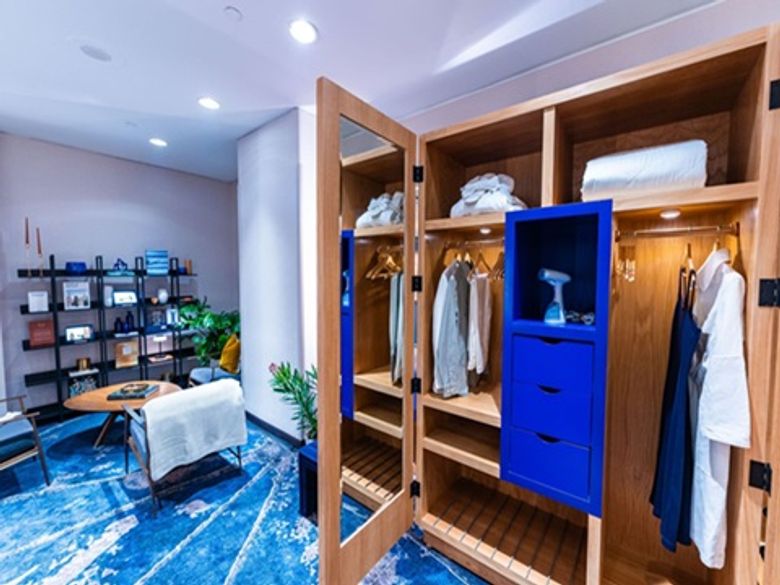
New-look Radisson Blu guest room
Earlier this year, Choice set plans in motion to reimagine
five of its eight brands that occupy the upscale and upper-upscale segments and
create Upscale by Choice. These include Ascend Hotel Collection, Cambria
Hotels, Radisson, Radisson Blu and Radisson Individuals.
“We think [this is] actually a really attractive space for
Choice… This is a journey where the parts are coming together and the future is
getting bright,” Adenaw said.
As a publicly traded hotel company, Choice is well aware
Wall Street expects growth every year, indicated Mark Shalala, Choice
Hotels senior vice president/development-Upscale Brands and Real Estate. “These
upscale brands, the acquisition of the Radisson Hotel Group Americas portfolio,
really creates two or three new whitespace growth channels for us, both upscale
full-service with Radisson, upper-upscale with Radisson Blu, and then a new
entrant… An upper-upscale soft brand, with a reimagining of the Radisson
Individuals brand. So, it’s really the natural progression of where we want to
go,” he said.
Shalala pointed out many of Choice’s competitors have become
extremely keen on expanding in the midscale segment where the franchisor has
been “a powerhouse player” for more than 80 years. “It's just only natural now
to start punching up [into] the upscale space,” he said.
“Our aim is not to replicate what others are doing, but to
try and figure out our own unique approach to each one of these brands, whether
it be Ascend, Individuals, Cambria or Radisson,” Adenaw added.
Working with owners
The move toward the Upscale by Choice platform was not done
in a corporate vacuum; it decidedly involved owner input, according to Alexandra
Coleman, vice president of upscale brand management. “For each of our brands,
we have owner councils in charge of providing feedback to us in addition to
taking what we’re doing and disseminating it to the rest of the owners,”
Coleman said. “We’re deeply committed to making sure our owners are with us on
this journey… It’s very important to us that our owners have a stake in how we’re
shifting and changing these brands. There are two customers at the end of the
day: the consumer staying in the hotel, and the owner/franchisee. Both of them
are equally important.”
.jpg?tr=w-360%2Cfo-auto "Indy Adenaw, senior vice president, GM, Upscale, with Alexandra Coleman, vice president, Upscale Brand Management")
Indy Adenaw, senior vice president, GM, Upscale, with Alexandra Coleman, vice president, Upscale Brand Management
Philipp Mirow, director, upscale brands and brand leader for
Radisson, Radisson Blu, said one area Choice worked on with its owners centered
on F&B. “For many hotels it’s a challenge to deliver: from a financial
perspective, from a staffing perspective, from a great quality perspective,” he
said. “What we really tried to ensure as we’ve been evolving our brands is to
develop new concepts that still deliver on the key guest needs of being able to
grab a great breakfast, have a great lunch, have a great dinner service with
all of the food and beverage expectations that come with that while being more
operationally friendly, easier to convert, easier to deliver, lower staffing
models, etc. And so, we’ve really been partnering together and working through
how we can ensure that we deliver that without compromising the guest
experience.”
Toward this, Adenaw stressed, “If somebody has an issue with
either their operating model, with a business plan that they want to execute,
they have an opportunity within our system and business to actually not only be
heard, but to help us build ideas in ways that they can’t in other
environments. That process of building together is intrinsic in who we are and
how we compete.”
Shalala echoed his colleague, noting, “Our owners are the
core of everything we do. They’re the ones that are taking the risk. They’re
the ones that are securing the debt and raising the equity and really putting
their necks on the line. Yes, their using our marks and there’s a partnership,
but if they’re not profitable, we’re not profitable. We want to build
long-term, 20- to 30-year relationships. So, this needs to work. It’s a
marriage. We do hear an overwhelming amount of frustration from owners with
some of our competitors where maybe they’ve just lost touch. They’re just so
focused on the brand initiatives, rather than looking at the property-level
profitability of that particular owner. And that’s what this group is going to
be laser focused on.”
Flexible, distinctive
The platform is expected to be a flexible one, noted Marissa
Ballan, head of development, Radisson Blu, so owners can feel confident in
having a business model that works. “Obviously, there are certain key-count thresholds
and amenity thresholds that we have to ensure that we’re delivering on that
brand promise, but when it comes to meeting space, we’re not going to say you
have to have 10,000 square feet of meeting space,” she said. “Maybe that doesn’t
work in certain markets. Or that you have to have a certain level of restaurant
or F&B or a spa. So, we’re trying to go market by market and embed enough
flexibility in each of these brands so that they deliver on an investment that
ultimately works for the owners.”
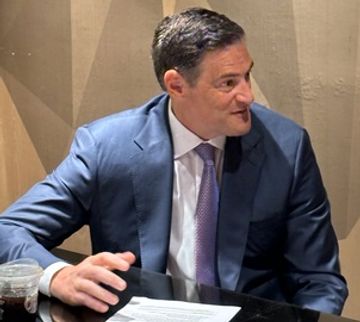
Mark Shalala, senior vice president development, Upscale Brands & Real Estate
Adenaw said there would be principles that stretch across
all the brands, but the objective is to make each brand distinct from the
other. For example, Coleman said with Radisson Blu considered the largest
upscale brand in Europe, there is “huge opportunity” in bringing it to the
United States. To set it apart, she said Choice is “leaning really strongly
into [the brand’s] Scandinavian roots, focusing on being a warm, inviting
experience that’s elevated, really leaning into art and inspiration.”
Toward this, the guestroom prototype has been redesigned to
focus on what’s being called “the get-ready moment,” and features a dry vanity,
full wardrobe and a place for luggage. “We think it’s differentiating. There’s
a lot of design hotels out there that feel cold and sterile and we’re really
leaning into creating an experience that’s warm and inviting,” Coleman said.
Choice plans to tap into the core Radisson brand’s 115-year
history, incorporating a contemporary look and feel with touches of nostalgia,
with an eye toward reinvigorating a classic hotel brand. Its enhanced guestroom
design will include what Mirow dubbed a “cozy nook” and described as “a unique
piece that blends a functional workspace and a soft-seating area for our guests
that enables them to get the most out of the guestroom and the footprint.”
As for Cambria, Coleman said the brand is and always has
been about warmth and approachability. “It’s something that’s been working for
the brand for a long time and [we’re] definitely not walking away from it;
instead, we’re going to enhance it more.”
As to the nitty-gritty of setting ADR for the Upscale by
Choice brands, Shalala said there would be clear delineation and “a significant
amount of daylight” between each brand.
“A Radisson Blu is not going to compete at all—completely
different guests—with a full-service Radisson. And a Radisson being a
full-service, upscale box is not going to compete with Cambria, and Ascend is
completely different from that,” Shalala said. “Yes, in some markets, there might
be some ADR closeness, but the experience and the booking decision is going to
be driven by a different guest or stay experience.”
Similarly, RevPAR goals will be toggled to target locations,
such as the top 25 to 50 markets across the country. “One of the things that we
know drives RevPAR is a great guest experience and that’s why we’re so focused
on repositioning and relaunching these brands, because we want to make sure
that great customer experience helps drive rate for those owners,” Coleman explained.
“So, RevPAR is both an exercise of looking at the markets you want to be in
[and] about how are you delivering something that’s more elevated and more
exciting than what is happening in the competition?”
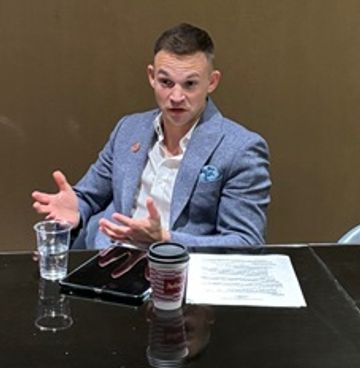
Philipp Mirow, director, Upscale Brands
Both Mirow and Shalala stressed the importance of having
“skin in the game” as the brands segue to the new platform. “With Radisson Blu,
we have both owned and managed hotels within the organization, including
Radisson Blu Mall of America, where we’re just starting a $50 million
renovation of that particular property,” Mirow said. “And so, we’ve been
working very closely with those hotels to be able to pilot and test some things
to understand what’s really working.”
“We believe you need to be in it with your owners,” Shalala
added. “You can’t just launch a brand off the backs of your franchisees; you
really need to kind of have some skin in the game.”
He also noted Choice has continued to support the Cambria
brand. “For the right locations and the right develop sponsorship groups and
strategically where we want to place the brand, we will lean heavy and invest
into the deal with different types of incentives or capital support.”
And while Choice is primarily an asset-light model, Shalala
indicated it’s building a handful of Cambrias on its own balance sheet. “That
allows the brand folks to kind of ‘test kitchen’ different concepts,” he said. “We
don’t want to ask a developer to do anything we wouldn’t do ourselves for our
own properties. And the idea is once we get them ramped or stabilized to eventually
find a buyer and get into a long-term franchise agreement and recycle that
capital into another deal.”
All about relationships
A focus on solidifying both longtime and new owner/developer
relationships as the Upscale by Choice platform builds also is key for the
brand team.

Marissa Ballan, head of development, Radisson Blu
“I think the warmth and friendliness of those relationships
we have with owners translates to guests,” Ballan said. “When consumers find
Cambria [for example], they feel that warmth and they feel that connection that
is passed through the relationship Choice has with those owners into the guest
experience.”
“It’s all about relationships. This is what the hospitality industry
is,” said Shalala, noting when Radisson came under Choice two years ago,
“initiative number one was go out, meet with these owners and ask, ‘Are you
okay with this? I know this is a lot of change for you.’”
Shalala added that Choice welcomed the owners into their
annual conference, making them feel part of the Choice family. “Each property
has [its] own wins and losses and areas of opportunity,” he said. “[We’ve been]
going in and trying to diagnose those one by one. This doesn’t happen
overnight, but again, the effort and consistency in doing that [has us] winning
those relationships and building on that going forward.”
As the Upscale by Choice platform advances, expansion for
the brands is expected to target a range of markets. According to Ballan, in
addition to the top 25 to 50 domestic markets, Radisson Blu is eyeing the
Caribbean as well as resort and urban destinations across Latin America. “So,
that could be Mexico City. It could be Cancun. Could be Rio or São Paulo, and
the list goes on. We’re really looking for those major gateway markets to
leverage some of the international nature of what this brand is,” she said. “If
[anyone] wants to bring us a deal in Hawaii, like, yes, let’s do it.”
With Cambria at 70-plus hotels, Shalala said there are 20
under active construction and another 65 in the pipeline, 50% of which are
waiting to break ground. “So, the pipeline for Cambria is robust. If we get a
little break from the capital markets, we’re going to continue to scale this
brand in a meaningful way,” he said.
Overall, said Adenaw, there’s just a sense of belief in what
Choice is doing with the upscale platform. “I think that probably speaks to our
mindset [that] this is the time to step into the wind versus to draw back. So,
we think that the coming months will be fruitful for us.”