Collective Hospitality is reimagining the ‘digital nomad’
brand it bought out of insolvency with a new name, a smaller footprint and a
goal to partner with a big brand.
SINGAPORE – Entrepreneur and hotelier Gary Murray bought the
insolvent ‘digital-nomad’ hybrid hostel brand known as Selina Hotels in August
2024 with a six-month plan to revive the concept by slashing costs, raising $50
million in capital and building occupancy with a better distribution plan. Last
week, the still-optimistic founder of Collective Hospitality told Hotel
Investment today he revised his initial plan to first clean up a bigger mess
than he anticipated.
What Murray has done is trimmed about 60 hotels from the
portfolio down to 40, and he said the portfolio that now sits under his more
traditional boutique brand Socialtel and now making money.
The concept is being repositioned away from the hostel model
and now being staffed by “real hotel people” to drive the business. Socialtel is
eliminating ineffective co-working spaces, reducing shared dorm rooms and putting
more emphasis on high-energy F&B.
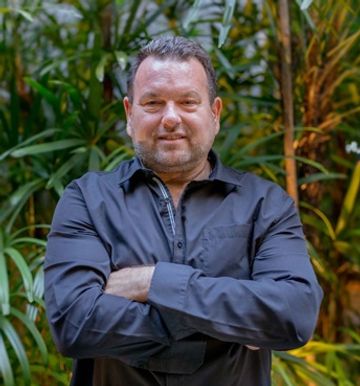
Collective Hospitality's Gary Murray
Murray also said he has “massively” cut overhead and waste,
especially with a new IT structure that cut costs from $2 million a year to
$200,000.
Now, Murray said, the groundwork has been laid, the
improvements are starting to bear some fruit, and he wants to bring in a major
brand this year to be a partner in the operating company and give the leaner
and repositioned concept much-needed distribution heft.
A goal to break the 50% systemwide occupancy barrier remains
just that – a goal with the repositioning to more of an experiential, Gen
Z-driven boutique hotel brand a work in progress.
The decision to raise $50 million capital in the form of
preferred equity is still in the works and Murray said he is getting ready to
go out and find what will likely be a single capital partner.
Transitioning to new brand
What Murray found when he acquired the brand was a structure
in worse shape than he thought, which he said is making 2025 more of a
transition year.
He let go of all the corporate office team, replaced a lot
of senior management at the country level, set up a new IT structure by
installing cloud beds everywhere and replaced the hostel culture with a
boutique hotel culture, bringing in experienced hoteliers for the first time.
There are new senior operations executives in one of their core markets, Latin
America, because Murray said the previous team had no more than one or two true
hoteliers.
“We’re changing the operational structure across all of
these properties, bringing them back into being boutique hotels,” Murray said. “A
lot of these hotels didn’t have TVs, they didn’t have any coffee setups, irons or
telephones in the room. So, we’re bringing these back to traditional hotel
rooms in many respects because most of them are hotel rooms. Maybe 15% of our
keys are dorm rooms.”
Murray added that they found that most of the dorm rooms
were only generating 20% to 30% occupancy and now many of them are being
converted. They’re also redoing all the food and beverage.

We’re bringing in salespeople, whereas the Selina guys really never did any MICE, wholesale, wedding, corporate business – not at all… We need to drive business based on the DNA of the hotel.
Gary Murray
Bigger picture, he said, it’s about changing the culture,
the people and being more proactive in sales as opposed to reactive. “We’re bringing
in salespeople, whereas the Selina guys really never did any MICE, wholesale,
wedding, corporate business – not at all… We need to drive business based on
the DNA of the hotel. If the hotel is in a somewhat corporate location, you go
after corporate business. And, so, we’ve been focusing a lot on that.”
The remaining 40 hotels are being broken out into three
sub-brands – a Pink Slash “party” brand with a high-energy DNA; a wellness
concept well suited to more remote locations and all-inclusive wellness
packages; and six full-on surf camps – again with all-inclusive packages to
help drive revenue and importantly increase average length of stay.
A big problem with Selina, Murray said, was average length
of stay was two to three days with a similar booking windows. “It’s tough to
make that work. So, we’re targeting this year six to seven days, and that’s
through wholesale, as well as all-inclusive.”
They have set up some 15 representation agreements across
Europe to drive wholesale business and break that 50% occupancy threshold. “We’re
focusing on building a base and driving average length of stay, and it’s
starting to turn,” Murray said.
Collective Hospitality is also starting to renovate all
properties with game plans for each property to match its market. For example,
in Tamarindo, Costa Rica, the property on the beach will be set up as a surf
location with ineffective co-working spaces being repositioned to meet local
and guest market demand.
“We need to make sure to understand the personality of each
hotel to make sure the customers are properly serviced in the market,” Murray
said. “Selina cloned its product – they all looked and acted the same… We have
a hotel in Bogota in a fabulous urban business location. We should be doing
corporate business. We’re doing no corporate business. So, we’re starting to do
corporate business.”
The properties are being renovated one by one and Murray
said it’s almost like restarting the concept for square one.
“We’re reopening these hotels as true boutique hotels, but
we don’t have three months to do it,” he continued. “We’re doing it in five or
six days. Our whole team parachutes in and revamps the whole thing, and then we
move on to the next one. So, we’re doing that for the next five to six months
across all of our properties. It’s a pretty aggressive program and we’re making
headway.”
Road ahead
The model of long-term leases with landlords remains in
place and Murray said they are looking at acquiring properties, having hired vice
presidents of business development for Central America and India.
We have a very conservative approach to our balance sheet, and growth is only predicated on having a solid foundation of management capabilities to drive the business.
Gary Murray
“We’re starting to look towards growth because we can see
light at the end of the tunnel,” he said.
Murray wants to take Socialtel to 100-120 properties over
the next five years with what he calls sober growth and a solid foundation of
professional management.
“We have a very conservative approach to our balance sheet,
and growth is only predicated on having a solid foundation of management
capabilities to drive the business,” he added.
As for courting a big brand as a partner, Murray referenced
a deal similar to Accor bringing in Mama Shelter. He wants Collective
Hospitality, with some 60 properties in its total portfolio, to keep control of
the experiential piece.
“The big brands are really not able to capture that
entertainment experience,” Murray said. “They’re fabulous at running hotels and
putting heads in beds, but we think we’re a lot better at creating those
experiences for our guests, particularly the Gen Z guest.”
He said dialogues with some big brands are ongoing and
thinks it would be a nice fit for one to have a Gen Z brand with growth
potential.
“Hopefully, something will happen this year. It’s important
because it allows us to tap into a lot more sales and distribution,” Murray
said.
All this after Murray started Collective Hospitality about
28 years ago with $75,000 and built it today to what he said is a value of
around $500 million. He added that he has no shareholders or partners at this
stage and grew with very low debt. “It’s just my capital, and it’s been built
up from lot of sweat,” he said.