Western
chains go beyond their home base and become huge global players. Why not Asian
chains? Could H World be first as it ramps up international expansion with
brands such as Ji Hotel?
INTERNATIONAL REPORT – China’s
H World has kicked off a new five-year plan to be a global hotel company,
starting with the renaming of Deutsche Hospitality, which it acquired in 2020,
as H World International.
The
integration is perhaps inevitable and might have happened sooner were it not
for COVID, which forced the Chinese giant to put global aspirations aside and
focus on earnings.
In
number of hotels, H World is actually bigger than Marriott International, the
world’s largest chain in room count. As December 2023, it has around 9,400
operating hotels, versus Marriott’s 8,700 properties. It achieved this behemoth
status in 20 years, while Marriott started almost 70 years ago.
But
Marriott is international, whereas H World is local with 98% of its operating
hotels spread across China. H World International, with 134 open hotels, is a
dot in that ocean; moreover, as its former name Deutsche Hospitality suggested,
it was Europe-centric.
However,
this is changing as the holding company H World now “really wants to drive
international growth outside our two home markets, China and Germany, where we
have a high degree of penetration although, obviously, at different
dimensions,” said H World International CEO Oliver Bonke.
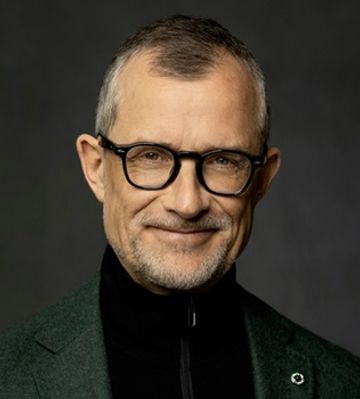
H World International CEO Oliver Bonke
Bonke
posits that there is currently no real global Asian hotel company, a gap H
World can fill. “You have Shangri-La, Rosewood, Mandarin Oriental – these are
niche ultraluxe players with wonderful Asian roots. But there isn’t a scaled
Asian player that is also in the economy, midscale and upscale segments with a
myriad of fantastic European heritage brands and Asian heritage brands,” he
said.
The
international push
Most
of H World’s brands are select-service, fit-for-China backed by supply chain
management that ensures surgical standardization and automation. This model
enables H World to mushroom rapidly throughout China.
For
an international push, it needs the legacy Deutsche Hospitality brands, of
which there are eight, with Steigenberger Hotels & Resorts and
IntercityHotel having the greatest number of hotels. To-date, only one of H
World’s brands, JI Hotel, has been included for international expansion.
Despite
being around since 1940, the first Steigenberger hotel will open in Asia Pacific
this July. A heritage property, the 475-room Montien Surawong Bangkok, a
Steigenberger Hotel, recently completed a reported 1 billion baht overhaul and
will test if H World International has the chops to help recoup that princely
investment.
When
asked about the task, Bonke said, “Obviously we want to work where we think we
can win. Our source markets are Europe and China. And there’s almost no other
city on the planet that has a strong European and Chinese travel influx as
Bangkok. We feel it’s the perfect place to start.”
One
of Bonke's immediate strategies is to focus on countries that rely a lot on
China and German outbound travelers, such as Thailand. This comes as H World
rolls out one global H Rewards program instead of two systems previously, one
for international travelers, the other mostly for domestic travelers. The
former counts around 600,000 loyal members; the latter 200 million-plus
members.
“Even
if we have just 1% of H World members [staying with H World International
hotels when traveling overseas], I’m very happy,” Bonke said. “We’ve just
started to do some booking integration but now it will also [integrate] points
and benefits.”

You have Shangri-La, Rosewood, Mandarin Oriental – these are niche ultraluxe players with wonderful Asian roots. But there isn’t a scaled Asian player that is also in the economy, midscale and upscale segments with a myriad of fantastic European heritage brands and Asian heritage brands.
Oliver Bonke
Eric
Levy, managing director of TSI, Singapore, believes H World International has
“an interesting future.” “H World International has critical mass and expertise
in its home markets that, if harnessed, has an interesting future with
significant potential for growth in Asia,” Levy said. “A focused approach and
the required investment could yield significant results as Asia is a blank
canvas for them – where they can bring strength in their home markets to the
table.”
Conduit
for growth
Growth
in Asia Pacific, Middle East and North Africa will be through strategic
partnerships for franchise and management rather than the lease model that is
prevalent in Germany and some other European countries, Bonke said.
In
Thailand, H World International has just entered into a joint venture with
Conduit House to grow its brands in the kingdom as well as in Cambodia and
Vietnam.
“I’ve
lived a third of my life in Europe, a third in Asia and a third in the U.S. I
truly believe you cannot simply remote-control things and believe that you know
everything that is happening on the ground,” Bonke said. “I was clear that we
need a strong local partner in Thailand that understands how to operate there,
how to ramp up hotels, how to do the pre-opening phases and, of course, has a
solid network in the market to help us find new properties. Conduit House is a
strong foundation for us.”
Aside
from Bangkok, H World International has a development office in Singapore and Dubai,
the latter overseeing the Middle East, India and Africa. It has also opened a
small office in Riyadh.
So
far, things are looking up. In India, a joint venture with MDB to develop MDB
Steigenberger Hotels & Resorts in the country is starting to bear fruit,
with a property opening in Ludhiana later this year and another in Noida next
year. In Asia Pacific, the first Maxx hotel, developed by Tai Xiang
International, will open in Pattaya, Thailand, by the end of 2025 under a
management contract.
Another
breakthrough is a possible debut of a Steigenberger Porsche Design hotel in
Asia, a brand launched in October 2021. “We’re in quite advanced negotiations
for it,” said Bonke, declining to reveal more.
In
Dubai, H World International is negotiating an opportunity for a Steigenberger
Icons hotel. The brand is top of the range in the portfolio, its expansion
“highly selective.” Currently, there are nine open in the world, including
“historical gems” such as the Frankfurter Hof and Parkhotel Dusseldorf.
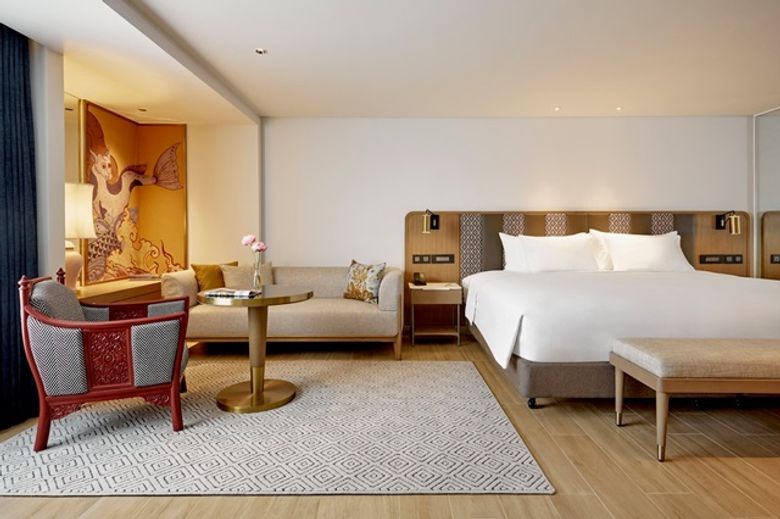
Montien Surawong Bangkok, a Steigenberger Hotel (credit: Conduit House)
Saudi
Arabia is a new frontier for everyone, including H World International, which
is in talks with two parties to scale a “fifth generation” Ji Hotel aimed at
international markets. “The business model for Ji Hotel is essentially a
modular, fit-out construction where we provide the supply chain. So, it’s a
highly efficient way to build and complete hotels,” Bonke said.
Currently,
H World International has a pipeline of 33 hotels that includes its other
brands Zleep Hotel, House of Beats and Jaz in the City.
What
can go wrong?
So,
there are interesting brands, there is a loyalty program that some will agree
is unique due to its China-Europe base, and there is a parent that is
technology-minded about product, distribution and seamless customer experience.
(H World's founder Qi Ji also co-founded Trip.com and Home Inns & Hotels
Management.)
For
Stephan Vanden Auweele, former CEO of Asset World Corp in Thailand, H World
ticked the boxes in its international drive by taking the first step to change
the name and by having/adding brands, a global loyalty program and
state-of-the-art booking platform.
But
it will still be competitive, he said.
“Competing
with Marriott which has just invested $1 billion in their new platform with
[more than 180 million members] will not be easy. Becoming a global hotel
company is a huge undertaking, needs commitment and deep pockets, and it’s a
long path to expansion. Look at Wanda [struggling to overcome a liquidity
crisis],” he said.
Bonke
said they are “dead set” on growing the business. “We have ambitious five-year
goals; we’ve laid them out with our shareholders and boards. I’m certain we can
achieve those [goals].” He wouldn’t go into actual targets that have been set.
On
investment poured into international expansion, Bonke said it is less about
investing specifically on the international side but “in all the key areas that
you need to do as a global hotel company,” similar to how Marriott or Hyatt
invests in brands, technology, people development and – ultimately – one global
culture and DNA of the company.