Strong branded and unbranded residence pipeline means more
units coming up for rent. So, Banyan launches a rental platform as icing on the
cake for investors.
Banyan Group is unveiling a rental platform on July 1 that
enables anyone to book branded and unbranded residences as they would a hotel
room. There are no membership requirements. Minimum length stay depends on
regulations of the city/country of the residence’s location.
But this isn’t a move meant to compete with other luxury
rental platforms such as Accor’s Onefinestay or Airbnb’s Luxury Retreats that
feature individual homes. Neither is the platform, Banyan Living, designed to
help developers pre-sell their units or villas. Instead, it focuses on
facilitating rentals of its own branded residences and those of other investors
and developers.
Banyan Living may be the icing on the cake for investors and
developers to pick Banyan Group for marketing, distribution and revenue
management deals and/or property management services upon project completion.
The Singapore-based company said projects must conform to its quality
standards.
The rental platform comes as the sector remains resilient.
In Asia Pacific, the average pipeline growth is 72% from 2023 to 2030,
according to Savills Research and Savills Global Residential Development and
Consultancy. Supply increased 216% over the past decade.
“We already have an online and offline network for the sale
of real estate development projects. So, the new portal will complete the
circle of support to owners and developers by offering a rental service
post-completion, or post-handover if we takeover an existing project,” said
Michal Zitek, Banyan Group's senior director of Regional Operations and in
charge of Banyan Living.

Banyan Group's Ho Kwon Ping (l.), Michal Zitek
Zitek highlights increased demand for developers to partner
with trusted brands, “adding merit to their creations by applying stringent
quality assurance guidelines and after-sales service.”
An example is Urasaya Property Thailand, which has just
completed a 15-villa beachfront resort located in Sichon in southern Thailand.
The developer is betting on a new international airport terminal in Sichon to bring foreign tourists seeking an unspoiled
destination. But being a small independent player in a new frontier is hard, so
Urasaya has branded the project Banyan Tree Residences Sichon. One reason is
Banyan Living.
Ravi Chandran, executive director of Urasaya Property, said,
“Associating properties with a well-known luxury brand can lead to higher
rental returns compared to independent or new brands, enhancing the property’s
investment appeal.”
Chandran worked with Banyan Group for 25 years and was CEO
of the group’s integrated resort Laguna Phuket before leaving in 2022.
Great expectations
Banyan Group expects “double-digit inventory growth in the
near future” as market awareness about Banyan Living increases, Zitek said. The
group operates 28 branded residences, either within or attached to a hotel, or
stand alone. It will open another 30 properties over the next few years in
Thailand, South Korea, Malaysia, Vietnam and the Philippines, but also farther
afield in the Bahamas, Mexico, Greece, Dubai and Qatar.
Of the hotel company’s 10 brands, Banyan Tree, Angsana and
Cassia are its key branded residences flags although it is open to use the
others in future. It also operates non-hotel branded residences developments
such as Skypark.
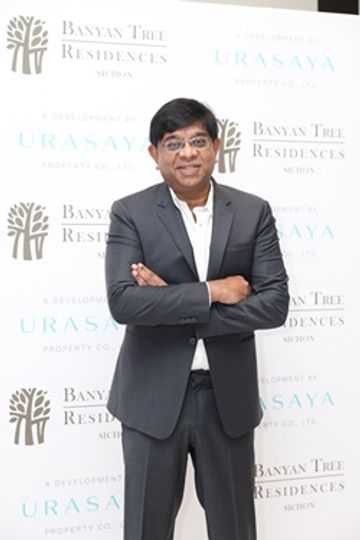
Ravi Chandran, Urasaya Property Thailand
But will Banyan Living move the needle for Banyan Group to accelerate
growth in the sector?
Lada Shelkovnikova, partner, Hotels & Hospitality,
Watson Farley & Williams, believes so. “For non-branded residential
projects specifically, this platform can add value to developers by offering
wider distribution exposure, thus rental/revenue opportunities, to their
individual buyers post-handover. Through its strong background in residential
sales, Banyan [Group] also has a valuable buyer pool for developers, which may
also play a part in future tie-ups.”
She added, “From a pure revenue-generating perspective, this
platform can, to a certain extent, compensate for the lack of a whole-property
rental program offering [in the absence of a branded hotel and operator that
could offer an umbrella rental program].
“The other benefits of a classic rental program in a branded
residential project, for example, hassle-free ownership with centralized
maintenance, etc., cannot be replaced by a booking platform alone, and so we
see a clear division between these two offerings.”
But there will be challenges. Shelkovnikova said while the
reward for Banyan Group is clear – a more compelling proposition to developers,
additional revenue stream and additional traffic drawn to their online
resources – there will be several resulting issues to attend to, such as
compliance matters in various jurisdictions. “Over time also, and inevitably,
ensuring that the properties offered on this booking platform comply with
certain standards of quality and safety may face some challenges,” she added.
Thriving together
Barry Robinson, president and managing director,
International Operations, Travel & Leisure, does not see branded residences
and Banyan Living as diluting adjacent programs such as vacation ownership,
which Banyan Group also offers.
“Branded residences differ from vacation ownership, which is
a points-based system that enables members to stay in numerous properties that
are part of a club,” he said. “We like to see innovation within the industry
and believe that there is space for a variety of accommodation platforms to
thrive alongside each other.
“Branded residences are a response to consumer demand, and
offering a direct route to book is a logical development online. If done right
I don’t believe there is any negative, except for maybe having an impact on
Airbnb, for [luxury consumers] will probably prefer to be attached to a brand
that will ensure standards, quality of service and service delivery are met.”
As a hotel parent company, Banyan Group is already the
fourth biggest branded residences player in the world, according to Savills
Research dated October 2023 (see chart). Marriott International is the largest,
followed by Accor and Four Seasons Hotels and Resorts.
In FY2023, the company enjoyed a record-breaking S$378
million in sales in its residences segment, an increase of 62% compared with
FY2022.
Said Ho Kwon Ping, executive chairman, Banyan Group, “Around
the world today, we’re doing so many branded residences because it is a whole
new trend that came after COVID. A lot of people now want second homes – be it
as a safe haven for political reasons or because they can work from home and so
on. And when they are not using it, they probably want to make some money off
it, not a huge amount but it pays for maintenance. So, we rent it out for them
and manage that whole process.
“It’s a whole different marketing game and [until Banyan
Living] we didn’t have a separate platform within our group to fully service
them.”