Maldives-based
turnkey developer-operator has its sights set on India, Sri Lanka and beyond.
Maldives-based Atmosphere Core is stepping outside its core
market where it has eight high-end new development and conversion resorts that leadership said drove $2 million in profits in 2022 for owners.
Deputy Managing Director and Head of Investment &
Strategy Shrikant Dash said nearby India is the biggest target for growth
with an Ozen-branded property in Kolkata set to open in 2024 and another eight
deals soon to be announced. The goal there is 25 signed hotels by 2025. “Once
we do operate a hotel in India, once that starts flashing, I think there’s
going to be more traction, a lot more traction,” Dash said.
Atmosphere is also adding the Ozen Prive Athiri Gili in the
Maldives with others there “in the oven.” It has a property under development in the Sri Lankan resort
destination of Tangalle with more in that market likely, and Dash said they have their eyes on Bhutan and Nepal.
The asset-light group has three brands, the luxury Ozen
Collection, lifestyle Colours of Oblu and more accessible Atmosphere Hotels
& Resorts. It debuted in late 2013 with the 162-villa Atmosphere Kanifushi
Maldives. Dash said Atmosphere Core, owned by three international investors,
welcomed more than 107,000 guests to the Maldives in 2022 – 6% of the guest market
share.
Owning company Atmosphere Core Pvt. Ltd. is chaired by Ismail Hilmy and includes Abdul Latheef and Salil Panigrahi. Property owners are high net worth individuals from the Maldives, India, Canada, and the U.K., with some of investment from the three co-founders.
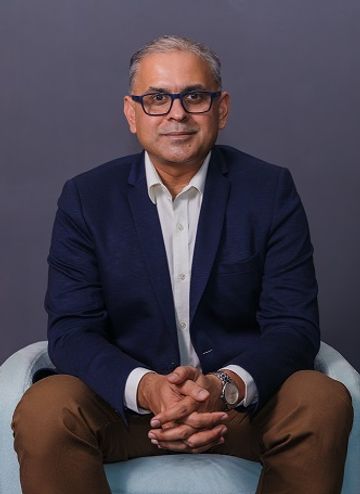
Atmosphere Core's Shrikant Dash
Performance in their home market has been solid the past
three years, according to Dash, even without Chinese tourists, who for the
most part have yet to return. The outlook for 2024 seems to be more of the same
with perhaps increasing airfares eating away at some of the growth potential, he said.
Dash, born and raised in India and who previously managed
growth and development of EoN Resorts Group in the Maldives, has also
spearheaded a slew of sustainability initiatives: Atmosphere has one of the
largest solar energy infrastructures in the Maldives, drawing 20% of its energy
from solar power; contributes to the Maldives’ carbon neutrality goal with the
use of Bema Bamboo – through its charitable arm Atmosphere Foundation; and
sources responsibly by working with local suppliers to minimize climate impact.
Atmosphere Core also provides development and planning
support in the Maldives to these investors and manages the entire development
process, including raising debt provided by banks in the Maldives, Sri Lanka
and Mauritius. That level of acumen and involvement has truly helped jump-start
growth in property and brand management, according to Dash. “Now we are able to
put together deal structures where others are confident in our deal
structuring, our concepts and expected results,” Dash said, meaning the
founding partners are not required to take an equity position with increasingly confident developers.
Dash added that Atmosphere Core’s reputation for fairness,
integrity and successful development continues to drive its pipeline in the
Maldives and elsewhere. “That reputation drives a lot of business to our doorstep,
and we are able to evaluate what would be most suitable for us,” he said.
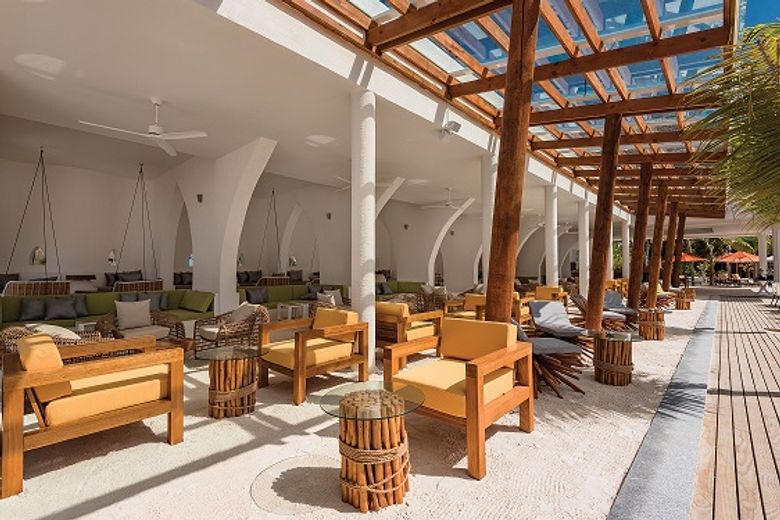
Social space at Colours of Oblu Sangeli in the Maldives
The group’s approach to management is also more evolved,
Dash added. “This whole idea of management agreements being lopsided and biased
towards the manager who imposes their views on the property is something we’ve
stepped away from,” he said. “We take a view that management should be fair and
balanced between the parties, recognizing the value of the owner into the asset
and the kind of efforts and money they have risked. That should reflect in the
management agreement – a mutual respect.”
Leisure-focused growth
Dash calls Atmosphere properties “leisure focused,” which to
him means they can work in resort and urban destinations, which is the plan for
India. “We have introduced a lot of storylines with the properties, which is
what really drives us,” he said. “We are not selling the rooms – we are selling
experiences for the locations.”
Competition for the HMAs in India have been very competitive and
Dash said they are used to competing against the industry giants, both global
and domestic. Some existing relationships have helped, and it became more a
matter of convincing developers to partner.

Right now, the story is South Asia, probably one of the most exciting places to be. It’s growing and when I speak to people, everybody’s optimistic. There’s actual investment. Deals are closing, especially in India where everybody sees the gaps in the market and rushing in to fill in those demand gaps.
Shrikant Dash
Dash also thinks their “leisure”
positioning matters, as well as India’s proximity to the Maldives is a plus. “It’s not
difficult for people (developers) to come stay with us. And when they see our operation,
they’re far more convinced,” he said. “And sometimes you win because you’re
small, and they can talk to you.”
Dash is also not afraid to compete with the giants on the
all-important distribution aspect of the business, suggesting Atmosphere’s as strong as anyone else, with the except of loyalty program memberships. “We are extremely
well connected on the distribution platforms, and we have offices worldwide,”
he said. “One of the big advantages of starting in Maldives is because the
inbound is so global you have to have a global distribution presence… So, I don’t
believe we are at a disadvantage on the distribution.”
Longer term, Dash said Atmosphere is designed to grow
everywhere, but for now the strategy is “one step at a time.”
“We would certainly like to be everywhere,” he said. “But I
would say one step at a time. Right now, the story is South Asia, probably one
of the most exciting places to be. It’s growing and when I speak to people,
everybody’s optimistic. There’s actual investment. Deals are closing,
especially in India where everybody sees the gaps in the market and rushing in
to fill in those demand gaps.”
Perhaps this sane approach is also led by the challenge of
managing the growth, not to mention the ever-present macroeconomic questions. “We want to ensure that the
core culture of the organization continues – that’s probably the biggest
challenge that I see, even more so than sourcing deals and getting hotels
built,” he said. “So, we’ve been investing a lot in the learning and development
space internally to ensure that we have core ambassadors within the group who
can potentially move into different projects and guide our colleagues.”
Dash added that training team members to take sense of ownership
in their properties matters most. “Take ownership of the guest. That’s the big
challenge because the success of the brand will come from the operational
delivery at the end of the day.”