Outdoor lodging is surging but it isn’t quite a slam-dunk
for scale and growth.
LOS ANGELES - In a breakout session at ALIS devoted to Alternative and Experiential
Lodging, panelists shared tremendous enthusiasm for this rapidly growing
lodging segment, even if the path to scale and profitability isn’t quite
crystal clear.
Todd Wynne-Parry, managing director at Horwath HTL and the
former chief growth officer of Autocamp, an airstream lodging company, compared
the excitement for this growing hospitality sector to the boutique and
lifestyle hotel revolution. “I feel it has a lot of similarities to sort of 25
years ago when lifestyle, boutique and independent lodgings was on its startup,
with a lot of new entrants,” he said.
Wynne-Parry was joined on the panel by Anjali Agarwal, senior
vice president, Starwood Capital Group; Rick Cunningham, senior vice president,
Development, Margaritaville; and Ben Tschann, partner, Goodwin Procter LLP. The
panel was moderated by Rachael Rothman, head of Hotels Research & Data
Analytics, CBRE.
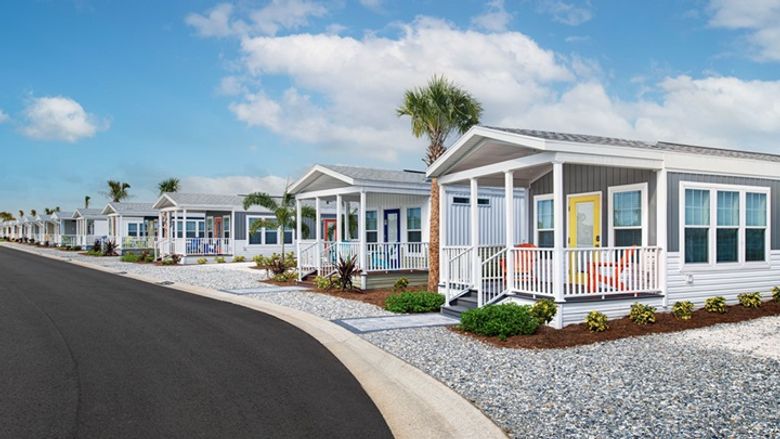
Camp Margaritaville RV Resort and Cabana Cabins in Auburndale, Florida
Wynne-Parry broke down the alternative and experiential
lodging landscape (sometimes called outdoor hospitality) to include RV parks,
glamping units, tented camps that are part of a larger luxury branded resort,
and what he calls independent lifestyle operators, people with extra land who
rent out tents, cabins or vintage trailers on various OTAs, including Airbnb.
Yet he noted that it’s still a very small group with not a lot of big players
emerging.
Leading the field
What is clear, though, is that the demand for these types of
outdoor lodgings is continuing to grow.
Agarwal, who served as the chief operating officer at
Autocamp during its expansion, said that when the brand was conceptualized
eight years ago, its founders did a deep dive into national park visitation
statistics and noted that visits increased by 40% after the Great Recession.
From 2015-2018, new camper households at national parks averaged about 2
million a year. But once the pandemic happened, that number surged to more than
10 million in 2020. Since then, the number has dropped a little bit, with 2023
seeing 6.5 million camper households.
“It is taking a share from traditional lodging because of
the customers,” she said, adding they are hungry for new experiences,
particularly those in their 30s and 40s with young families. And because the
pandemic made remote working acceptable, customers can get away while still
having an adventure.
“At Autocamp, post-pandemic, we would see several people
working from their laptops being outdoors,” Agarwal said.
Starwood Capital is creating its new brand, Field &
Stream Lodging Co., the first of which will open this year. The brand’s intent
is to provide modern and affordable lifestyle lodging near national parks,
mountains, beaches and ski towns.
Camp Margaritaville, the RV park division under the
Margaritaville lifestyle brand, has gone a different route than Autocamp to
alternative lodging, by rebranding existing RV parks into “license to chill”
Camp Margaritaville experiences.
“What we've done in Camp Margaritaville is take the
lifestyle company that we already are and integrate it into a RV concept, as
well as the camping trip” Cunningham said. “Becoming a destination for the day,
incorporating all of our digital products into that camp.” Currently, there are
six Camp Margaritavilles and more to come.
Creating scale
For now, Margaritaville is the only major brand that seems
to be capitalizing on alternative and experiential lodging, aside from luxury
brands like Four Seasons, Aman and Ritz-Carlton who are tacking on luxury
safari tents to their resort experiences.
Yet Tschann of Goodwin said while brands haven’t entered the
space, sophisticated capital is moving in. Investors are looking at where
customers are spending their money and seeing that less discretionary dollars
are going towards consumer products but more towards consumer experiences. “And
so that's why this segment is so ripe,” he said. “And it has, I think, a long
runway ahead of it, given that it is fragmented. It's still early days.”

The problem with this particular sector is that every site is completely different. It's all different jurisdictions. It's all different sizes of sites and geography.
Todd Wynne-Parry
Aside from a fragmented owner and operator landscape, the
sector has some challenges when it comes to scale and growth. It’s not like
rolling out 120 Courtyard by Marriott hotels in eight years, Wynne-Parry said.
“The problem with this particular sector is that every site is completely
different. It's all different jurisdictions. It's all different sizes of sites
and geography,” he said. “Normally, scaling in the hotel industry goes quite
fast. Once you figure out the product and then design, you get other people
building it for you and you franchise. But in this sector at this point in
time, it's not happening very fast.”
Margaritaville, however, might be well-positioned to scale
its outdoor lodgings faster than most, especially as it can tap into all
different age groups from young to old.
“We're putting it all under our umbrella and really focusing
on the experience, but also the destination,” Cunningham said. “We don't want
them to necessarily leave Camp Margaritaville, because we want to provide
enough activity for them to stay there and enjoy it.”
Consolidation of existing campsites, as well as converting
older motels or campgrounds could be an easier way for smaller companies to
continue to grow their foothold in the outdoor lodging space without having to
start from scratch.
In the meantime, outdoor lodging is experimenting with other
avenues of revenues to increase profitability—by borrowing a page from a
traditional hotel's playbook.
Because Autocamp can’t necessarily charge high rates without higher levels of
service and amenities, Agarwal said the company has focused on retail, food and
beverage, and selling guided experiences like hikes in partnership with outdoor
outfitters REI. “We added a lot of revenue streams while keeping the core base
model of efficiency." she explained. "And so that was a way to
maximize profitability.”