Co-founder Robin Chadha on removing headwinds and
embracing tailwinds in the brand’s new chapter.
INTERNATIONAL REPORT – Being
asset-heavy and newbuild-focused proved unfavorable for citizenM when the 2019
pandemic struck and seems to have been a key factor behind the sale of the
brand to Marriott International, which is expected to close this year.
“As we continue to operate in a challenging macroeconomic
environment, the company faced headwinds as we pursued ground-up developments,”
Robin Chadha, son of founder Rattan Chadha and co-founder/chief brand officer
of citizenM, told Hotel Investment Today. “citizenM originally sought to secure
additional growth capital and instead explored an alternative investment
structure [with Marriott].”
In 2021, when citizenM had around 24 open hotels, existing
shareholders Singapore sovereign wealth fund GIC, Dutch pension fund manager
APG Asset Management and Founder Rattan Chadha reportedly raised $1 billion to
add new hotels, complete existing ones and replace revenue lost due to
COVID-19. The brand expanded to the current 36 operating hotels, plus three
others under construction scheduled to open by mid-2026, giving it more than
9,100 rooms.

Robin Chadha, co-founder/chief brand officer, citizenM,
But issues such as rising labor costs in markets such as the
U.S., along with supply chain constrictions and higher construction prices,
appeared to hit home, even though citizenM uses modular construction for guest
rooms. Moreover, many citizenM hotels were built entirely from ground up rather
than less expensive conversions.
By last March, the chain started exploring a sale of the
business, with Morgan Stanley and Eastdil Secured as financial advisors.
Alternative investment structure
The alternative investment structure with Marriott enables
the seller to continue managing the 39 owned or leased assets under long-term
franchise agreements with Marriott. It also promises the seller to earn up to
$110 million more if the brand grows and does well over the next few years, on
top of the $355 million Marriott is paying to acquire the brand and related
intellectual property.
As well, Marriott’s distribution capabilities, loyalty plan,
and development engine will open doors to new customers for the brand’s biggest
hotel owner.
But while the 39-strong stable of citizenM hotels managed by
the founding company is a critical mass that assures brand image and
consistency is upheld, future growth lies in the hands of the global behemoth.
Although Marriott has professed to preserve the brand’s ethos, this is clearly
a wait-and-see.
While Rattan Chadha continues to be the chairman of the
existing real estate, the remaining company will be restructured to reflect the
fact that a lot of the activities will be taken over by Marriott, including key
individuals on the leadership team, said Robin Chadha, who is leading the brand
integration with Marriott and is dedicated until the end of the year.
When asked if the seller intends to own/lease more CitizenM
hotels in the future, he budged the question, saying “both Marriott and
citizenM see the prospect for meaningful expansion globally over time.”
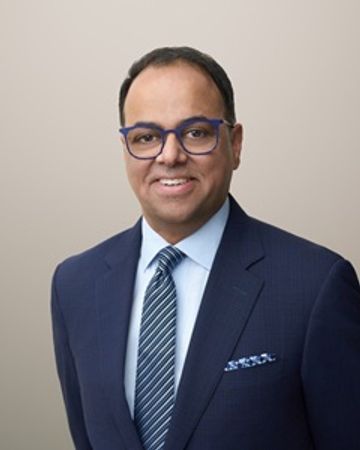
Marriott President APEC Rajeev Menon
It's hard to tell what “meaningful growth” is at this stage.
“It’s still early days,” said Marriott President Asia-Pacific, excluding China,
Rajeev Menon, when asked for more specifics on Marriott's expansion targets for
citizenM. In announcing the deal, Marriott only hailed “the prospect of significant
additional growth across Marriott’s global regions over the next decade.”
“We see a global opportunity, with particularly strong
prospects in EMEA and Asia,” Menon added.
A disrupter when it launched in the Netherlands in 2008,
citizenM is present in key European cities including Paris, Rome, London,
Geneva and of course its birthplace Amsterdam. Likewise, its footprint in
America is strong, in cities such as New York, Los Angeles, Miami, San
Francisco, and so on.
Asia, however, remains a non-event so far with only two open
hotels. A joint venture with Shun Tak Holdings’ Artyzen Hospitality Group
announced in 2016 was dissolved in January 2019. Artyzen was to introduce the
brand to Asia, with the first opening in Taipei in 2017 and Shanghai to follow
afterwards. But the Shanghai hotel did not happen, although a property in Kuala
Lumpur did.
At press time, Artyzen did not respond to Hotel Investment
Today’s request for a comment.
Marriott’s Menon is eager to scale the brand in Asia Pacific,
excluding China, in convenient locations across primary and secondary markets.
His strategic vision is for citizenM to be a predominantly managed upscale
brand in the region, although Marriott will remain open to franchise and
conversion opportunities.
Owners in the region are increasingly looking for brands
that combine smart design, operational efficiency, and distinctive identity,
said Menon, adding “we are already seeing strong interest from potential
partners across Asia Pacific.”
As well, the brand matches evolving Asian consumer
preferences, he said.
“What sets citizenM apart is its tech-savvy in-hotel
experience, thoughtful use of space, grab-and-go food and beverage options, and
a focus on art and design. The brand combines tech-enabled convenience, bold
aesthetics, and vibrant communal spaces, creating a distinct offering that
aligns with shifting traveler expectations across Asia-Pacific,” Menon said.
Meanwhile, when asked what’s on his wish for citizenM going
forward, Robin Chadha said “the ambition is for the values and culture that
have been in place at citizenM from the beginning to be upheld.
“citizenM will strive to continue on the same path in
working with local communities across the world; this distinction is one of the
many reasons Marriott decided to purchase the brand. We also know Marriott will
bring the brand to new heights on a global scale,” he said.