New owner Collective Hospitality plans to cut corporate
costs, pay off some partnership debt and focus on driving occupancy with much
more exhaustive distribution approach.
SINGAPORE – New owner Collective Hospitality plans to cut corporate
costs, pay off some partnership debt and focus on driving occupancy with much
more exhaustive distribution approach.
The new owner of the “digital nomad” Selina hybrid
hotel/hostel brand has a six-month turnaround plan to clean up the balance
sheet, implement cost controls and drive more business through the door to
break the 50% occupancy barrier that likely was most responsible for sending Selina into insolvency
last month.
Singapore-based Collective Hospitality, with an operations post in Bangkok and multiple already owned assets in Thailand, bought the majority
of the operating subsidiaries of Selina PLC from Joint Administrators late last
month. It now owns the leases to approximately 100 hybrid hotels/hostels in 22
countries, including cities in North America, Latin America, Europe and Asia.
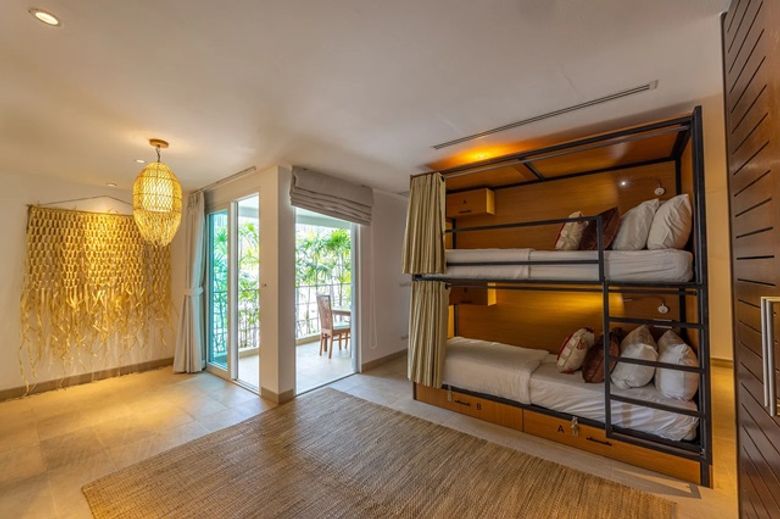
Bunkbed room at the Selina in Phuket, Thailand
Collective Hospitality CEO Gary Murray told Hotel Investment
Today he is raising about $50 million to pay down debt with local and regional
partners. He is also focused on cutting corporate expenses with the formerly
Nasdaq-listed company and he wants to drive occupancy into the 70% range by driving
more incremental room nights.
“Selina’s business is predominantly driven by a handful of
OTA and direct business. So, we need to get more sources of revenue, whether it
be MICE, wholesale, incentive, group and dynamic packages – a lot of channels
it has not tapped into that we will tap fairly quickly,” Murray said.
Murray will also look at converting Selina properties to
other Collective Hospitality brands currently focused on Thailand, Indonesia
and the Philippines, and with a similar DNA to Selina. “We have a couple of
brands that would lend themselves beautifully to some of the [Selina] properties,”
he said. “We have a fabulous wellness brand and a tented product, as well as
our Socialtel hotel brand, which is a real lifestyle product.”
Another 20 or so consistently failing Selina properties will
likely be given back to the landlord, Murray added.

When we look at our business model, we look at where our customers want to go – a handful of places in the world, which we call backpacker trails. They want the experiences, the socializing and interaction with other young people having their first travel experiences. That’s really the most important thing here – tapping into a customer segment which no one else has and has no way to come after because this hotel asset class is incredibly fragmented.
Gary Murray
Once the leased Selina portfolio has been assimilated and
absorbed by Collective Hospitality, Murray does expect growth for it along with
the Slumber Party, Bodega Hostels, and Socialtel brands. While he is not yet
raising funds for further expansion until his acquisition settles, Murray said
for Selina as well as other Collective brand he wants to consider growth in
Southern and Northern Europe, as well as India, Sri Lanka and its backyard,
Southeast Asia.
“When we look at our business model, we look at where our
customers want to go – a handful of places in the world, which we call
backpacker trails,” Murray said. “They want the experiences, the socializing
and interaction with other young people having their first travel experiences. That’s
really the most important thing here – tapping into a customer segment which no
one else has and has no way to come after because this hotel asset class is
incredibly fragmented... If you’re trying to grow a business like this, it is
going to take you five to eight years because you’re picking up one asset at a
time.”
With about 17 or 18 existing assets in the Collective
Hospitality portfolio (it also owns and operates eight or nine traditional
hotels in Thailand), and now the Selina portfolio in hand, Murray’s plan is to
continue to grow in other key destinations for the Gen Z and millennial digital
nomad customers. “We’ll start rolling out that plan once we clean up what we
have in play today,” he said.
Collective Hospitality is owned by Destination Group,
founded by Murray in 1996 and has been rebranding and repositioning 4- and
5-star hotels in Southeast Asia since 1997. Murray is the sole shareholder. The
company has also grown and expanded into the F&B business with Destination
Eats.
Collective is keeping the Selina properties open, having
retained the senior teams and property teams at the country level. “We're just figuring out kind of where we go
with each property at this point, and working with the senior team and how we
can maximize the value of the businesses,” Murray said.
He will meet with property landlords and expects them to
come to the table refreshed by new faces and a new approach to stabilizing and
growing the business.
Murray reiterated the importance of growing group and
incentive business, all-inclusive-like packages, and accessing multiple OTAs
versus just a handful.
He is also fully in the camp that believes tapping digital
nomads is the way forward.
“The way of doing business is different today. The way of
traveling is different today,” he said. “Corporations accept the digital nomad
type of employee… Today, when we’re when we're building traditional hotels, we
always put in coworking areas – something you never did five years ago. We’re opening
a Radisson Red in Phuket and half of the lobby is a digital nomad work area…
The hospitality business has evolved to digital nomads, probably one of the
fastest growth segments. And interestingly enough, most of the big brands have
not been able to nail it.”
That’s why when he was asked for his message to the
investment community, Murray said they should look at this space because it’s
the last bastion in the hospitality sector that hasn’t been gobbled up by the
big brands. “And I tell all of my team members, we used to be in the hotel
business; now we’re in the entertainment business – a very different business.”