Puerto
Rico-based LionGrove has been searching for the right deal for its first U.S.
acquisition. CEO Andro Nodarse-León explains why the Adero Scottsdale Resort in
Arizona was the perfect fit.
SCOTTSDALE, Arizona — LionGrove
has been looking to expand its hotel portfolio into the U.S. for the past few
years, but the company had to kick a lot of tires and kiss a lot of frogs until
it finally found its prince of a deal.
Last week, the Puerto Rico-based
firm announced that it had acquired the 177-key Adero Scottsdale Resort,
Autograph Collection, in Arizona from Fountain Hills, Arizona-based Palisades
Resorts for an undisclosed price. The property was in receivership for over
a year, so the process was complicated, said LionGrove CEO Andro Nodarse-León.
But he said the patience paid off.
“We’re very disciplined as an
investor and so we are very careful and very focused on leaving room for error
when we make investments and not assuming that everything in life turns out to
be an A-plus sort of scenario, and then an A-plus sort of execution, and then
somehow how you get to a high teens investment return,” he said.
Nodarse-León said his company’s
conservative underwriting was one reason it took so long, but another was
LionGrove’s specific focus on the Sunbelt and specifically properties in
Florida, Texas and Arizona. That meant the bidding was fierce.

There’s a lot of competition in those markets, and sometimes assets get bid up beyond where we feel it’s the right level of risk and reward to make a trade.
Andro Nodarse-León
“There’s a lot of competition in
those markets, and sometimes assets get bid up beyond where we feel it’s the
right level of risk and reward to make a trade,” he said.
Nodarse-León said there were
times when LionGrove made an all-cash offer very close to the ask, only to be
outbid by another all-cash offer that exceeded the asking price.
“Sometimes it’s the competitive
dynamic that drives it. Sometimes it’s our own conservatism that drives it,” he
said. “At the end of the day, we want to do transactions that are going to be
successful.”
That means quality over quantity
of deals, which requires a lot of patience.
“We do want to grow and we want
to keep scaling,” Nodarse-León said. “We’re going to have to just keep kissing
a lot of frogs and we’re going to have to keep kicking a lot of tires, but
we’ll keep scaling.”
Inside the deal
The property, which was
previously known as the CopperWynd Resort before a massive renovation and
expansion in the late 2010s, reopened in October 2020 after a $100 million
investment and renovation.
In December 2023, the property
was placed under the control of a receiver after Palisades Resorts failed to
make its monthly loan payments to its lender, VMC Finance 2021 HT1 Ltd., which
is a subsidiary of Minneapolis-based Värde Partners.
Nodarse-León wouldn’t disclose
the price of the asset but did say LionGrove was making $15 million in
renovations to the property (it was appraised at $92.4 million in 2021). He
said the process took time but was “right down the middle of the fairway” regarding
the type of asset they love.
“It is going to be getting a
whole breath of fresh air,” he said. “It is going to be a better property on
the other side of the investments we’re going to make.”
LionGrove is already operating
the asset and will remain open during the renovations. Light work will be done
on the rooms, and most of the renovations will be done on the villas, the spa
and other parts of the property to help reposition it as a wellness-oriented
destination. The renovations will also expand Adero’s F&B footprint, which
is another staple of LionGrove’s other assets in Puerto Rico, and expand the
meeting and event space to better accommodate groups and weddings.
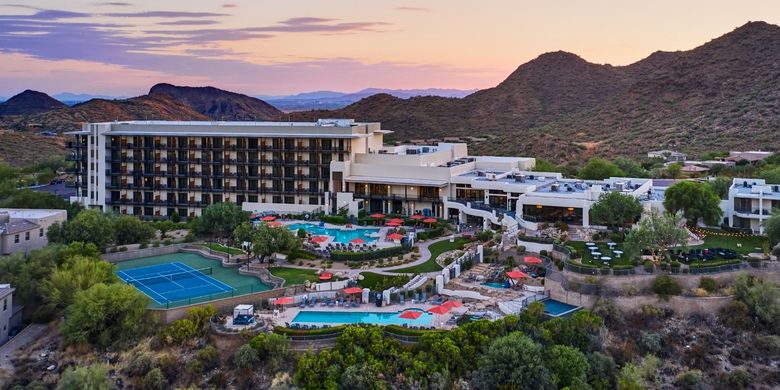
Last week, LionGrove announced it acquired the Adero Scottsdale Resort in Arizona.
Mispriced
opportunities
When Hotel Investment Today
first spoke with Nodarse-León in October 2023, he spoke of LionGrove’s desire
to expand into the U.S. As the company has continued to pursue deals,
Nodarse-León said the bid-ask spread has improved over the past 15 months and he
sees the market gaining some velocity.
“In the first half of that
window of time, there was a greater bid-ask spread and a greater preponderance
of deals that would come to market and the deal wouldn’t get done and would
ultimately get pulled because nobody would get to the ask,” he said.
Nodarse-León said a gap still
remains in the market, but he’s optimistic about improvements in 2025.
“I think it’s narrowing and 2025
is promising when it comes to that,” he said. “Certainly, if we begin to see
further rate reductions from the Fed, which obviously is a big question mark,
then velocity will proportionally begin to increase.”
LionGrove pursues what it calls
“mispriced opportunities” when looking for assets. The problem, Nodarse-León
said, is that they are usually elusive.
There aren’t a lot of mispriced opportunities. If that were the case, you would see even greater deal velocity and the markets would be quick to arbitrage that out.
Andro Nodarse-León
“There aren’t a lot of mispriced
opportunities,” he said. “If that were the case, you would see even greater
deal velocity and the markets would be quick to arbitrage that out.”
While Nodarse-León said
LionGrove has seen a decline in unreasonable expectations, that doesn’t mean
they have totally disappeared.
“If things are mispriced… or the
asks are still too high compared to the reality of where deals can get
financed, that’s just owners not wanting to take a mark on an asset or feeling
like they can wait,” he said.
Nodarse-León said a quality
asset like the Adero Scottsdale Resort being in receivership created a more
complicated situation, but the complexity didn’t scare LionGrove away.
“When you run into a situation
where there is the receivership opportunity or things like that, you’re going
to find more noise in there,” he said. “We are a group that rolls up its
sleeves and is willing to do the extra work over the longer haul. Sometimes,
these processes that are more opportunistic and quasi-distress are going to
take longer.
“Adero was more complicated, and
therefore, does that mean that it leads to a somewhat better valuation than if
it were not? Yes, but I think it was priced appropriately in the context of
the totality of its realities, including the complexities of the process.”
In terms of its pipeline,
LionGrove is still largely focused on potential assets in the U.S., although it
is pursuing one potential deal in Puerto Rico, too. However, it will not
necessarily only focus on one asset at a time.
“The new incremental element is
a focus on portfolio type of transactions,” he said. “There’s a portfolio (of
four assets) that we’re underwriting currently that is across three different
states, all of them in the Sunbelt, and we would love being able to do that.”