With
an objective of helping Lexima Lodging grow its management portfolio via
capital infusion, TMGOC Ventures’ Glenn Alba brings the big picture into
sharper focus.
CHARLESTON,
South Carolina, and BOCA RATON, Florida — Backed by a billion dollars in
investments, private equity firm TMGOC Ventures recently opened its wallet to
take a 50% stake in Lexima Lodging LLC to help raise the national profile of
the Wichita, Kansas-based firm as it pursues more third-party management
agreements.
According
to Glenn Alba, TMGOC’s co-founder and managing partner, the developer’s
strategic play in Q1 has set the stage for a long-term symbiotic partnership
expected to benefit both firms’ portfolios.
“Part
of our decision matrix was we want to work with people that we know and trust,
and they absolutely fit that mold,” Alba said.
And
like most “overnight” moves, the deal had been germinating for some two years,
with Alba and Sunju Patel, also a TMGOC co-founder and managing partner,
exploring ways to collaborate with Lexima’s CEO John Cantele, COO David Emery
and CFO Kay Auer.
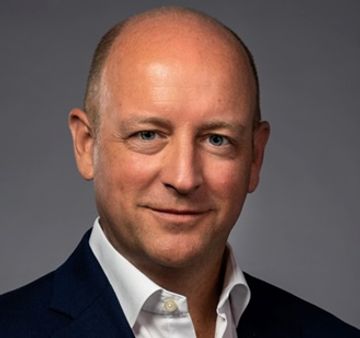
TMGOC Ventures' Glenn Alba
Alba
noted like many conversations around potential, what started as a discussion
about a single transaction grew to consider multiple agreements until the
subject of TMGOC’s investment into Lexima was on the table. The objective, he
said, was to help Lexima grow and as a confidence-booster, “would contribute
some of our assets relative to the direct management of those.”
The
two firms already had been chasing a few acquisition deals together in which
Lexima would have assumed management of the hotel assets if and when they were
secured. “They had been partnering with us to do the underwriting, to look at
the transactions. We were making offers based on that and attempting to acquire
them with the intention of installing Lexima as third-party managers at that
point,” Alba said.
“In
addition, we had been hiring them for some ad hoc additional asset-management
services to help us with some of the existing assets that we had under other
third-party managers at that point,” he said.
Lexima
is now fully installed in five TMGOC assets and two more—the 148-key Marriott
Courtyard in Charlotte, North Carolina, and the 136-key Aloft Charleston
Airport in Charleston, South Carolina—are scheduled to transition to its
management on June 1. “A couple more” are slated to follow later in the summer,
Alba said.
TMGOC
currently has 15 operating assets in 13 markets and seven under development and
construction for an overall key count of 2,945 rooms.
Other
projects that will come under Lexima’s management include the 124-key
Jacksonville Airport Extended Stay America, TMGOC’s first ground-up development
in the extended-stay space that is slated to break ground within a month. “This
is sort of a beta test,” Alba said. “We’re going to go and work on this one and
continue to see if this makes sense for what we like to do and what our
investors are looking for and perhaps embark on a greater development strategy
in that space.”
Also
moving forward under Lexima is the 208-key Moxy Charlotte Uptown, which recently
topped off in the city’s Entertainment District and is expected to open in
February 2025. It’s the first Moxy in North Carolina.
Lexima
has been managing the 131-key Moxy Charleston Downtown and the 180-key Holiday
Inn and Suites in Boca Raton.
Not
a captive manager
For
a variety of reasons, Alba noted not every TMGOC hotel asset would be migrating
to Lexima, the goal instead being to draw attention from other owners and
investors to the company.
Toward
this, Lexima recently inked a third-party management contract outside TMGOC for
the 104-key Waterfront Homewood Suites in Wichita.

One criticism of the management company industry is its growth just for growth’s sake because scale—for whatever reason—seems to be the end-all, be-all.
Glenn Alba
“They’re
not a captive management company by any stretch of the imagination,” Alba said.
“They are a fully independent management company that we are just helping to
seed with some assets and some capital and, obviously, some introductions.”
The
executive expressed no qualms about Lexima’s ability to absorb and manage TMGOC’s
hotel assets. “It’s been a very seamless transition thus far and we expect that
to continue… Their knowledge of the underlying assets by virtue of the fact
that they were helping us asset manage in the first place was instrumental in
already knowing the key players at the property, knowing the competitors in the
marketplace, etc. So, they could step in and sort of turn on the system day one
and be hitting the ground running,” he said.
Alba
stressed from TMGOC’s perspective, Lexima’s advancement is not simply growth
for growth’s sake. “You
want to be partnered with groups where you can see a long runway, but you also
have an alignment of interests and vision… We think that the right amount of
scale in the right amount of time is where we’re trying to direct Lexima and
build around relationships where that growth can happen organically and over
time. It doesn’t necessarily mean if somebody has a 10-hotel portfolio that all
10 of those need to come over. It’s sort of: ‘Hey, give Lexima a shot on one or
two. I think you’re going to find that they’re going to be outperforming your
other managers and may ultimately be what you want to move to on other assets
that already are in your existing portfolio or would be for future acquisition
targets,’” Alba said.
Balance
sheet support
While
he did not disclose the amount of TMGOC’s capital infusion into Lexima, Alba
indicated the most significant aspect of the stake has “allowed for our balance
sheet to help supplement theirs.” For example, that balance sheet is being
supported by hiring positions in advance of need, such as with sales and
revenue management associates or allowing for greater dispersion of regional
vice presidents of operations.
“One
of the things we found challenging with our existing relationships was just not
having the right amount of ‘boots-on-the-ground’ human capital available to
really be visiting and touching the assets on a consistent basis,” Alba said. “Obviously,
the GMs are always the captains of the ship at the most local level but really
where this game is won and lost, in our mind, is the direct oversight and a
regional presence.”
When
the Lexima deal first came to light, Alba suggested a portfolio composed of 50
to 70 hotels would constitute a proper sizing for the management company. “In
my general opinion, and I think Sunju shares the same, is that as you start
getting beyond [that number] it starts getting to a point where you’re not able
to connect with] every owner as frequently as you would otherwise need to or
should be doing,” Alba said. “One criticism of the management company industry
is its growth just for growth’s sake because scale—for whatever reason—seems to
be the end-all, be-all. We don’t necessarily believe that delivers the best
results for hotel owners.”
In
addition to bolstering Lexima’s human capital, TMGOC also is putting a focus on
IT systems to ensure properties have the right level of technology to be
competitive in their respective marketplaces.
“There’s
a very big amount of technological change that I foresee as coming,” Alba said.
“You just sort of feel there’s a lot that’s going to be changing fairly
dynamically in the next six months, 12 months, 18 months on what management
companies could or should be doing in that space and it’s something that we’re
exploring very deeply right now in terms of how does AI change what’s happening
on the ground? How does it [affect] the ability to do a stronger and different
style of data analytics? Can we do people movement tracking a little bit more
like the retail shops are doing? How can that differentiate us as owners and
Lexima as a manager to get a little bit deeper into understanding changes in demand
and the marketplaces?
“What
excites me is the area of ‘unknown’ that’s still out there that a smaller
company like [Lexima], with a capital backer like us, can go and take those
chances and explore and try to be a little bit more on the point of the spear
to stay ahead, where larger companies, naturally, are going to have a little
bit more of a difficult time being as nimble and able to react to those types
of things,” Alba said.

TMGOC Ventures is building a Thompson in Charleston, South Carolina, that will be managed by Hyatt
In
terms of segments, Alba indicated there’s “no doubt” Lexima has strength “from
extended-stay up through compact full-service where they would be 1,000%
confident to sit down with any hotel owner and tell them ‘Here’s the reasons we
can do it as well, if not likely better than who you’re working with today.’”
Would
they consider managing assets that are on the boutique or luxury side? “I would
say that’s not on their plate today. We’re not saying that would never be the
case, but that takes a little bit of a different skill set, a little bit
different personnel in what they’re experienced in up to this point,” Alba said.
TMGOC’s
growth
That
said, Alba noted there are other projects where Lexima will not be managing. “We’re
building a Thompson in Charleston that will be managed by Hyatt… We’re very
close to finalizing our capital stack and then we’ll be ready to move forward.
We’re shovel-ready from the construction side relative to permits and all the
approvals. We’re also building a Ritz-Carlton in Savannah that’s going to be
managed by Marriott. We’re actively pursuing a few other acquisitions right now
that’ll be exciting if we can get them done. They’ll be a little bit more on
the upscale or luxury lifestyle space that will be third-party managed but will
likely be candidates for other managers that are specializing in that particular
field.”
While
a vested champion of Lexima’s success, the TMGOC executive sees opportunities
ahead for both partners. For example, Lexima, which is getting exposure within
TMGOC’s largely Southeast hotel portfolio—Florida, North Carolina, Georgia,
South Carolina—has operated more in the Midwest. So, reasoned Alba, Lexima
might come across deals farther west “where we want to expand—Colorado, Utah,
Arizona, etc.—where we’re not yet invested. On the flip side, it’s bringing
their name to owners and regional operators in [the] markets where we’re
already very strong and now they have a base of operations. They have in-depth
intel into these markets that they can share with other owners and hopefully
[help] them with their acquisition targets.”
“Our growth is really
driven more by the opportunistic nature of what we’re trying to find to buy and
not driven by trying to grow the management arm at Lexima necessarily, but
hopefully they can be matching up very nicely, but they very well may not.
There may be a significant number of acquisitions that TMGOC makes that [do]
not involve Lexima and vice versa. We’re hoping they sign a lot of management
contracts that are not TMGOC assets,” Alba said.