Dallas-based management company added 22 properties in its first year. With 40 more in its pipeline,
growth is also a big part of the company’s immediate future.
DALLAS — As Dreamscape Hospitality hits its first
anniversary, rapid growth in the present and the future is the story for the
third-party management firm. The company added 22 properties in its first year,
with 40 more in its pipeline, which it expects to grow over the next year.
While organic growth is the main path for
Dreamscape, Adam Patenaude, president of the Dallas-based company, isn’t ruling
any other paths either. That includes working themselves out of a job,
which he actually sees as flattering.
“We talk about working ourselves out of a job because our
results are so good that an owner is able to exit at a better multiple than
they originally intended. That is one of the highest forms of flattery,” Patenaude said. “Although we may lose a hotel because it sells, it’ll repay itself
tenfold by the job we did and the reputation we build. Word travels. It’s all
about results and relationships.”
That means Dreamscape, which was funded as a small
partnership for the startup that is now in the black, will continue to grow
organically or through M&A, Patenaude said.

I wouldn’t rule out any strategic M&A for us in the next year or two. But it’s got to be smart. It’s got to be strategic.
Adam Patenaude
“There’s a growing lane out there of smaller
owner-operators that want to shift their focus from the grind of day-to-day
operations and focus on the development side. So, that’s an angle that we’ll
continue to focus on,” he said. “Then, I wouldn’t rule out any strategic M&A
for us in the next year or two. But it has to be smart. It has to be
strategic.
“We’re looking for smart geographical marriages. Whether
it’s [companies] that make sense and have teams that are specialized in
verticals that we may not be in currently, I wouldn’t rule that out.”
Dreamscape was founded two years ago when Patenaude met
Eric Birnbaum (founder and CEO) in New York City.
“We got to discussing some of the gaps in the third-party
management space and traded business plans and ideas back and forth over the
course of a few months,” Patenaude said. “We finally came to the realization,
after many conversations, that we were very much aligned in what we thought an
operating company could be and could do… It was really one of those
conversations over at cocktail napkin to start and it evolved from there.”
What is the niche that they wanted Dreamscape to fill?
“One of the one things that that we really agreed on, and
that we’re really hanging our hat on and making a part of our DNA as we
continue to grow, is we really want to be best-in-class operators, super
transparent and trustworthy,” Patenaude said. “We really felt like if we could
do that, then growth in the space is really limitless.”
Inside the portfolio
While Dreamscape is currently a pure third-party management
business, Patenaude said the company has the balance sheet to make “sliver
investments on the equity side” for future management deals as it makes sense.
The company’s portfolio is a mix of select- and
full-service hotels (roughly 60-40 on the select-service side), with more than 13
brands and five independent lifestyle properties. While its current portfolio
is heavily weighted in the southern U.S., that will change as it adds to its
pipeline. Dreamscape already has a few resorts in its portfolio domestically
and is also interested in growing in the Caribbean.
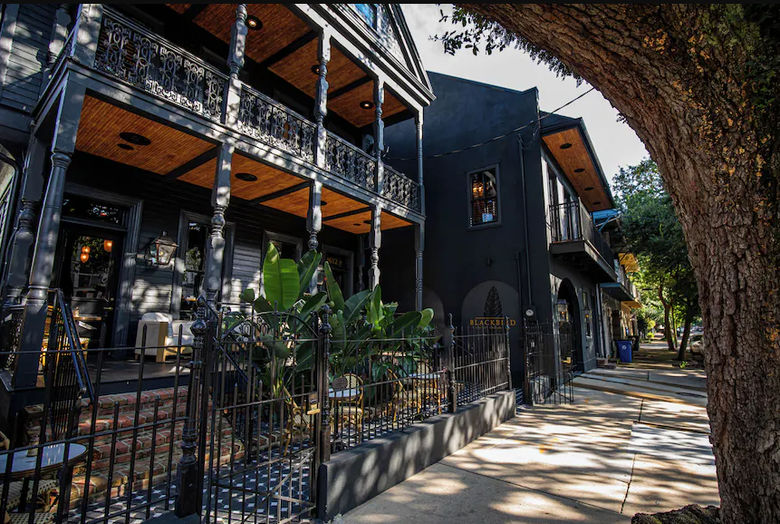
Dreamscape has 22 properties, including independent boutique hotels like The Blackbird in New Orleans.
“The last I checked, we’ll have probably six or seven
hotels coming aboard in the next 90 days,” Patenaude said. “The only difference
is we’re spreading out throughout the country.”
Dreamscape currently has owners with multiple hotels in its
portfolio and Patenaude said there is plenty of room to grow with those owners. The company also wants to add properties from REITs, private equity,
family offices or high-net-worth individuals.
“It’s really a mixed bag. We can serve just about any
ownership type out there,” he said.
We are market-share fanatics… Ninety percent of our portfolio through March is growing market share. From a rate standpoint, 50% of our portfolio right now is ranked number one or number two in absolute ADR, and half of our portfolio is growing rate index.
Adam Patenaude
Patenaude said despite a potential inflationary
environment, the company has so far been able to keep operating costs from growing too rapidly. One thing that is growing is market share.
“From a cultural standpoint, we are market-share fanatics… Ninety percent of our portfolio through March is growing market share,” he said.
“From a rate standpoint, 50% of our portfolio right now is ranked number
one or number two in absolute ADR, and half of our portfolio is growing rate
index.”
Dreamscape is also having success growing occupancy.
“All but one of our hotels is growing occupancy index and
75% of those are double-digit growth,” Patenaude said. “We’re really leaning
into where we see as the best opportunity to drive revenue and RevPAR for
owners right now, and it’s been through the occupancy vehicle so far.”
Dreamscape currently has two massive renovations at two of
its bigger, full-service hotels, which is a headwind. But Patenaude said the
company isn’t intimidated by PIPs.
“The PIP process doesn’t scare us away when it comes to
coming in and operating. We have two large PIPs undergoing right now. We have another one that is going to come into the start of its renovation in the
next 8-12 months,” he said. “From a management standpoint, we’re fully prepared
to operate a hotel at any point in the cycle.”
If Dreamscape adds all of its pipeline properties, it will
almost triple its size over the next year. Patenaude embraces that growth, and
while he says his teams talk about future growth goals, that isn’t the main
driver of success.
“I’m less concerned with the number of hotels that we get
to. For us, it’s more about our mission to be the most trusted third-party
operator out there by way of transparent relationships, internally and
externally,” he said. “What’s important to us in that formula is we never want
to lose focus of the core business… I think the sky is the limit. To me, that
model is scalable at a very high level.”