With acquisition closed, like-minded owner-operators focus
on sourcing new deals, considering adjacencies, resisting overreaches.
With two long-time family-run businesses from the same town with similar
business perspectives and even principals who root for the same baseball team from the wrong side of town, could an acquisition be a better fit? In early,
November the deal closed with Chicago-based First Hospitality owned by the
Schwartz family acquiring the majority of hotel management agreements (17
hotels) of Hostmark Hospitality Group from the Cataldos.
Hostmark President and CEO Jerry Cataldo has joined First Hospitality
in its downtown Chicago office to manage owner relationships, further work with his team
that is mostly integrated into the First platform, as well as source deals for both First
Hospitality and his existing investor partners.
At the same time, First Hospitality grows its portfolio of
owned and managed hotels to 70 with more than 10,000 keys, sets itself up for accelerated
growth in new markets like California, Texas, and Florida, while continuing to
look opportunistically for both management and acquisition opportunities.
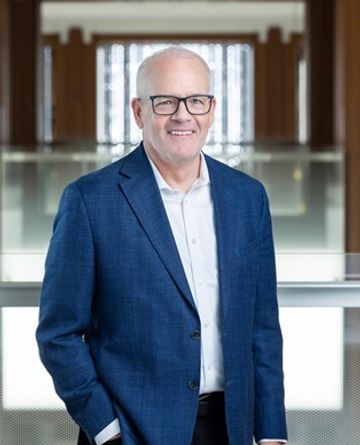
First Hospitality's David Duncan
First Hospitality President and CEO David Duncan not
surprisingly added that the transition and integration of the Hostmark team and
assets could not be going easier. “It feels like [the transition] is already
done,” Duncan told Hotel Investment Today. “I’d be surprised that if by January
1, the integration wasn't over and we were moving on.”
For Cataldo, the decision to sell was admittedly difficult,
but he said the more he learned about Duncan and the direction First
Hospitality has been going over the last five years, the more the deal became
appealing. “We needed to have more resources and a stronger platform, and that’s
why this was very appealing… With a few minor redundancies, our whole team has transitioned
and bolted into the First Hospitality platform,” Cataldo said.
He added that his family and their partners still can invest
in new hotel assets on a joint venture basis, individually or with First
Hospitality. “Obviously, in any scenario, the objective would be to bring that
management into the first hospitality operating company platform,” he added.
Next steps for First Hospitality
Today, First Hospitality has about one-third of its
portfolio in third-party management and the remainder in owned and managed
assets. While third-party growth will continue and another potential portfolio
deal a possibility, according to Duncan, asset acquisition could heat up over
the next few years for First.
“There’s no magic mix to that. But I think on a go forward
basis, we’re really interested in growing the operating company,” Duncan said.
“We are looking at other acquisition opportunities, but it must be a good fit
for us. We’re under no mandate. We’re just going to do what makes sense for us.
We’re privately held and planned to be so for another 40 years.”
If and when the real estate transaction market opens up,
however, Duncan expects First Hospitality to be an active buyer with its First
Investors real estate entity and its partner The Georgetown Company out of New
York City.
In fact, Duncan said First has pursued numerous acquisitions
and has underwritten 340 deals in the last 10 months, but for the most part the
bid-ask spread remains too big. “I hope in the next 12 months, we become much
more active, but if it’s in 24 months, that’s okay, too,” he said.
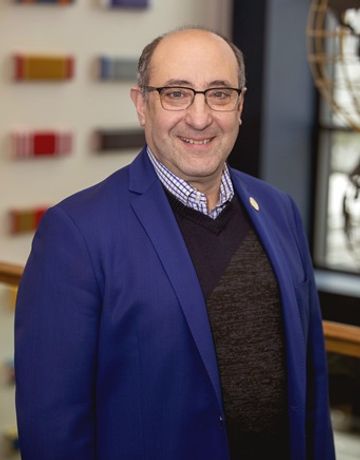
Hostmark Hospitality's Jerry Cataldo
The question remains whether lenders will start turning the
screws on hotel owners, but Duncan hypothesizes that perhaps they are too busy
dealing with bigger challenges in other commercial real estate segments such as
office. “The problems that lenders perceive they have in office and other real
estate types are so much more significant on a relative basis than hotels. So,
hotels are not their biggest problem,” he said.
Back on the management side, First Hospitality would
consider another portfolio deal like Hostmark if it furthers its geographic
expansion goal which is biased toward the Southeast, which Duncan loosely
defines as “Austin to Boston.” The other prerequisite would be to acquire a
high-quality team to expand First’s ability to become an employer of choice and
provide more opportunities for upward mobility.
In addition to the Hostmark deal, Duncan estimated First
Hospitality has added 15 management contracts this year and seems to be closing
more deals for soft brand hotels. “We’re moving more into upper upscale, and we
are tapping the luxury side, as well,” Duncan added.
First Hospitality is also exploring opportunities in adjacent
spaces that mix multi-family and hospitality, or servicing office spaces with
hospitality offerings. “In both of these adjacencies, people love what
hospitality provides, and we think there’s a lot of opportunity to build our
business there – perhaps be an acquirer of multifamily and bring some more
hospitality services to it,” Duncan said.
He also points to the emergence of concepts like Apartments
by Bonvoy from Marriott International that will need service providers. “There
will be a lot of activity on a go forward basis and we have a company that’s
set up to do that with services like nice food and beverage capabilities,” he
said. “Obviously, we’re adept at the customer service side and we’re thinking
about leaning seriously into that adjacency.”
Duncan added that First Hospitality has been approached by several
investors in the office space where occupancy is unlikely to fully return. “How
do they take a stack of floors and convert it to an alternative use that is better
than office – but more importantly accretive to the office? I think there will
be opportunities in selective major markets.”
What First Hospitality will not be doing is going down
market. “There’s a lot of activity in the midscale space. That’s great for
other people but it’s probably not for us.”
The other hard pass: on the operating company side it is
toxic cultures and toxic people, Duncan said.
On the real estate side, Duncan said First has an investment
track record of 27% unlevered IRRs and will take “another hard pass screwing
that up.”
While deals wouldn’t necessarily have to hit a 27% unlevered
IRR today, Duncan added, “what is a hard pass is really stretching for things
with high leverage.”
Looking at the bigger picture, Duncan said First Hospitality
has realized its ability to predict the forward interest rate curve and the
economic environment is limited. “What we’re really mindful of being really
careful about investment decisions and being prepared to own an asset for a
really long period of time,” he said. “Given the uncertainty today, if you have
to own an asset for 10 years, while that may not be the plan, you must be
prepared for that… You better have a capital structure and a relationship with
your partners that will sustain black swan events because, sadly, they’re just
going to be more frequent be it climate, be it economic, be it social.”