Jeff Wagoner said two years after the Hawaii wildfires that there are plenty of green chutes, while headwinds remain for full recovery.
INTERNATIONAL REPORT — Two years
after the wildfires that broke out in Hawaii, predominantly on the
island of Maui, Jeff Wagoner said he’s encouraged by the recovery of the area,
but emphasizes it is still going to take more time to get back to
where the island was three to four years ago.
“We’re excited about the
recovery of Maui, but it’s going to take some time still to have it recovered
to the degree that it was in three or four years ago. But we are encouraged,”
said Wagoner, president and CEO of Honolulu-based Outrigger Hospitality Group,
which has eight hotels and resorts in Hawaii and over 30 in its overall
portfolio.
Wagoner said Outrigger lost a
small hotel in the fires and because the recovery of the area has so far
focused on residential, the company hasn’t been able to determine its strategy
on whether to rebuild yet.

We’re excited about the recovery of Maui, but it’s going to take some time still to have it recovered to the degree that it was in three or four years ago. But we are encouraged.
Jeff Wagoner
“There were 3,000 buildings that
actually had been burned to the ground,” he said. “We’re starting to see
recovery of business in that market. The rate in that market is up and
continues to go up,” he said, noting one of Outrigger’s properties ran 80% occupancy
last month.
“It’s been a 50-plus percent
market for some time now. So to see an 80% (occupancy) month really does become
encouraging. You’re starting to see the green shoots of recovery.”
Wagoner said international
inbound from Asia Pacific continues to be a headwind for all of Hawaii, noting that on
the island of Oahu, where there are 100 resorts (four of which are
Outrigger’s), international inbound was 50% of the market pre-COVID (35% from
Japan, 10% from Australia and 5% from Canada).
Japan is only back into Oahu at
50% of 2019 levels, which Wagoner believes is primarily currency-driven.
“That is probably not going to
change if the currency issues don’t change, but we’d love to see some movement
there over the upcoming year,” he said.
Australia is 50-60% back from
2019 levels, but Wagoner said he anticipates that being closer to 100% in the
next 12 to 18 months. Canada was almost back to 2019 levels, too, until tariffs
and political turmoil cut those numbers.
“We’re hoping that as we move
into the rest of 2025 and into 2026, some of that stabilizes, and that we’re
able to have those international geo sources, which are critically important to
us here in Hawaii, return to the kind of levels we saw in 2019,” he said.
Wagoner was interviewed by the
author of this story as part of the HICAP Conversations virtual event on August
20, which is run by The BHN Group by Northstar. Wagoner discussed the
company’s portfolio in Asia Pacific and the current environment for M&A in
the region.
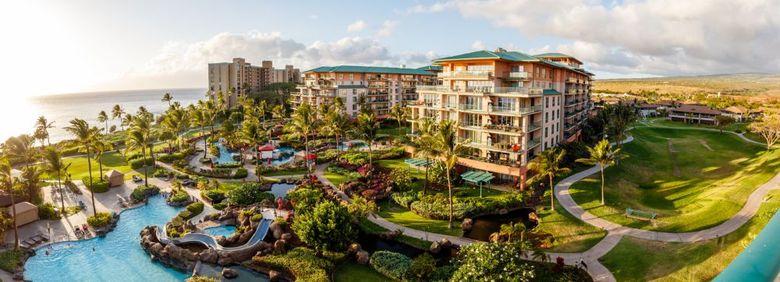
The Outrigger Honua Kai Resort & Spa is on the island of Maui in Hawaii.
Portfolio in APAC
When asked about Outrigger’s
portfolio in APAC, Wagoner stressed that the hospitality industry as a whole is still working toward getting back to normal.
“Every chance I can, I tell
people that we are not, as an industry, stabilized. Anybody that says we are is
really not being transparent,” he said, noting factors like the Ukraine-Russian
war, outbound travel recovery in China and the currency situation in Japan and
elsewhere. “There are so many different
dynamics that we’re all wrestling with every day.”
Every chance I can, I tell people that we are not, as an industry, stabilized. Anybody that says we are is really not being transparent.
Jeff Wagoner
As an example, Wagoner notes
Thailand, where Outrigger has four resorts, which came roaring back after
COVID, driven by business from China and Russia. Those numbers have softened in
the past few years, Wagoner said, before noting that Vietnam and Malaysia have
improved in that same time.
“You’re still trying to figure
out all these different geo sources. When do they come back? When do they get
better? Who’s going away and who’s going to be new on the scene, like what
we’re seeing in Vietnam and Malaysia,” he said.
Wagoner is optimistic about the
Maldives, especially with a new airline terminal opening up this
summer.
“Thank goodness that’s finally
opened,” he said. “That’s going to drive millions of new passengers in capacity
into that airport when (before) you basically couldn’t bring anybody else in.”
Current M&A
environment
Wagoner said interest rates are still stunting the opportunities for growth to some degree, as well as the number
of transactions. But that doesn’t stop Outrigger from pursuing in markets like
Japan and Australia.
We’re looking in Japan. I think everybody’s looking at Japan. It’s been a great growth area. Interest rates are favorable. It’s a nice place to be able to find a resort asset for us.
Jeff Wagoner
“We’re looking in Japan. I think
everybody’s looking at Japan. It’s been a great growth area. Interest rates are
favorable. It’s a nice place to be able to find a resort asset for us,” he
said. “We do not have a property in Japan today, but we would love to be there…
We’ve been looking for quite some time in Australia, and I think we continue to
have things bubble up that we’re taking a look at in Australia.”
Overall, Wagoner is optimistic
about potential M&A in the Asia Pacific, especially compared to making a
deal in the U.S. right now.
“I’m a lot more bullish on our
opportunities in Asia Pacific than I am on finding new opportunities on the
U.S. mainland, in beach locations, as well as here in Hawaii,” he said.
“Recently, though, here in Hawaii, a couple of assets have bubbled up that are
on the beach and that rarely happens… There’s typically not a lot of that
happening.”
Wagoner said he’s also hearing
interesting things about new supply becoming available in Fiji.
“Fiji, to me, is not just going
to be a destination [for just] honeymoons. It’s going to be something people
really do seek out, not just from Australia, but other places across the
globe.”